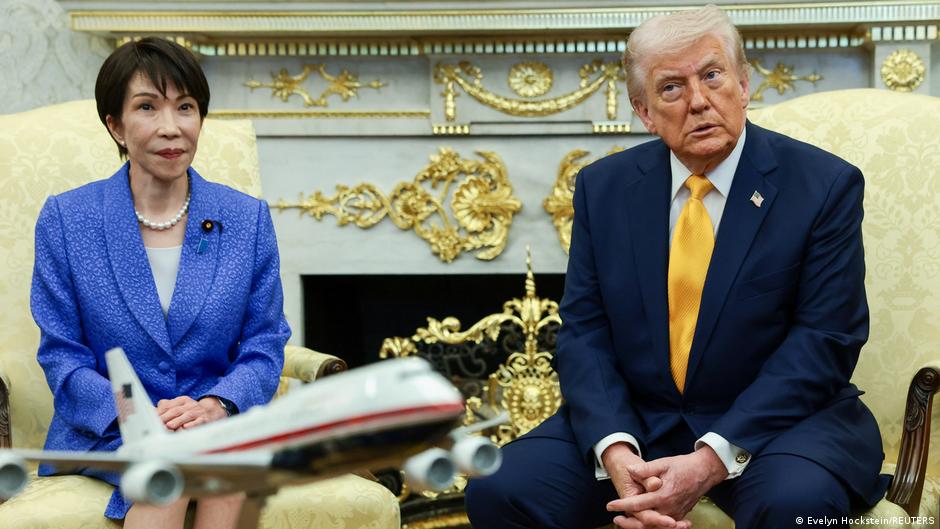
$73 billion of new Japanese investment in U.S. projects was announced (part of a broader $550 billion pledge), targeting small modular reactors in Tennessee and Alabama, rare-earth/critical-mineral supply-chain alternatives to China, shipbuilding, AI/technology development, and increased Alaska crude purchases. Tokyo reiterated it cannot send combat forces to the Middle East under its constitution but sought participation in the proposed Golden Dome missile-defense network; the visit is framed as a diplomatic win that preserves the trans‑Pacific alliance. Market implications: positive for U.S. energy/Alaska producers and refiners, SMR and nuclear suppliers, rare-earth/minerals developers, shipbuilding and defense contractors, and select AI/tech partnerships, while geopolitical risk from the Iran war and China remains an ongoing premium.
Tokyo’s pivot to diversify supply chains away from China and the Middle East is a multi-year structural trade, not an immediate earnings shock. Building alternative rare-earth processing, shipbuilding capacity and SMR nuclear plants typically takes 24–48 months and will push commodity and engineering capex higher, compressing near-term contractor margins while fattening long-run revenue pools for specialized mid-tier suppliers.
A US–Japan collaboration on a satellite-linked missile-defence layer creates a 3–7 year procurement runway for primes and space-focused suppliers; think recurring systems-integration and payload manufacturing revenue rather than one-off platform wins. However, budgetary approvals, export-control harmonization and Japan’s internal political constraints mean material contract flow likely won’t begin before FY27–FY29, making procurement newsflow the primary short-term catalyst rather than delivered revenue.
The energy re-routing away from the Middle East will shift tanker, refining and storage flows and create localized margin opportunities in Gulf/Alaska midstream and Japanese refiners, but it also raises a sticky sequencing risk: if Middle East hostilities spike near-term, oil and refined margins can dominate headlines and temporarily dwarf industrial investment themes. The largest market error would be to assume these announcements are instant supply-side cures—expect lumpy implementation, rising capex inflation in mining/shipyards, and a non-linear political tail-risk that can reprice both energy and defence exposures within weeks.
AI-powered research, real-time alerts, and portfolio analytics for institutional investors.
Request DemoOverall Sentiment
moderately positive
Sentiment Score
0.45
