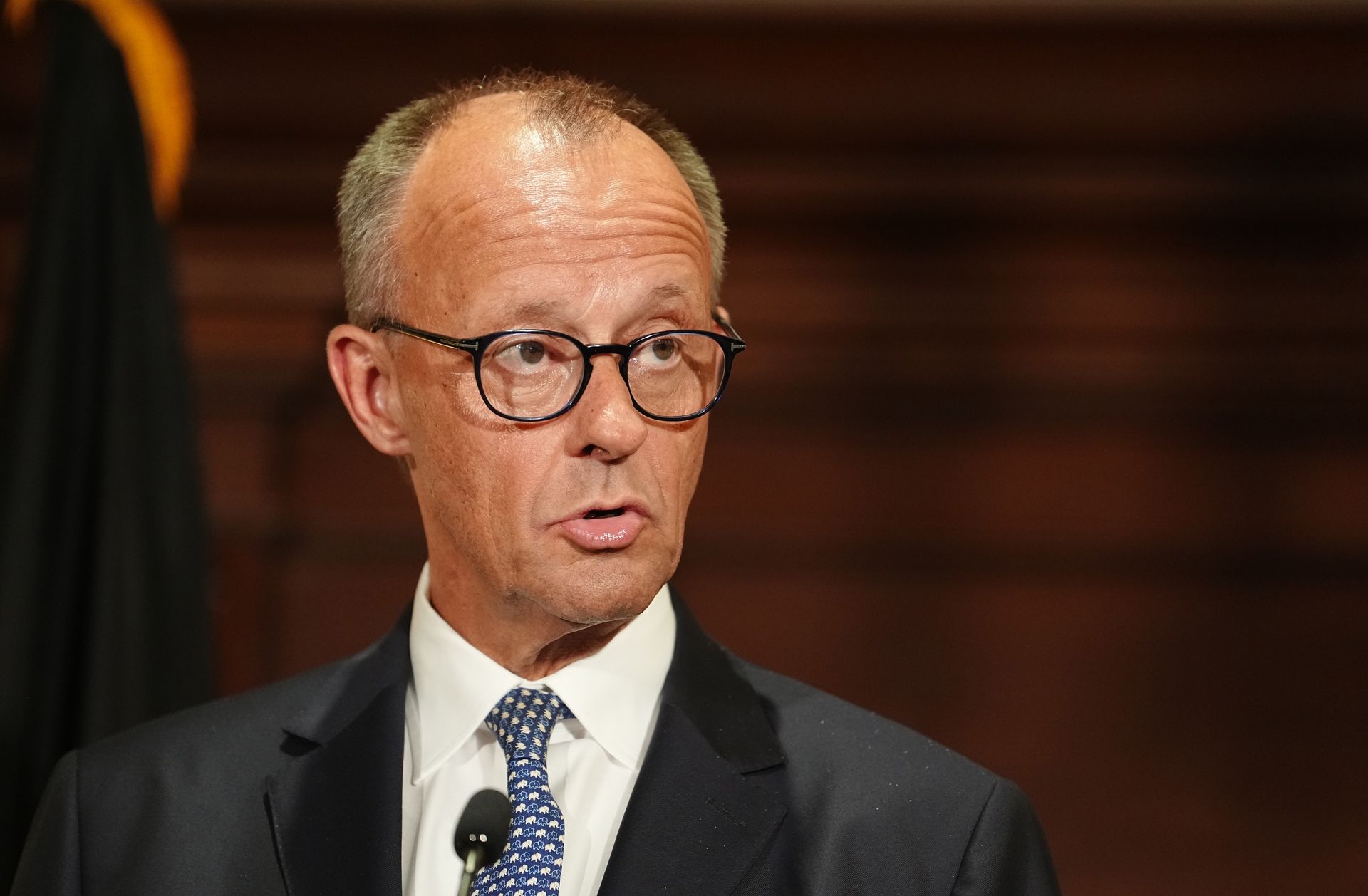
German Chancellor Friedrich Merz and Defense Minister Boris Pistorius have publicly contradicted European Commission President Ursula von der Leyen's assertions of a "clear road map" for European troop deployments in post-war Ukraine. Merz stated no concrete plans exist, particularly for Germany, and stressed that any long-term security commitments require parliamentary approval and a prior ceasefire. Pistorius further emphasized the EU's lack of competence for such deployments, deeming pre-negotiation discussions "fundamentally wrong." This significant public disagreement among key European leaders underscores internal divisions and complicates the prospects for unified European security guarantees and military policy regarding Ukraine's future.
A significant public rift has emerged within European leadership regarding post-war security guarantees for Ukraine, introducing uncertainty into the region's geopolitical outlook. German Chancellor Friedrich Merz and Defense Minister Boris Pistorius have directly contradicted European Commission President Ursula von der Leyen's assertion of a "clear road map" for troop deployment. Merz stated unequivocally that no concrete plans exist for Germany, conditioning any long-term commitment on a prior ceasefire and parliamentary approval, for which he still has "considerable reservations." Pistorius further undermined the Commission's position by stating the EU lacks the "competences" for deploying troops, calling such discussions "fundamentally wrong" before negotiations. This German pushback complicates the formation of a proposed "coalition of the willing" and highlights the high procedural and political hurdles for a unified European military response. The division is amplified by the broader context: the U.S. has ruled out ground troops, offering only potential air support, while Russia has explicitly labeled any such deployment as "foreign military intervention." The lack of consensus among key Western powers, particularly the cautious stance of Europe's largest economy, casts significant doubt on the feasibility and timeline for implementing the binding security guarantees envisioned by France and the European Commission.
AI-powered research, real-time alerts, and portfolio analytics for institutional investors.
Overall Sentiment
mildly negative
Sentiment Score
-0.25
