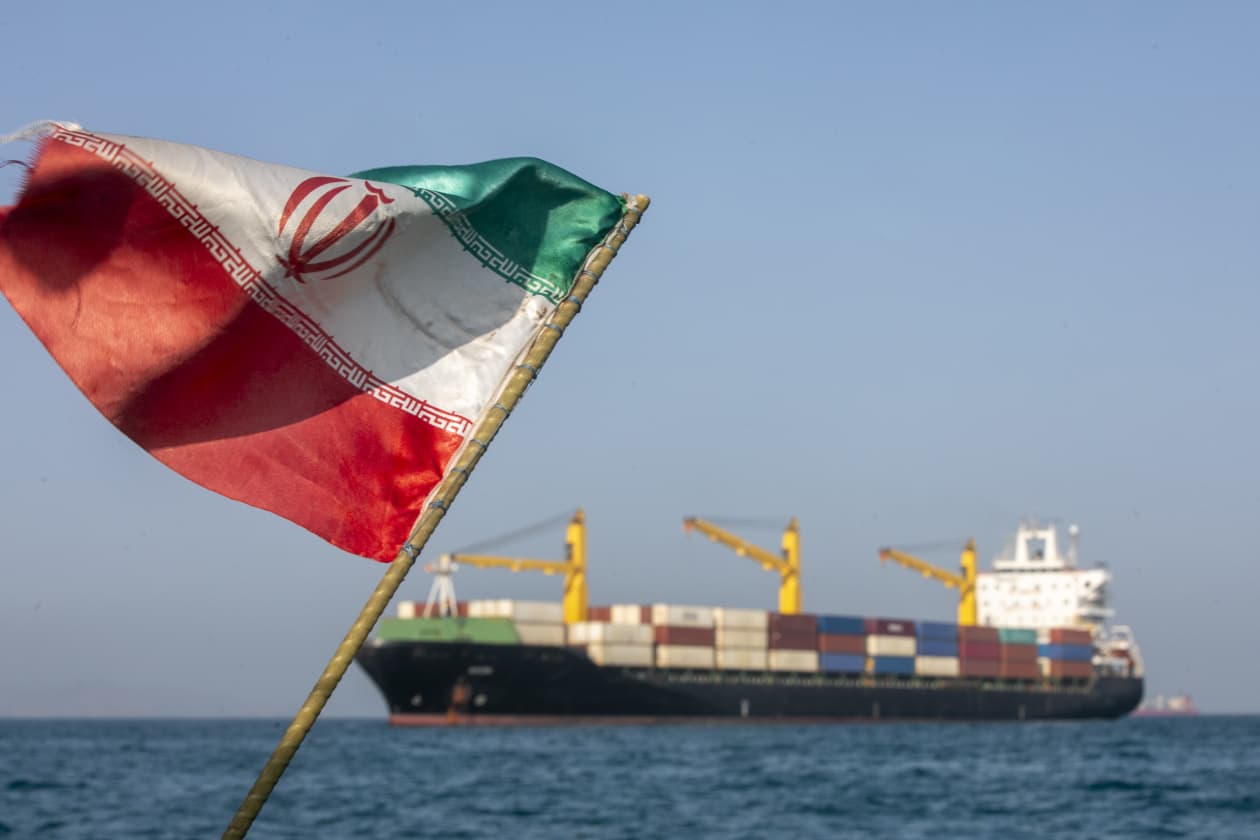
A delayed reopening of the Strait of Hormuz through the end of August could further deplete global Brent crude supplies and raise the odds of a '2008 train wreck scenario.' The warning implies a sharp oil price spike that could intensify existing economic fragilities, especially if supply disruption persists. The article points to elevated geopolitical and commodity-market risk with broad implications for energy and risk assets.
The market’s real risk is not just a higher spot crude print; it is the forced repricing of near-dated supply optionality. A prolonged choke point in Hormuz would make prompt barrels scarce relative to deferred barrels, steepening the front of the curve and punishing refiners, airlines, chemicals, and any inventory-light consumer of distillates before it meaningfully helps producers. That asymmetry matters because the first-order move in oil often turns into a second-order liquidity event in credit and equities when inventories are thin and positioning is crowded.
The most vulnerable cohort is not the broad equity market but margin-sensitive demand sectors with limited pricing power: airlines, trucking, and industrials that already run on thin operating cushions. A $10-20/bbl shock can compress 12-month forward EPS far more than consensus models imply because fuel costs hit immediately while pass-through lags by quarters. In contrast, upstream names and integrateds benefit only if the move persists long enough to offset hedging, political intervention, and refinery margin weakness.
The catalyst window is days to weeks, not years. If reopening is delayed into late August, the market will start treating the event as a stock-and-flow problem rather than a headline risk, which is when backwardation can become self-reinforcing and physical hoarding accelerates. The reversal path is also binary: a verified reopening, diplomatic de-escalation, or a coordinated release of strategic inventories would likely crush the risk premium quickly because speculative length in crude tends to be fast money.
The contrarian point is that recession calls may be premature if the shock is brief; energy spikes only become macro events when they coincide with already fragile credit, employment, or consumer balance sheets. That argues for tactical hedges rather than blanket shorting of equities. The better setup is to own convexity around the distribution tail and fade sectors with the most immediate input-cost sensitivity, while staying nimble on any sign that physical flows normalize.
AI-powered research, real-time alerts, and portfolio analytics for institutional investors.
Request DemoOverall Sentiment
strongly negative
Sentiment Score
-0.72
