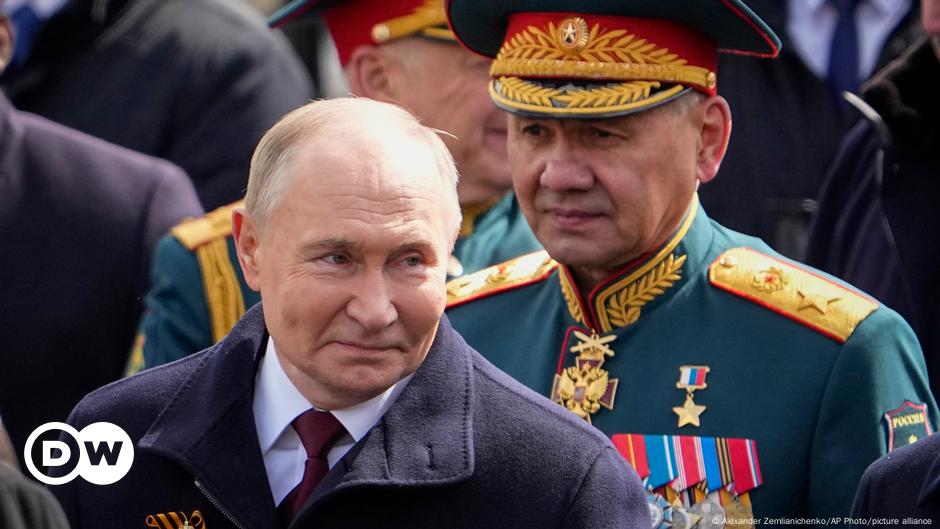
Reports say the Kremlin has sharply increased security around Vladimir Putin amid fears of assassination or an internal coup, prompting a scaled-back Victory Day parade and tighter controls in Moscow. The article highlights rising elite tensions, corruption cases involving senior defense officials, and widening rivalries among Russia’s security and patronage networks. While the coup threat itself is disputed, the piece underscores elevated political instability risk in Russia.
The investable signal here is not a near-term regime break in Russia, but a further degradation in decision quality inside the security state. That usually translates into more fragmented command-and-control, higher transaction costs for capital, and more erratic enforcement around defense procurement, sanctions evasion, and export logistics. For markets, that favors companies and jurisdictions that benefit from Russian operational sloppiness while penalizing any assets that depend on stable Kremlin allocation of rent or predictable military-industrial execution.
The second-order effect is escalation risk in the short window around major state-symbolic events and domestic security stress points. Even if a coup remains unlikely, the probability of discrete asymmetric incidents rises, which can trigger air-defense tightening, GPS/jamming spillovers, telecom disruption, and temporary transport frictions across Moscow and border regions. Over the next 1-3 months, that argues for a modest volatility premium in European security-sensitive assets and for keeping an eye on insurers, logistics, and satellite-navigation-exposed names.
The contrarian point is that heightened paranoia can actually strengthen incumbency in the medium term. A more fearful leader tends to centralize further, purge rivals, and allocate more resources to internal security and the defense complex, which can extend the life of the current system even as it becomes less efficient. So the base case is not state collapse; it is a slower, more expensive, more coercive Russia with rising internal friction but limited near-term succession probability.
From a positioning perspective, the cleaner trade is to own the beneficiaries of persistent Russian dysfunction rather than to bet on immediate political rupture. The consensus appears to overprice coup headlines as a binary event; the more durable edge is in the gradual erosion of administrative capacity, procurement integrity, and battlefield reliability. That is a months-long, not days-long, theme.
AI-powered research, real-time alerts, and portfolio analytics for institutional investors.
Request DemoOverall Sentiment
mildly negative
Sentiment Score
-0.20
