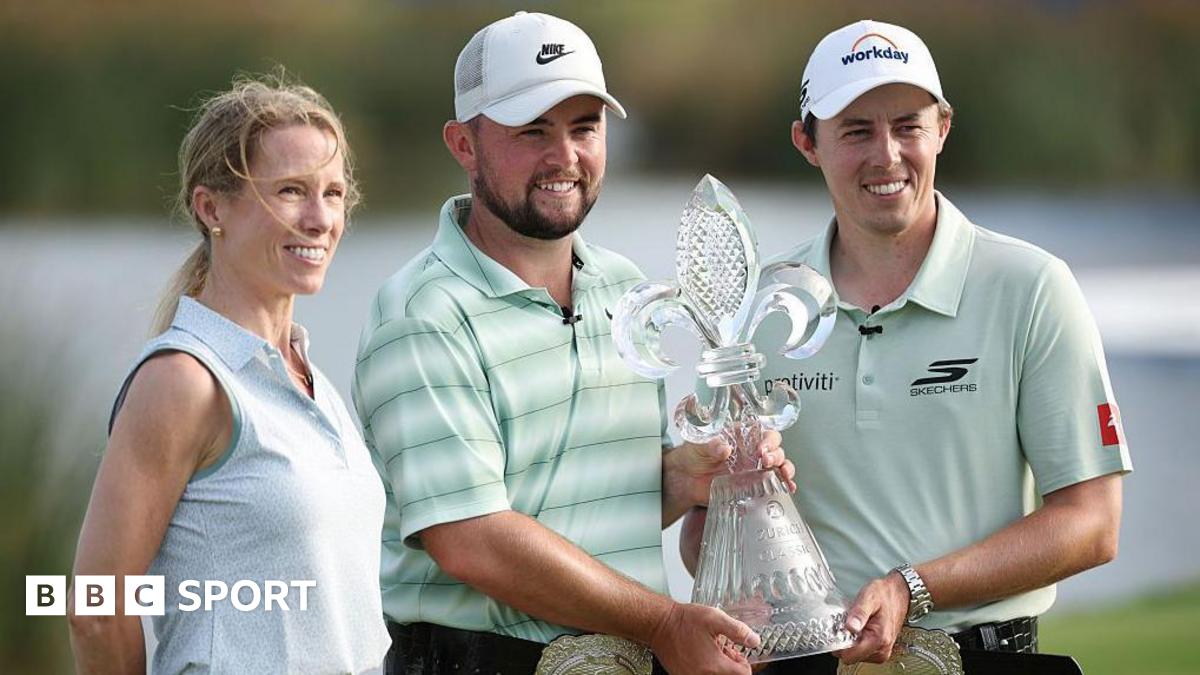
Alex and Matt Fitzpatrick won the Zurich Classic of New Orleans, becoming the first brothers to win a PGA Tour event and earning a $1m cheque. The victory gives 27-year-old Alex automatic PGA Tour membership through 2028, plus entry to Signature Events, next month's PGA Championship, and next year's Players Championship. Matt, 31, added his third win of the year after surviving a tense final-round finish.
The immediate market takeaway is not the tournament prize money; it is the transfer of status into a much larger revenue engine. A marginally established professional with protected access to Signature events tends to see a step-change in expected earnings and sponsorship value, because the distribution of outcomes shifts from “qualify to survive” to “bankable schedule + occasional upside.” That matters for talent retention across both the DP World Tour and PGA ecosystem: once a player crosses into recurring high-end starts, the probability of staying inside the top cohort rises nonlinearly.
Second-order, this is a modest positive for the broader golf commercial complex rather than any one player. More stable field quality and a recognizable sibling storyline improve event-marketability, which supports TV inventory, hospitality demand, and sponsor renewal pricing around elite events over the next 12 months. The better analog is not an isolated sports upset but a quality-of-access event that can widen the earnings gap between top-50 players and the rest, making the upper tier even more entrenched.
The contrarian angle is that this kind of headline is usually overread as pure momentum when the real signal is durability of status, not guaranteed performance. The brother with newly secured membership still faces a high variance regime: early exemptions can mask weak underlying form, and any regression over the next 6-18 months would quickly reintroduce status risk once the initial halo fades. The more interesting risk is that elevated access increases schedule intensity, which can compress performance if not managed well, especially in a sport where marginal fatigue shows up first in putting and recovery days.
From a trading perspective, the best expression is through the venue and content ecosystem rather than player-specific exposure. If this type of storyline continues to lift viewership and sponsor engagement, the beneficiaries are the rights holders and premium golf media franchises, not the athlete himself. That creates a cleaner way to play the commercial uplift while avoiding the idiosyncratic volatility of individual form.
AI-powered research, real-time alerts, and portfolio analytics for institutional investors.
Request DemoOverall Sentiment
moderately positive
Sentiment Score
0.40
