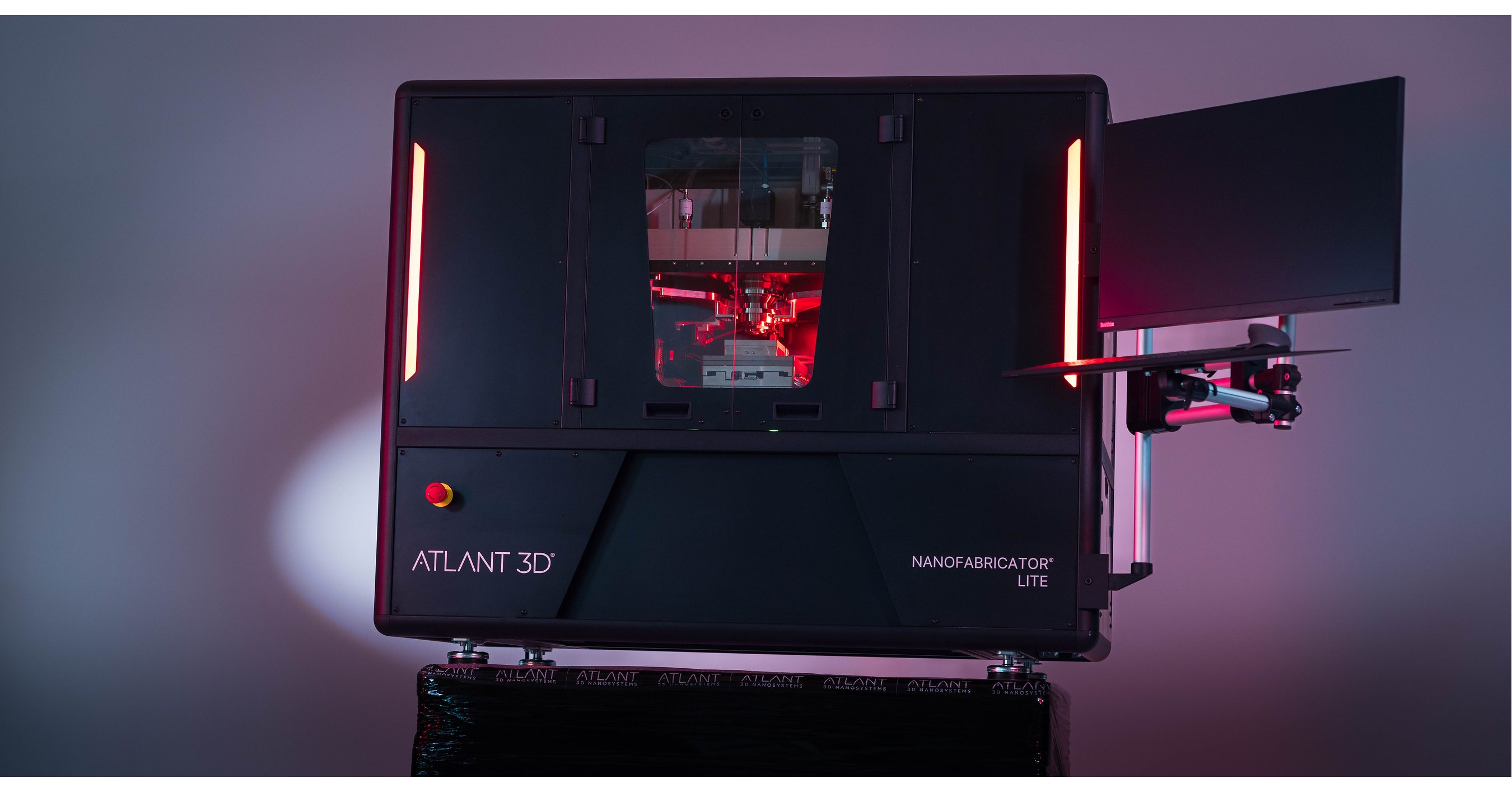
ATLANT 3D annonce une commande d’un “géant mondial de l’IA” pour sa plateforme NANOFABRICATOR® LITE, afin de déployer un laboratoire de découverte de matériaux piloté par l’IA. Le système vise à accélérer la fabrication et la validation expérimentales de matériaux générés par l’IA via un cycle itératif conception → expérimentation → données, couvrant notamment semi-conducteurs, packaging avancé, photonique, énergie et quantique. L’annonce souligne une demande croissante pour des flux de travail intégrés IA + validation expérimentale, avec un impact attendu surtout au niveau de l’entreprise.
This reads less like a near-term earnings event and more like a signal that AI budgets are beginning to migrate from pure inference/training infrastructure into the physical validation stack. If that spend broadens, the first beneficiaries are not the AI model vendors but the equipment and workflow layer around materials characterization, process control, and advanced packaging — names like AMAT, KLAC, LRCX, TER, and potentially ASML at the margin. The second-order effect is that AI “real-worldization” raises the value of rapid iteration tools, which can pull forward demand for metrology, deposition, test, and lab automation even before any new end-market revenue is visible.
The market risk is to over-interpret a single customer win as scalable demand. For ATLANT 3D, this is still likely a pilot-scale validation of a niche workflow; the revenue impact for public comps is probably immaterial over the next 1-2 quarters unless it catalyzes follow-on orders across hyperscalers and leading-edge fabs. The more important catalyst window is 6-18 months: if these labs shorten material development cycles, that could modestly improve the ROI of advanced packaging, photonics, and specialty materials capex, which would support equipment backlogs and keep multiples firmer than the broader tech tape.
The contrarian point is that consensus may be too focused on AI software margins and underweight the infrastructure needed to turn digital prototypes into manufacturable matter. But the move is still fragile: if capex discipline tightens, or if experimental validation does not translate into production wins, this remains a headline, not a demand inflection. Falsifiers would be weak commentary from AMAT/KLAC/LRCX on customer spend, or a broader slowdown in semi capex/order books over the next two reporting cycles.
AI-powered research, real-time alerts, and portfolio analytics for institutional investors.
Request TrialOverall Sentiment
mildly positive
Sentiment Score
0.25
