







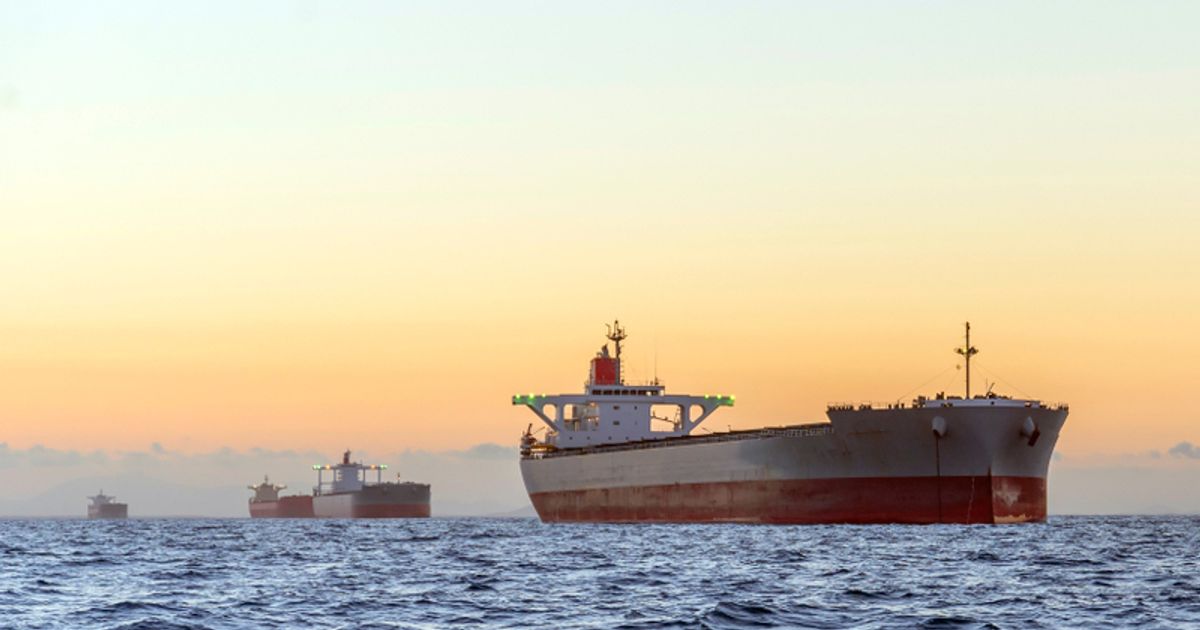
US and Israeli strikes on Iran under 'Operation Epic Fury', including the assassination of Iran’s supreme leader, prompted Iranian missile and drone retaliation across the region, disrupted tanker movements near the Strait of Hormuz and damaged Saudi Arabia’s Ras Tanura refinery; Qatar suspended LNG output, sending European gas roughly 50% higher. The risk-driven supply shock pushed WTI crude up 6.4% to just above $71/bbl and lifted US energy names (ConocoPhillips +4.3%, Exxon +1.8%, Chevron +1.7%, and several refiners/producers up >2%), signaling elevated volatility and a re-pricing of energy-sector assets, shipping insurance and logistics costs.
Market structure: Upstream integrated supermajors (COP, XOM, CVX) and US gas producers (EOG, DVN) are immediate beneficiaries as supply risk and LNG outages bid benchmarks higher; refiners near affected facilities (PSX, VLO) face operational hits and disrupted feedstock flows which can compress throughput in days-weeks but widen crack spreads regionally. Shipping/insurance frictions effectively remove a few percent of seaborne crude in the near term, amplifying front-month WTI volatility and giving producers temporary pricing power.
Risk assessment: Tail outcomes include a Strait of Hormuz closure or extended Saudi export impairment that could push WTI >$100 within weeks (high-impact, low-probability) causing demand destruction and policy reactions; alternatively a rapid diplomatic de-escalation could unwind risk premia and drop oil >20% in 1–3 months. Hidden dependencies: tanker insurance, refinery feedstock routing, and bank/insurer counterparty exposures; monitor insurance rate indices and tanker AIS flows over 48–72 hours as early-warning signals.
Trade implications: Tactical: favor short-dated, risk-defined oil upside (WTI 3‑month call spreads) and selective longs in financially strong supermajors (COP) and US gas (EOG) while avoiding high-debt E&Ps (OXY, CTRA). Use pair trades (long COP vs short OXY) to capture differential balance-sheet resilience. Enter within 48–72 hours while implied volatility is elevated; target profits if WTI trades to $85–90 or compresses IV by 30%.
Contrarian angles: The market overlooks that refiners and logistics could be longer-term losers if shipping reroutes and insurance remain elevated — refining capex and throughput can suffer for quarters. Historical precedence (1990s/2003 spikes) shows large oil jumps often retrace within 3–6 months as shale and OPEC responses restore supply; therefore size directional equity exposure modestly and favor hedged structures.
AI-powered research, real-time alerts, and portfolio analytics for institutional investors.
Request TrialOverall Sentiment
mixed
Sentiment Score
0.00
Ticker Sentiment
