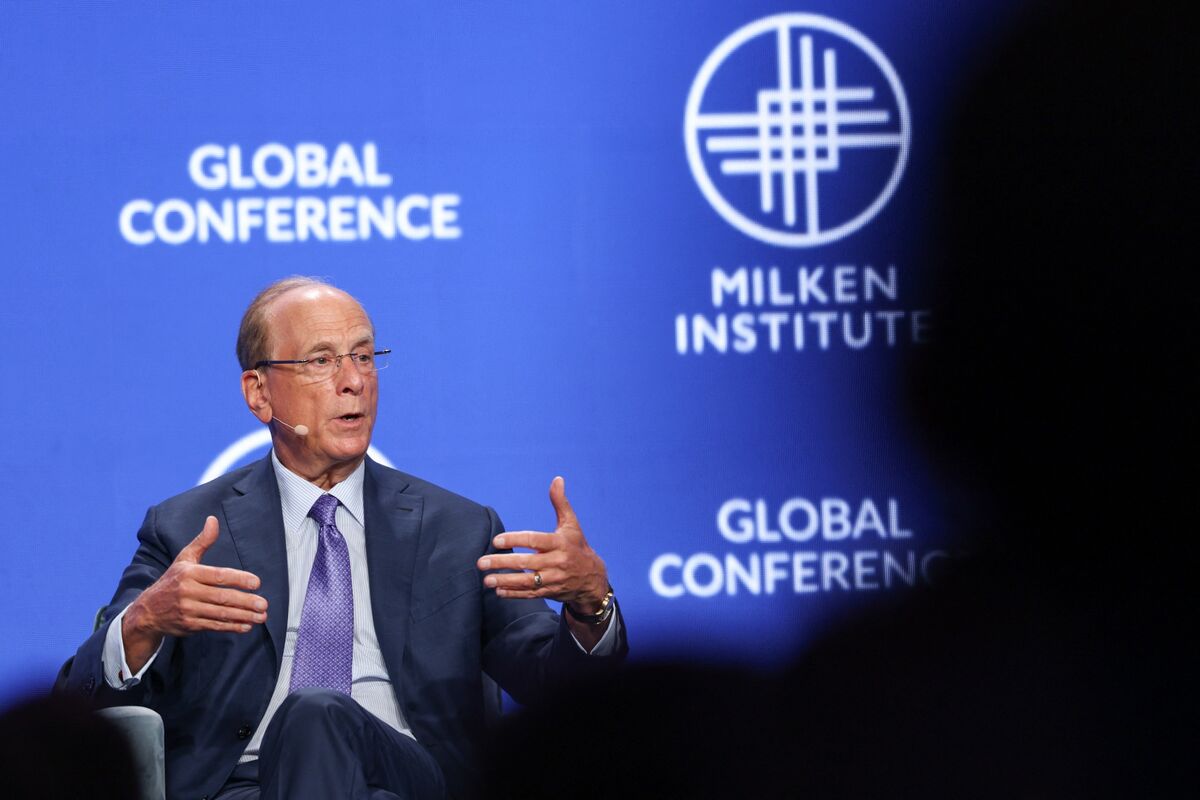
Larry Fink said a new asset class could emerge in which traders buy futures on compute power, reflecting surging demand for AI-related computing capacity. He said the US lacks enough compute power, chips, and memory, but the remarks are forward-looking commentary rather than a concrete market event. The article suggests longer-term implications for technology infrastructure and derivatives markets, with limited immediate price impact.
A liquid futures market for compute would turn a currently opaque capex bottleneck into a tradable forward curve, and that matters more for incentives than for pricing headlines. The first beneficiaries are not the obvious semiconductor leaders alone, but the intermediaries that can warehouse, finance, and arbitrate access to scarce capacity: cloud operators with large installed bases, colocators, and infrastructure-finance platforms that can lock in long-dated supply. If compute becomes a standardized contract, it should compress the bargaining power of single-customer AI buyers and shift margin from software-layer hype toward asset-heavy owners of power, land, and racks.
The second-order loser is the group relying on perpetual scarcity premiums to justify valuation. A futures curve would expose whether near-term AI demand is a genuine step-function or simply a channel fill cycle; if the curve inverts, it will signal overordering and force repricing across the most crowded AI beneficiaries. The most important supply-chain tell is memory and advanced packaging, where a formal compute market could pull forward speculative inventory builds, creating a 2-3 quarter boom-bust pattern rather than a straight-line demand story.
The main risk to the theme is not that compute demand disappears, but that policy and financing relieve the bottleneck faster than expected: grid interconnects, export controls, and hyperscaler self-supply can all flatten the scarcity premium over 6-18 months. Near term, the trade is more about volatility than direction; if investors start pricing a new commodity-like benchmark, factor rotations will likely widen between asset-light AI software and asset-backed infrastructure. BlackRock is strategically positioned to benefit from the productization of this flow, but the stock reaction should be muted unless it translates into ETF, private credit, or alternatives AUM growth.
Contrarianly, the market may be underestimating how deflationary compute standardization could be for end-user AI pricing. Once capacity is contractible, marginal AI inference and training costs may fall faster than consensus expects, which is negative for many “pick-and-shovel” names that depend on scarcity rents but positive for broad AI adoption and monetization timelines. In that regime, the better expression is to own the enablers of financing and power delivery, not the names most exposed to a peak-scarcity narrative.
AI-powered research, real-time alerts, and portfolio analytics for institutional investors.
Request DemoOverall Sentiment
neutral
Sentiment Score
0.10
Ticker Sentiment
