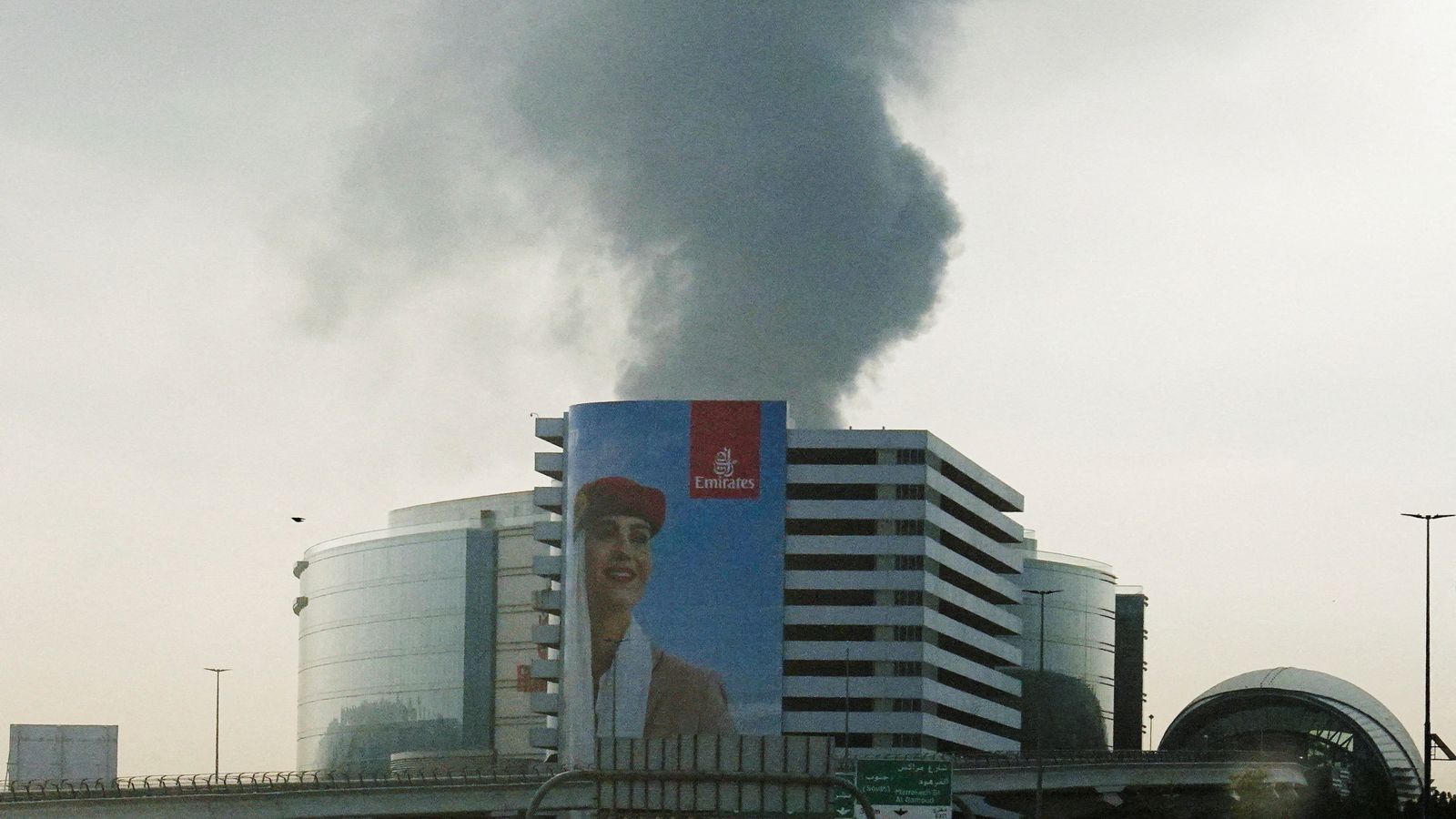
A drone struck a nearby fuel tank at Dubai International, prompting a suspension of departures and arrivals at 01:36 GMT and disrupting thousands of passengers; five UK-origin flights returned (including EK24 to Edinburgh which turned back over Egyptian airspace) and all seven Emirates Dubai–Heathrow services were cancelled. Flights later began 'gradually resuming' to selected destinations, but the outage compounds disruption from the US–Israel operations against Iran since 28 Feb and affects regional hubs that handle ~500,000 passengers per day; Qatar Airways will resume Doha–Dublin service on 20 March with four weekly flights.
Operational disruptions at a major Gulf hub create concentrated, measurable cost shocks to long‑haul airlines and freight operators: every diverted A380/777 routing or overnighting aircraft typically adds $25k–$60k in incremental opex (fuel, handling, crew, passenger reaccommodation) and removes 0.5–1.0 percentage point of daily aircraft utilization. Over a one‑to‑three week window this compresses margins most for carriers operating thin trans‑continental schedules that rely on hub feed (higher unit costs compound when utilization is down by even a single rotation).
Air cargo is the hidden accelerant: ~20–30% of Europe‑Asia belly and freighter lift transits Gulf hubs in normal times, so sustained bottlenecks should push time‑sensitive airfreight spot rates up 10–20% within days and 20–50% on peak rerouting. Integrated carriers with controllable lift (UPS/FDX) capture pricing power and can redirect freighters; asset‑light forwarders and airports that lose feed‑passenger volumes face sharply lagging revenues and higher unit terminal costs.
Security and infrastructure capex is the medium‑term call. If incidents recur, expect accelerated procurement cycles for counter‑UAS and perimeter/sensor systems with 6–18 month delivery windows — a multi‑year revenue stream for prime defense/avionics suppliers and for specialized integrators. Insurance and fuel crack spread volatility are second‑order channels: higher insurance premiums and regional jet‑fuel basis shifts would transfer costs to carriers or pass through to freight shippers.
Key catalysts that will reverse or exacerbate the setup are short‑term (days–weeks) operational declarations by IATA/insurers and medium‑term (months) political de‑escalation or formal airspace re‑routing agreements. Monitor spot freight rates, insurance premium notices, and procurement RFIs from regional governments — each will be a high‑information trigger for re‑rating the trades below.
AI-powered research, real-time alerts, and portfolio analytics for institutional investors.
Request DemoOverall Sentiment
mildly negative
Sentiment Score
-0.30
