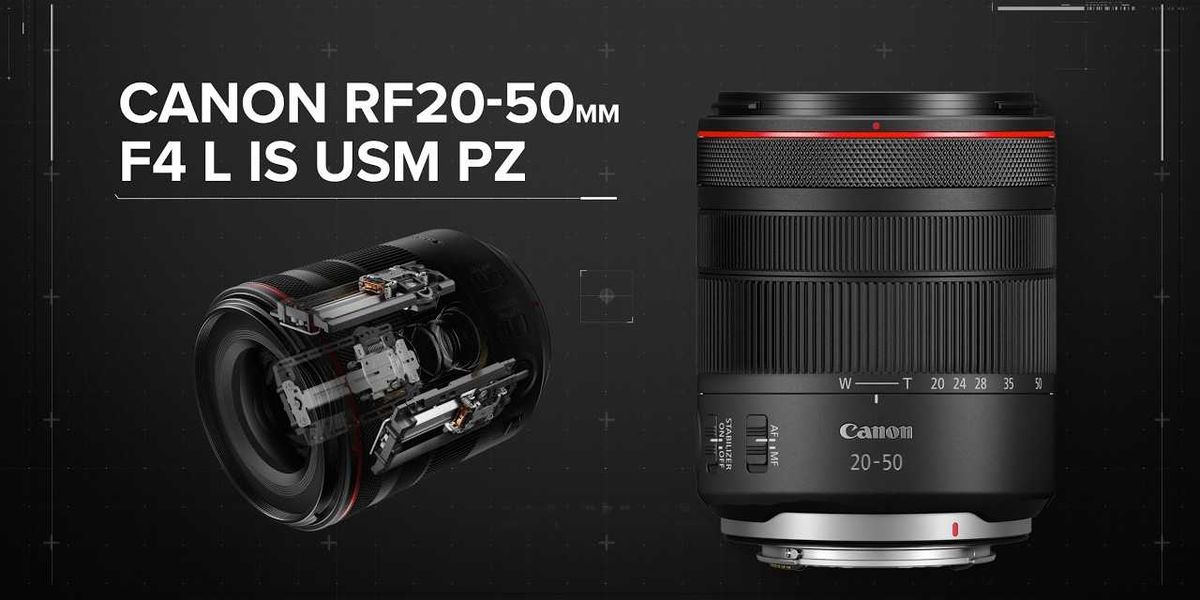
Canon introduced the RF 20-50mm f/4 L IS USM PZ Lens, a lightweight power-zoom lens optimized for video and positioned as a kit pairing with the new EOS R6 V. The lens features dual Nano USM power zoom, built-in optical stabilization, six stops of IS, minimal focus breathing, and full RF-mount compatibility. The announcement is product-focused and supportive of Canon’s creator/video strategy, but it does not include financial guidance or results.
This is less about one lens launch and more about Canon extending its moat in the higher-margin creator workflow, where customers buy ecosystems, not standalone hardware. The strategic significance is that video-first users tend to be much stickier than hobbyist still shooters: once a lens becomes part of a rig and workflow, replacement cycles stretch but attach rates rise, supporting accessory-heavy gross margin mix over time. If Canon can keep bundling bodies and lenses into a creator stack, it can defend share without needing to win on sensor specs alone.
The second-order effect is competitive pressure on Sony and Panasonic in the mid-tier video hybrid segment, where power zoom and stabilization matter more than headline resolution. A credible Canon kit lens lowers the friction for adoption by small production teams and solo creators, which can shift incremental share in the fastest-growing subsegment of mirrorless. The supply chain implication is modest but real: precision optics, stabilization components, and AF motor capacity become more strategically valuable than generic body assembly, favoring suppliers with tight Canon relationships and execution reliability.
The key risk is that this is a feature-response cycle, not a category reset; if rivals match the video ergonomics quickly, the advantage decays within 1-2 product cycles. The contrarian view is that the market may underappreciate how much profit Canon can extract from lens attach and bundle pricing even if unit camera share barely changes. The near-term catalyst is channel checks on kit sell-through over the next 1-2 quarters; if the bundle lifts conversion, the earnings impact could matter before any broad body replacement cycle shows up.
AI-powered research, real-time alerts, and portfolio analytics for institutional investors.
Overall Sentiment
neutral
Sentiment Score
0.15
