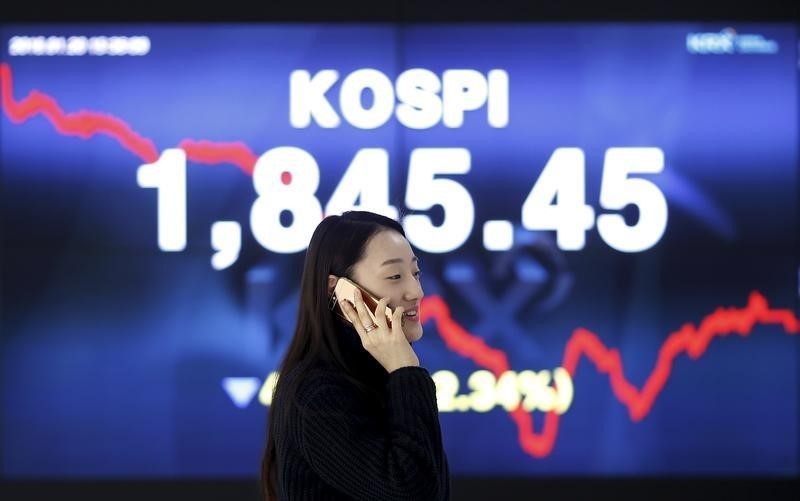
South Korea’s KOSPI hit a record high, rising as much as 3.6% to 8,131.15, with the index now up more than 90% in 2026. Samsung Electronics rose nearly 3% and SK Hynix jumped more than 7% as AI-linked semiconductor demand and strong chip-export growth fueled the rally. Broader risk appetite was supported by easing Middle East tensions, helping steady global markets and cool oil prices.
The immediate winner is not just the named chip leaders but the broader AI supply chain tied to memory intensity and capex durability: semiconductor equipment, advanced packaging, and Korean/Japanese materials suppliers should see follow-through if investors keep treating AI infrastructure as a secular rather than cyclical trade. The second-order effect is that a stronger Korea tape can pull in passive and quant flows into Asia tech, mechanically tightening positioning in anything with high beta to AI spend, including NVDA even if the move is not fundamentally about U.S. demand today.
What matters over the next few days is whether oil’s geopolitical premium re-expands faster than the market can fade it. A sustained energy bid would pressure global multiples through discount-rate and margin channels, but the current setup is more nuanced: lower oil supports risk appetite and extends the duration of the AI rally, while a renewed Middle East shock would likely hit small-cap cyclicals and airlines before it meaningfully dents mega-cap semis.
The contrarian read is that consensus may be underestimating how much of this semiconductor move is already crowded. When an index is up this far this fast, marginal buyers become flow-driven rather than fundamental, so any disappointment in export data or AI capex commentary can trigger a sharp de-grossing. The more interesting asymmetry is that NVDA benefits from the same infrastructure optimism but has less near-term torque than the Asian memory complex; if the market broadens out, leadership could rotate away from the obvious U.S. anchor into the higher-beta beneficiaries that are still under-owned.
The geopolitical piece is a volatility catalyst, not a clean directional thesis: oil spikes can ultimately tighten financial conditions and cap the duration of the risk rally, but that usually plays out over weeks, not hours. Near term, the market is likely to keep rewarding any evidence that supply chains remain intact and that AI demand is not slowing, which argues for staying long the strongest balance-sheet beneficiaries while hedging the tail.
AI-powered research, real-time alerts, and portfolio analytics for institutional investors.
Request DemoOverall Sentiment
moderately positive
Sentiment Score
0.62
Ticker Sentiment
