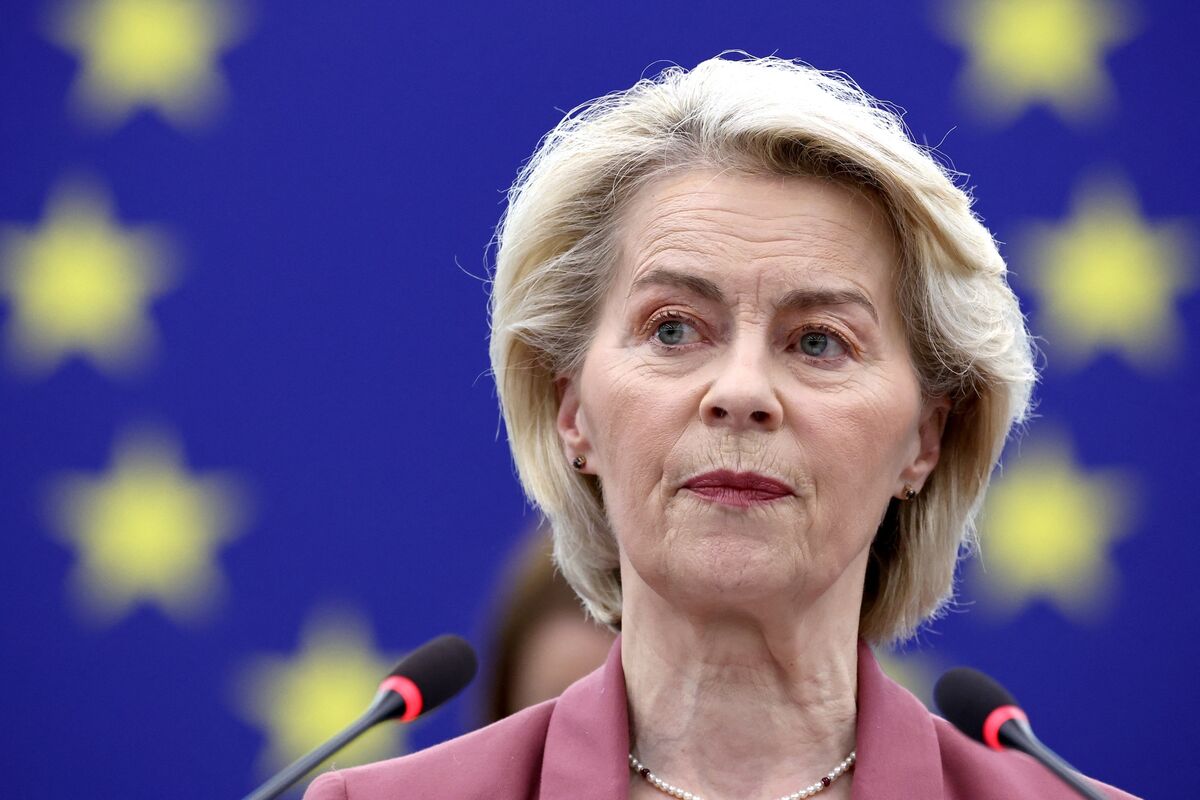
The EU warned that the US-Israeli war in Iran could have consequences for months or even years, with European Commission President Ursula von der Leyen signaling that the resulting energy price spike may persist. The message points to prolonged upside pressure on energy costs and broader inflation risks across Europe. This is market-wide risk-off news with potentially significant implications for energy-sensitive sectors and macro expectations.
Europe is the cleanest first-order loser, but the more interesting effect is policy latency: once energy inflation re-accelerates, the ECB and national fiscal authorities get boxed into a slower easing path just as growth is already fragile. That raises the odds of a stagflationary setup in which defensives, utilities with regulated pass-through, and upstream energy outperform while cyclicals, consumer discretionary, and rate-sensitive sectors underperform on margin compression and delayed demand.
The second-order pressure is on industrial supply chains that rely on power-intensive inputs, especially chemicals, fertilizers, glass, and aluminum. Even if spot crude stabilizes, gas and electricity volatility tends to persist longer in Europe, so the margin damage can outlast the initial headline shock by multiple quarters. That creates a wider dispersion trade: companies with indexed energy contracts or non-European feedstock are materially better positioned than peers exposed to merchant power.
The key catalyst to watch is whether this becomes a sustained risk-premium regime rather than a one-off spike. If shipping, insurance, or infrastructure disruption broadens beyond crude into refined products and LNG, the market will start pricing a months-long earnings reset, not just an acute inflation print. The main reversal case is a credible de-escalation corridor that restores confidence in maritime and energy flows; absent that, any pullback in prices is likely tactical rather than structural.
Contrarianly, the market may still be underestimating how much of the damage is already embedded in European valuation multiples, especially for banks and utilities, which have room to outperform if inflation expectations keep creeping up. The bigger overreaction risk is in lower-quality energy proxies that are already crowded; if the conflict stabilizes without a full supply interruption, those names can give back quickly even as Europe remains macro-bearish. So the best expression is not a blind energy beta trade, but a relative-value tilt toward balance-sheet strength and pricing power.
AI-powered research, real-time alerts, and portfolio analytics for institutional investors.
Request DemoOverall Sentiment
strongly negative
Sentiment Score
-0.55
