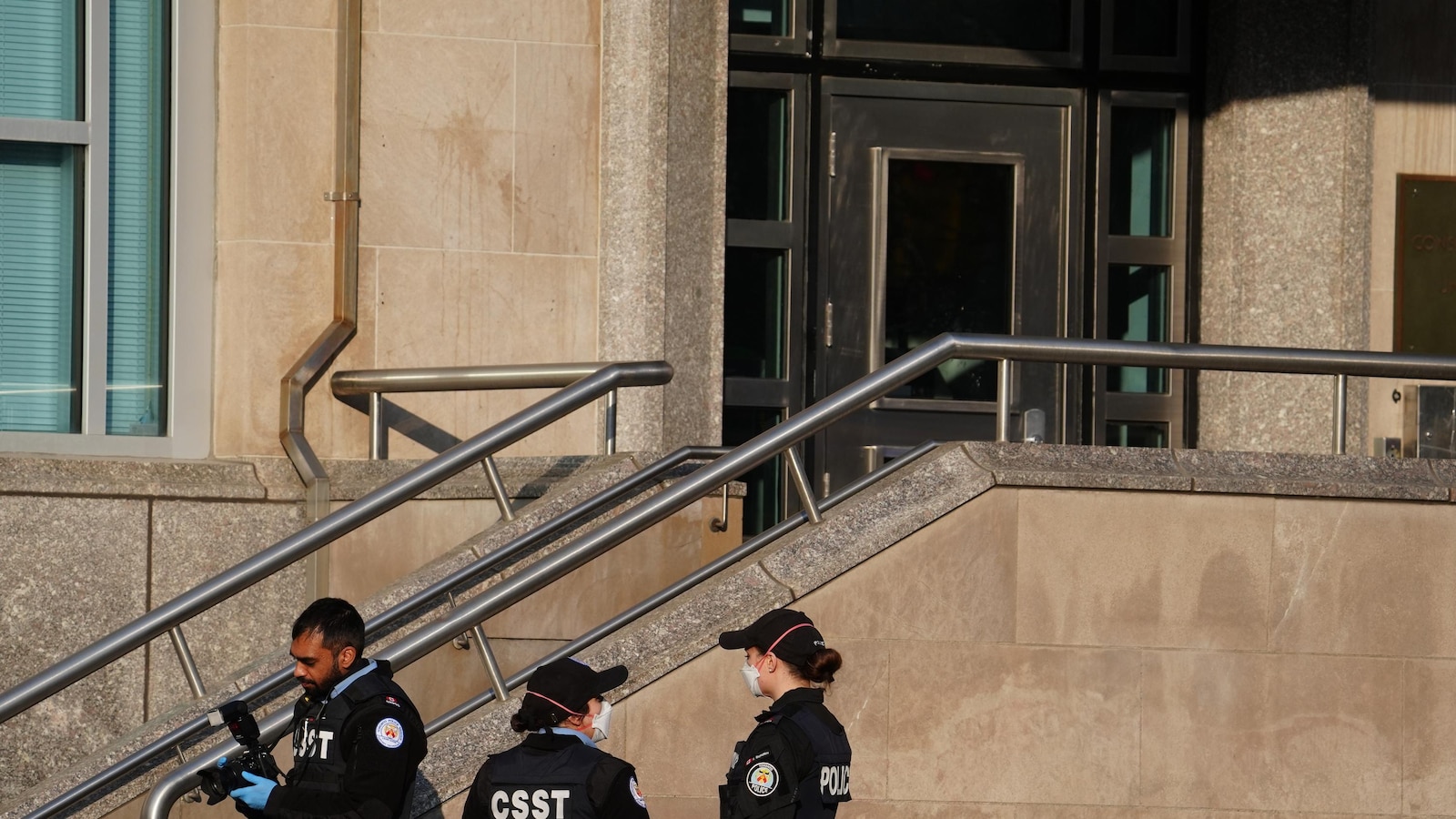
Gunfire was reported at the U.S. consulate in downtown Toronto at ~5:30 a.m.; police located evidence of a firearm discharge, with no injuries reported and no suspect information released. The consulate (near University Ave and Queen St W) was secured and the event—coming after shootings at two Toronto-area synagogues last weekend—is primarily a localized security incident with negligible market impact but heightened operational/security attention for diplomatic facilities.
This kind of isolated attack in a high-profile allied city functions as a credibility shock for diplomatic asset protection rather than an immediate geopolitical inflection. The most actionable second-order effect is a procurement cycle reset: expect accelerated assessments and retrofit budgets for perimeter sensors, hardened glazing, RF/jamming countermeasures, and advanced video analytics across North American consulates — procurement windows that typically convert into contracts in 3–18 months and into deployable revenue in 6–24 months.
Defense primes with mid-market offerings (sensors, integrated security systems, counter-drone and tactical communications) and software analytics firms that have existing GSA/defense footholds are positioned to capture disproportionate share-of-wallet because RFPs favor vetted incumbents; incremental wins will be modest vs company revenue but can re-rate multiples for smaller-cap suppliers. Insurers and commercial landlords face immediate underwriting and CapEx decisions: expect tightened endorsements and a discrete uptick in tenant-funded security CapEx which compresses near-term NOI for downtown office landlords but supports security integrator revenue.
Catalysts to watch: 1) official attribution or link to an organized actor (weeks) which materially ups the odds of cross-border diplomatic policy/defense spending; 2) municipal or federal security grant announcements (1–3 months) that seed procurement; 3) absence of linkage and rapid de-escalation which would remove the tail of defense spending risk. The primary reversal risk is that this remains a local criminal incident — in that case markets will quickly revert, making near-term sentiment trades susceptible to fast unwind.
AI-powered research, real-time alerts, and portfolio analytics for institutional investors.
Request DemoOverall Sentiment
neutral
Sentiment Score
0.00
