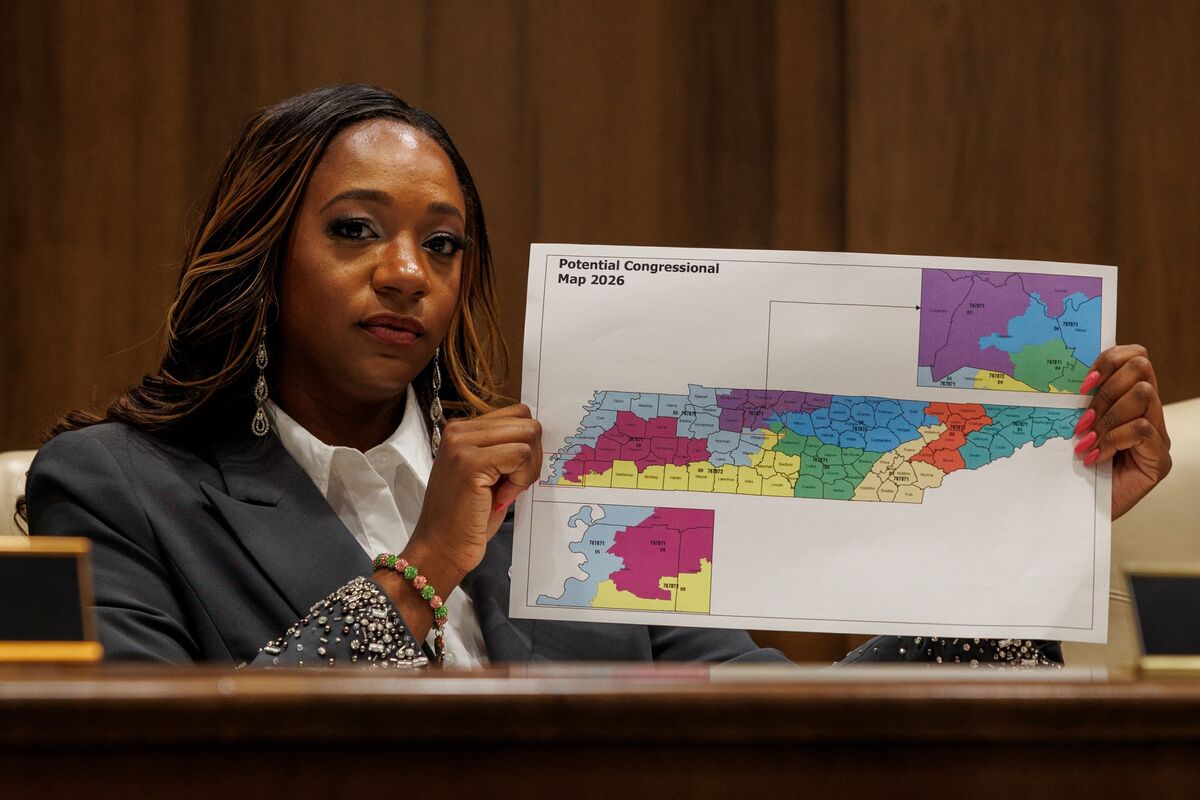
The article argues that the post-Supreme Court redistricting rush across southern states is undermining minority representation and is not truly race-neutral. It highlights concerns that decades-old congressional districts are being erased after the gutting of the Voting Rights Act, creating a negative but primarily political and legal development rather than a direct market event.
The near-term market impact is less about the constitutional theory than the portfolio of downstream litigation and election-mechanics winners. A broader redraw in the South tends to increase the value of firms exposed to campaign spend, political consulting, TV/CTV inventory, and election-law defense work; those revenues are lumpy but can step up quickly as map fights force candidate launches, fundraising, and media buys months earlier than usual. The bigger second-order effect is durability: once lines are re-sketched, political volatility becomes a recurring catalyst every cycle, which tends to lift implied volatility and demand for legal services even after the headlines fade.
The hidden loser is incumbency certainty. When districts are engineered to reduce minority voting power, the immediate practical outcome is more safe seats in the short run, but the medium-term effect can be higher intra-party turnover because primary challenges matter more than general elections. That shifts spending from broad persuasion to narrower turnout and legal warfare, benefiting vendors that monetize data, microtargeting, and compliance, while hurting broadcast and local-market advertisers with less sophisticated political stacks.
The main tail risk is judicial whiplash: if courts or DOJ injunctions slow implementation, the trade becomes a timing bet rather than a structural one, with the strongest revenue effects pushed from weeks into quarters. A second catalyst is public backlash translating into ballot initiatives, turnout surges, or federal legislative proposals; those would not fully reverse district changes, but they could restore fundraising urgency and increase election-related ad spend. The consensus likely underestimates how much this is a catalyst for the entire political services supply chain, not just a constitutional headline.
From a contrarian lens, the move may be underpriced for media and election-tech names because investors often assume politics is all noise until November. In reality, redistricting fights extend the campaign season and front-load budgets, which can support revenues earlier in the cycle and expand the universe of tradable names beyond traditional defense contractors or law firms. The cleanest way to express that is through companies with recurring political workflow and high operating leverage to incremental ad or compliance dollars.
AI-powered research, real-time alerts, and portfolio analytics for institutional investors.
Request DemoOverall Sentiment
mildly negative
Sentiment Score
-0.20
