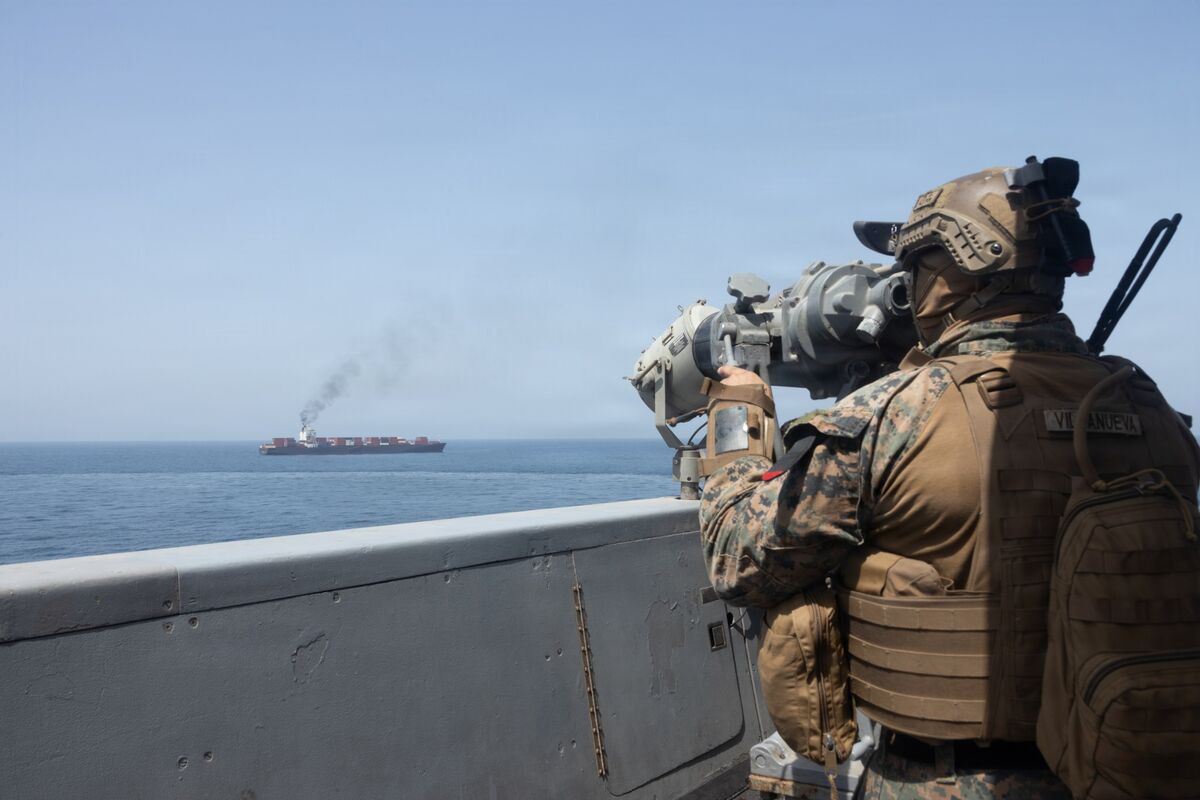
The US military says it has been defending commercial vessels in the Strait of Hormuz against regular threats and is now guiding ships with their signals off along the Omani coast. The program is helping support oil and cargo flows through a critical chokepoint. The article points to ongoing geopolitical risk, but also to improved shipping security and continuity in the waterway.
This is less a one-off shipping headline than a signal that the market is now pricing a managed-risk corridor through a structurally fragile chokepoint. The immediate beneficiaries are the operators with exposed Middle East routing and tight inventory chains: tanker owners, container lines, and bulk carriers should see a modest reduction in volatility premium, while downstream refiners and industrial importers gain from lower disruption probabilities and fewer insurance/war-risk surcharges. The second-order effect is that any credible de-escalation in transit risk compresses prompt freight rates faster than it affects spot energy pricing, so the first beneficiaries are likely transport equities and marine insurance rather than crude itself.
The key risk is that this is a mitigation program, not a resolution. By moving ships in a lower-signature mode and along a narrower route, the US may reduce incident frequency, but it also creates a more visible policy target: a single successful harassment event would force a rapid repricing of the entire route because the market would have to reassess whether the escort regime is scalable. That means the tail risk remains asymmetric over the next 1-8 weeks, especially around any escalation in regional messaging, but the medium-term setup over 3-6 months is more benign unless the program proves operationally inadequate.
The contrarian angle is that the market may be underestimating how quickly logistics normalizes once perceived passage risk falls below a threshold. Energy traders tend to focus on headline geopolitics, but charter rates and delivery schedules typically respond first, which can soften near-term inflation impulses without materially changing longer-dated crude balances. If this corridor holds, the biggest loser may be the volatility trade rather than outright energy shorts; realized vol in crude and tanker names should fade faster than consensus expects.
In practical terms, this favors buying names that monetize calmer ocean freight conditions while fading overreaction in oil-beta. The best setup is a tactical long in shipping/logistics and a relative-value short in freight-sensitive industrials or insurers that had already priced a persistent disruption premium, with a tight stop if a single security event breaks confidence. For energy, the message is to prefer optionality over directionality: geopolitical risk is still alive, but the base case shifts from immediate supply shock toward intermittent headline spikes.
AI-powered research, real-time alerts, and portfolio analytics for institutional investors.
Request DemoOverall Sentiment
neutral
Sentiment Score
0.10
