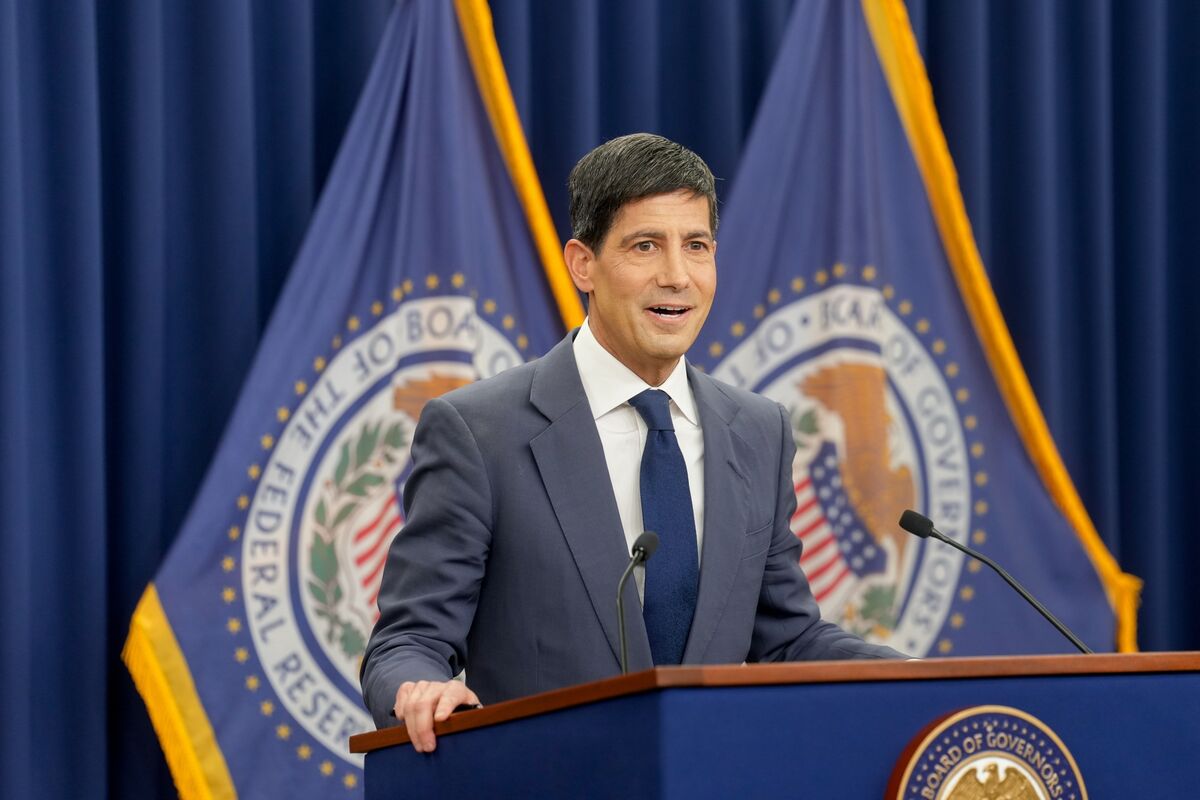
The Federal Reserve held interest rates unchanged at its first meeting under new Chairman Kevin Warsh, while policy makers remained split on whether to raise rates this year. Warsh declined to submit a forecast, and the Fed also introduced a shortened policy statement plus one fewer dot on the dot plot. The decision is market-wide relevant because it signals an unchanged policy stance but lingering uncertainty around the rate path.
The immediate market read is not about the unchanged policy rate; it is about regime signaling. A shorter statement and a divergent internal forecast process reduce the clarity premium that markets usually assign to the Fed, which tends to steepen front-end volatility even if the level of rates is unchanged. In practice, that means the first-order winner is uncertainty-sensitive assets that benefit from lower “policy conviction” pricing, while the loser is any asset class leaning on a clean disinflation/fewer-hikes path.
The second-order effect is in rates volatility, not just spot yields. When the chair withholds a forecast and the committee is split, the distribution of outcomes widens; that usually supports paying for optionality rather than expressing a directional duration view. The most vulnerable part of the curve is the 2Y-5Y sector, where incremental hawkish or dovish surprises transmit fastest into equity multiples, bank net interest income expectations, and USD carry trades.
Consensus is likely underestimating how quickly this can reprice risk assets if the next data print forces the committee to resolve its split. If growth cools or labor softens over the next 1-2 months, markets will read the current pause as the beginning of a policy-easing path; if inflation re-accelerates, the lack of a coherent forecast makes the Fed look behind the curve and raises the odds of a disorderly rates selloff. In other words, the memo-line today is neutral, but the path dependency is not.
The contrarian point is that a less transparent Fed can be bullish for equities in the short run: fewer explicit tightening signals often compress implied volatility and encourage systematic risk-taking, especially when macro data are mixed. But that same ambiguity makes crowded duration longs fragile; if the committee is forced to “catch up” later, the adjustment will likely be abrupt rather than gradual.
AI-powered research, real-time alerts, and portfolio analytics for institutional investors.
Request DemoOverall Sentiment
neutral
Sentiment Score
0.00
