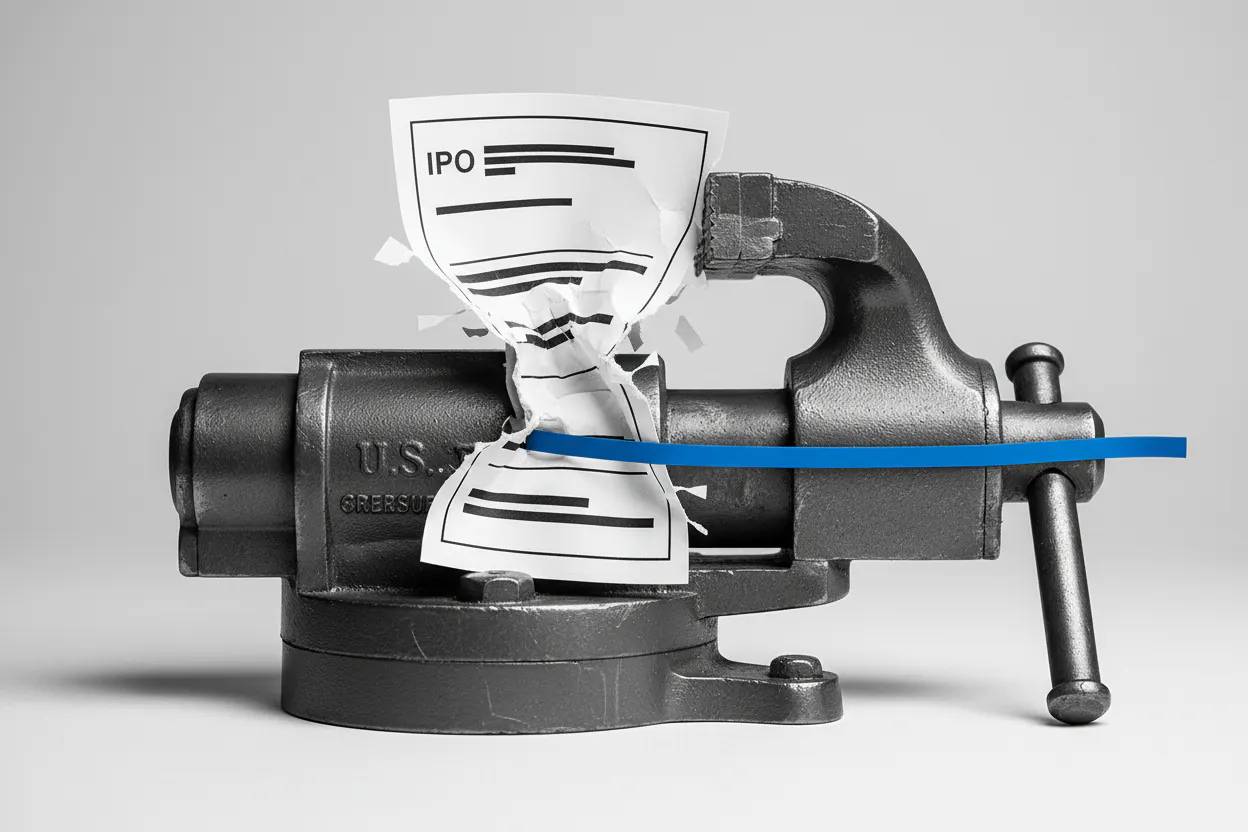
Potential mega-IPOs from SpaceX and OpenAI could add a large wave of new stock supply, while 30-year TIPS real yields near 2.90% are the highest since 2008. The combination raises the discount rate for long-duration growth assets and may force portfolio cash rotation out of liquid mega-cap winners, increasing short-term volatility. The article is mainly a market-structure warning rather than a direct company-specific catalyst.
The key second-order effect is not “more IPOs” so much as a forced rebalancing event into the most crowded duration-sensitive winners. If a mega-listing window opens, the bid has to come from somewhere, and the most obvious source is liquid growth equity held in public portfolios that are already overstretched on positioning. That creates a temporary supply overhang for mega-cap tech and AI proxies even if fundamentals remain intact, which means relative underperformance can show up first in the most index-heavy names rather than in the newly listed companies themselves.
High real yields matter because they cap the market’s willingness to pay for optionality. At these levels, the market is implicitly saying that distant cash flows must clear a much higher hurdle, so the aftermarket for unprofitable or long-dated growth IPOs is likely to be valuation-constrained from day one. The more interesting implication is that private-market marks may not fully adjust until public comps crack, so venture-backed sponsors could delay listings or accept smaller float sizes, which reduces the scale of the supposed “supply wave” but increases scarcity premium in the few deals that do come.
The consensus seems too focused on headline IPO excitement and not enough on market microstructure. A real-yield regime this high tends to compress dispersion inside growth equities: the market stops paying for narrative and starts rewarding balance-sheet quality, current FCF, and near-term monetization. That is a problem for the higher-multiple AI complex broadly, but especially for names whose valuation depends on 2027+ earnings assumptions; the reverse is that profitable software and semis with tangible near-term cash generation should prove more resilient than the broader AI basket.
AI-powered research, real-time alerts, and portfolio analytics for institutional investors.
Request DemoOverall Sentiment
neutral
Sentiment Score
-0.10
