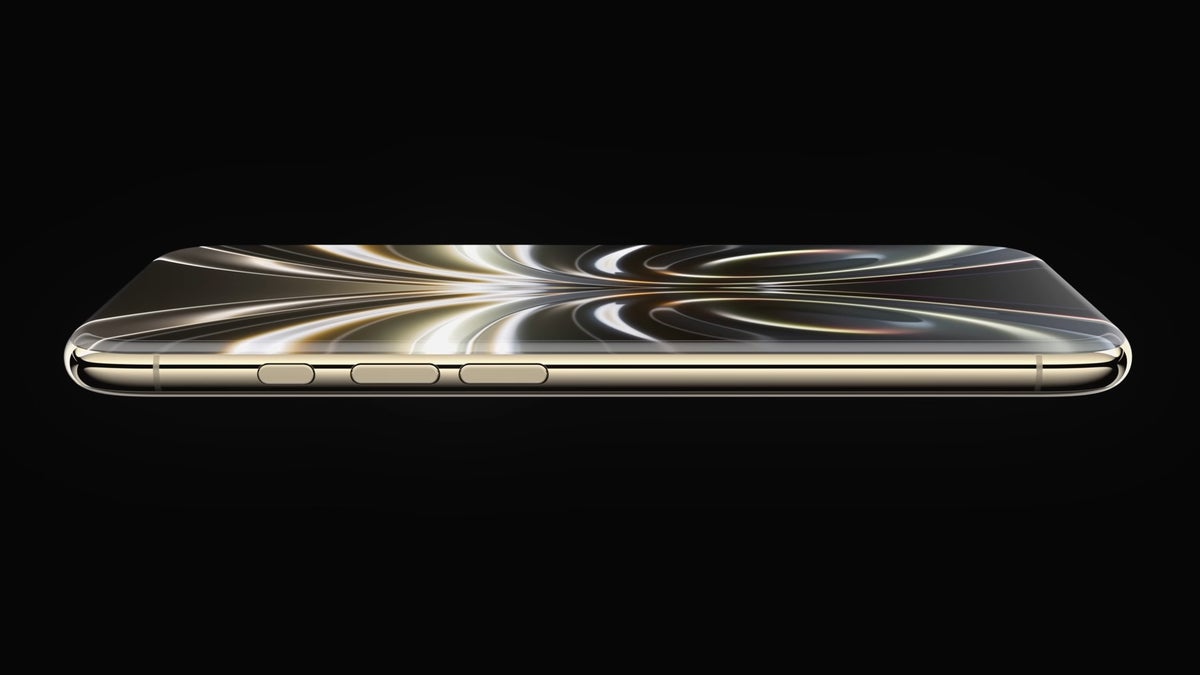
Apple’s iPhone 20 Pro is portrayed as a 2027 20th-anniversary redesign with zero bezels, no Dynamic Island, curved sides, anti-reflective display film, and potentially a more solid-state design. The article also notes risks: under-display Face ID may slip, and the next-generation display may still have edge distortion and minor brightness issues. Overall, the piece is speculative and product-focused, implying limited near-term market impact.
The market should treat this less as a near-term iPhone unit catalyst and more as a signal that Apple’s industrial-design roadmap is still intact. The key second-order effect is that a credible all-screen, low-reflection, higher-battery, no-button device would widen Apple’s hardware moat at the premium end, where ASP expansion matters more than shipment growth. That tends to support AAPL multiple resilience even if the 2026/2027 launch cadence slips, because investors will underwrite a stronger replacement cycle and higher mix rather than just more units.
The bigger competitive implication is pressure on Android OEMs to defend premium share with faster design iteration and heavier subsidy spending, which usually compresses gross margins in the handset ecosystem. If Apple gets close to a true bezel-free form factor, the industry spends the next 12-18 months chasing it in display, cover glass, adhesives, and camera-module integration. That is mildly bullish for Apple’s suppliers with differentiated content, but negative for commoditized Android component vendors that have to spend to keep up.
The contrarian read is that the market may be overestimating the timing precision and underestimating execution risk. Even a 6-12 month delay on Face ID/display integration would push the real payoff into a later cycle, which matters because Apple hardware sentiment is usually pulled forward well before launch and then fades if specs slip. The near-term trade is therefore not a straight long AAPL on product excitement; it is a quality-vs-execution dispersion setup, where the upside is mostly in sustained premium-ecosystem monetization rather than an immediate revenue inflection.
For AAPL specifically, the risk/reward improves if the market starts pricing a 2027 halo device with no meaningful earnings revision, but that’s a months-to-years story, not a days-to-weeks trade. Any evidence that the design is delayed or softened should cap upside quickly, because Apple’s premium multiple already embeds a high bar for flawless execution.
AI-powered research, real-time alerts, and portfolio analytics for institutional investors.
Request DemoOverall Sentiment
mildly positive
Sentiment Score
0.20
Ticker Sentiment
