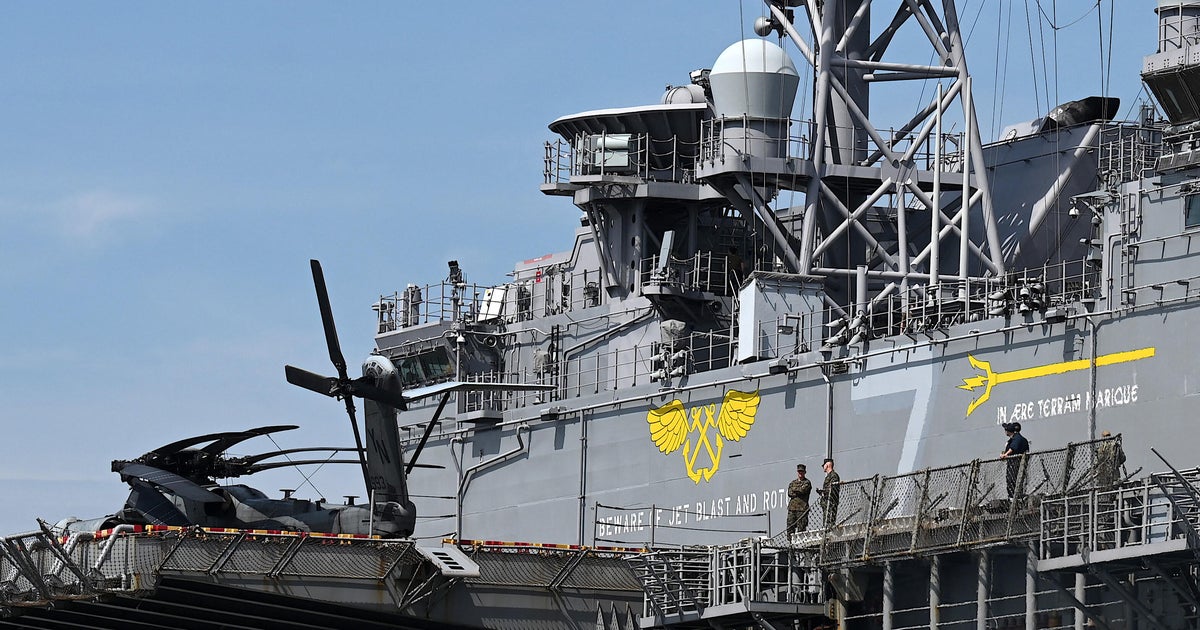
A second Marine Expeditionary Unit of ~2,200 Marines and three warships has departed California en route to the Middle East; a first MEU including the amphibious assault ship USS Tripoli is already moving toward the region. The deployment is expected to take a few weeks to be fully in place and includes 'big deck' capabilities for F-35s and Ospreys. The administration publicly denied plans to put U.S. boots on the ground, but the shipment increases geopolitical risk and could pressure regional energy markets and defense-related equities.
This deployment ramps the marginal cost of operating in the Gulf seating a durable, short-term risk premium into maritime logistics and energy delivered prices. Historically, war-risk insurance and tanker charter rates jump 5–25% within 1–6 weeks of sustained military posture changes in the region; that translates into roughly $0.5–$3.0/bbl of incremental delivered crude cost for importers that cannot immediately re-contract or re-route cargoes.
The most reliable equity uplift will come through sustainment and aftermarket flows rather than platform orderbooks: spares, MRO, fuel, and expeditionary logistics see concentrated, high-margin demand within 1–9 months. That favors smaller, defense-industrial and services-exposed names with >50% aftermarket revenue and fast contract velocity rather than large primes whose stock prices are more tied to program wins and long-cycle revenue recognition.
Tail risks are asymmetric and cliff-like: a strike on a tanker or a temporary chokepoint disruption could move front-month Brent by $10–20 within days and push tanker rates multiples higher, while diplomatic de-escalation can erase premia in weeks. Key catalysts to watch are credible reports of attacks on commercial shipping, insurance premium notices from P&I clubs, and rapid congressional or allied diplomatic interventions — any of which will flip the risk-on/risk-off calculus quickly.
Consensus is over-indexed to headline defense exposure and underestimates logistics/transportation winners and the speed of mean reversion if no kinetic escalation occurs. For portfolios, prefer names with direct, short-cycle revenue exposure to deployed platforms and selective shipping/insurance plays over large-cap defense primes trading at premiums to their sustainment cashflows.
AI-powered research, real-time alerts, and portfolio analytics for institutional investors.
Request DemoOverall Sentiment
neutral
Sentiment Score
0.00
