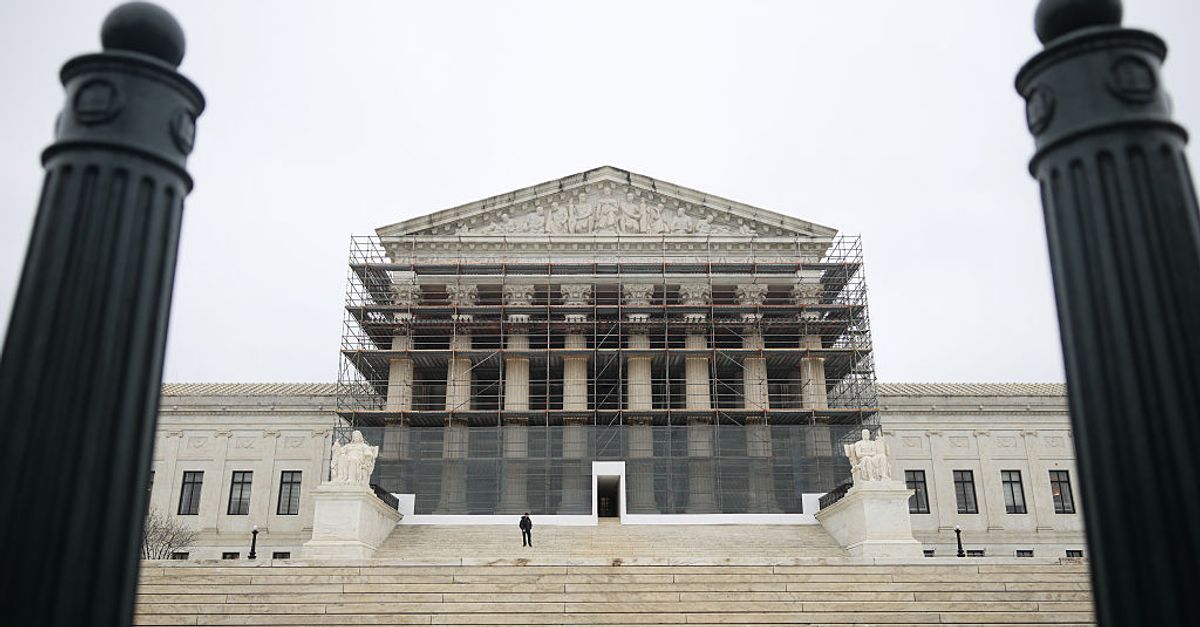
The Supreme Court, by a 6-3 vote, upheld the federal government's metering policy that turns back asylum seekers before they reach the U.S. border, reversing the 9th Circuit. The decision narrows asylum access at ports of entry and could increase immigration enforcement certainty, but the direct market impact is likely limited. The ruling is a policy and legal development rather than a broad macro or company-specific catalyst.
This is less an immigration headline than a policy-validation event that lowers the odds of abrupt border-operations volatility in the near term. The market implication is modestly bearish for politically sensitive humanitarian / logistics exposures because the ruling gives future administrations wider latitude to manage surges administratively rather than through immediate court constraints, reducing the probability of a headline-driven shutdown or emergency injunction cycle over the next 6-12 months.
The second-order effect is on cross-border throughput and state-level fiscal pressure. If metering becomes a more durable tool, congestion shifts away from ports of entry into informal crossings and internal processing systems, which tends to raise costs for border states, detention capacity providers, and legal-services demand while also creating intermittent volatility in local labor supply for agriculture, construction, and hospitality in border regions. That argues for more persistent, not less, demand for private detention, monitoring, and immigration compliance infrastructure even if overall crossing counts do not change materially.
The contrarian read is that the ruling may be near-term bullish for border-control incumbents but medium-term bullish for migration pressure. By making lawful entry harder at the threshold, it can increase the expected value of illegal crossing attempts and shift activity into more dangerous channels, which can ultimately raise enforcement budgets and political salience. The true catalyst is not this decision itself but the next surge in crossings: if that happens within 1-2 quarters, expect renewed executive action, procurement spikes, and renewed litigation that could reverse sentiment quickly.
AI-powered research, real-time alerts, and portfolio analytics for institutional investors.
Request DemoOverall Sentiment
mildly negative
Sentiment Score
-0.15
