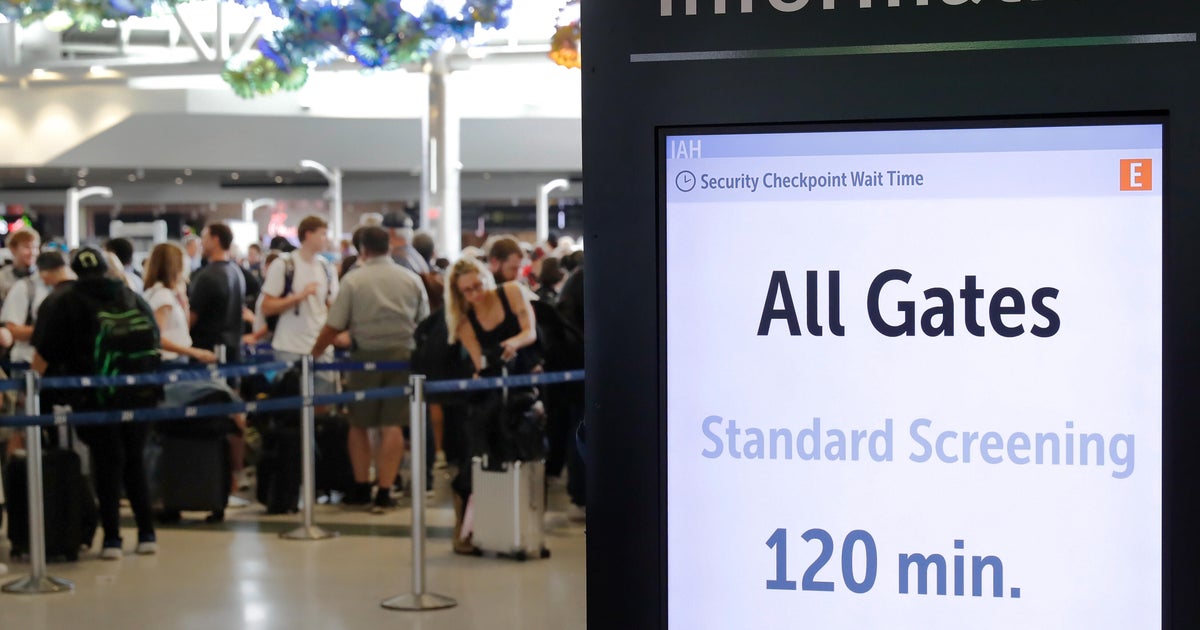
Senate failed to advance a DHS funding bill Friday, leaving TSA officers unpaid and worsening airport operations: wait times reported up to 120 minutes in Houston and 80 minutes in Atlanta, with absenteeism as high as >50% at one Houston airport and 38% in Atlanta (Wed). More than 300 TSA employees have left since the shutdown. Democrats plan a TSA-only funding pitch likely to face the same hurdles amid ICE policy disputes; Elon Musk offered to cover TSA salaries. Continued funding lapse poses operational risk to airlines and airports and could pressure travel sector performance if unresolved before the Easter recess.
Screening-point staffing is a choke point with highly non-linear downstream effects: a modest, sustained drop in checkpoint throughput (order of 10-30%) can cascade into a 3-8% reduction in daily departures at major hubs within 48–72 hours because of crew legality windows, gate reassignments, and missed connections. That dynamic creates concentrated revenue leakage — not just lost ticket sales but amplified re-accommodation, settlement and hotel costs that fall disproportionately on thinner‑margin, high‑frequency domestic carriers.
Second‑order winners and losers diverge by balance‑sheet durability and mix of revenue streams. Airport concessionaires and short‑cycle travel retail see immediate P&L pressure (low fixed‑cost, high variable elasticity), while government systems integrators and screening‑technology vendors gain optionality: replacement/automation capex decisions accelerated by operational pain can shift multi‑year procurement timelines forward. Freight/logistics chains face idiosyncratic friction too — air cargo schedule reliability degrades first, pushing volume to truck and rail and creating transient spot rates in inland hubs.
This is an event‑driven, binary risk set with tight timing arbitrage: a rapid policy fix compresses realized volatility and should produce a sharp mean reversion in travel equities within days; a protracted stalemate elevates credit and liquidity risk for the most levered carriers over weeks and begins to show in airport concession revenues and local muni receipts over a 1–3 month window. Position sizing should therefore prefer defined‑risk instruments and concentrate color around hub exposure and contract‑winning optionality in defense/government IT names.
AI-powered research, real-time alerts, and portfolio analytics for institutional investors.
Request DemoOverall Sentiment
strongly negative
Sentiment Score
-0.55
