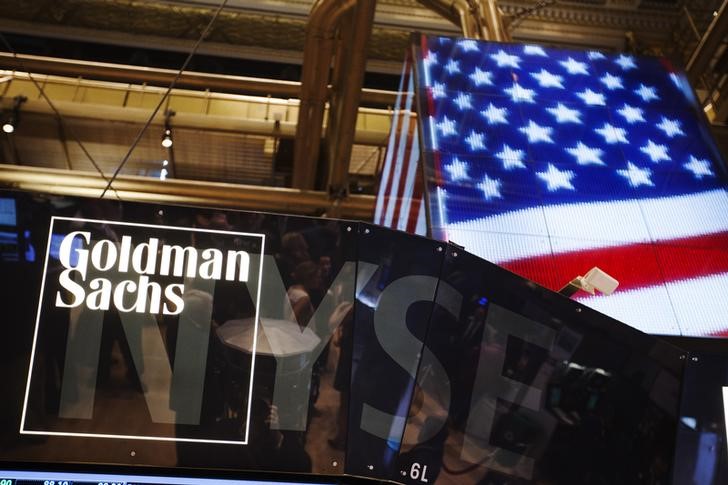
Goldman Sachs reported Q1 2026 revenue that beat consensus by 2.2%, with headline EPS of $17.55 topping estimates due to a $2.91 tax benefit. Excluding the tax item, adjusted EPS of $14.64 missed BofA’s estimate by 3.5% and consensus by 11.0%, while FICC trading revenue of $4.0B fell short of the $4.7B consensus. BofA kept a Buy rating and $1,100 target, but the stock was indicated down 4% pre-market on the FICC miss despite $5.0B in quarterly buybacks.
The market is likely anchoring on the headline earnings beat, but the more important signal is dispersion inside the franchise: capital markets and balance-sheet-intensive businesses are still monetizing volatility, while rate-sensitive trading looks more vulnerable to any normalization in spreads and funding conditions. That creates a subtle but important read-through for the group: GS is proving it can still harvest alpha in pockets of volatility, but the quality of the beat is less durable than the headline suggests. The stock reaction looks like a classic “good quarter, bad mix” setup, which often creates a 1-3 day overreaction window. If management signals that the FICC miss was mostly timing/mark-to-market rather than structural franchise loss, the drawdown should retrace quickly; if not, the market will start discounting a lower run-rate for the quarter’s revenue mix and a tighter share-repurchase pace relative to capital generation. In that case, the multiple can compress even with healthy profitability because investors tend to pay up less for earnings that depend on episodic trading conditions. Second-order beneficiaries are the higher-quality diversified money-center banks and market-makers with less sensitivity to a single revenue line, because the market will likely reward more balanced earnings persistence over headline trading volatility. The contrarian read is that the selloff may be overdone if investors are extrapolating one weak FICC print into a franchise issue; GS’s capital return remains a real floor under the stock, and sustained buybacks can materially support EPS over the next 2-3 quarters even if revenue growth cools. The key catalyst is the upcoming management commentary: any language implying the weakness was concentrated in specific products or weeks would argue for buying the dip, while a broader explanation tied to client activity would justify staying cautious.
AI-powered research, real-time alerts, and portfolio analytics for institutional investors.
Overall Sentiment
mildly positive
Sentiment Score
0.20
Ticker Sentiment
