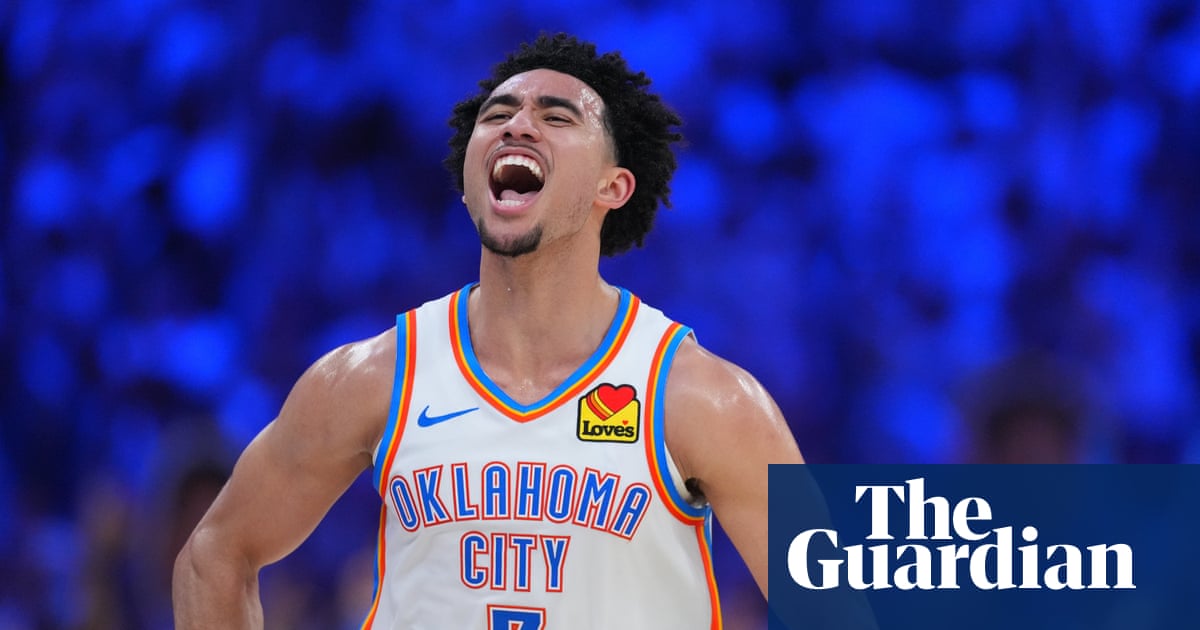
Oklahoma City beat San Antonio 127-114 to take a 3-2 lead in the Western Conference finals, with Shai Gilgeous-Alexander finishing with 32 points and nine assists after a slow start. Alex Caruso added 22 points and six assists, while Chet Holmgren posted 16 points and 11 rebounds as the Thunder rebounded from their Game 4 loss. San Antonio’s Stephon Castle led the Spurs with 24 points, and the series shifts to Game 6 in San Antonio on Thursday.
The market takeaway is not the headline series lead; it is the Thunder’s ability to absorb a subpar primary creator performance and still generate a high-quality scoring mix. That matters because it reduces the fragility premium typically assigned to teams built around one heliocentric star — when the supporting rotation can swing a playoff game by 20+ points, the probability of a full series derailment falls materially. In portfolio terms, this is the kind of depth-driven resilience that tends to be underpriced until it compounds over multiple games.
The second-order dynamic is on the opponent side: San Antonio’s path narrows if its interior anchor is forced into higher-shot, higher-usage offense without efficient conversion. When a defensive centerpiece becomes more of a scorer by necessity, it often creates a hidden tax on the rest of the roster — fewer clean possessions, less rim deterrence, and more variance in role-player shot quality. Over a 48-hour horizon, that raises the probability of a short series rather than a competitive extended set.
The contrarian angle is that the current price may be overreacting to one game of supporting-cast outperformance and underreacting to matchup sustainability. If the Thunder’s ancillary scorers normalize down and the opposing star’s shot volume rises, the series can still tighten quickly; playoff margins are thin enough that one hot shooting night can flip the narrative. But the more durable signal is structural: the Thunder have multiple ways to win, while the other side appears increasingly dependent on an efficiency spike from its primary advantage creator.
For broader public-market analogs, this is a reminder that depth and bench reliability outperform “star-only” exposure in high-variance environments. Names or baskets tied to deeper rotational quality and coaching adaptability should command a premium in multi-game or multi-quarter settings, while single-point-of-failure assets deserve a discount once the market fully internalizes the dependency. The real edge is in distinguishing temporary shooting variance from persistent roster elasticity.
AI-powered research, real-time alerts, and portfolio analytics for institutional investors.
Request DemoOverall Sentiment
neutral
Sentiment Score
0.10
