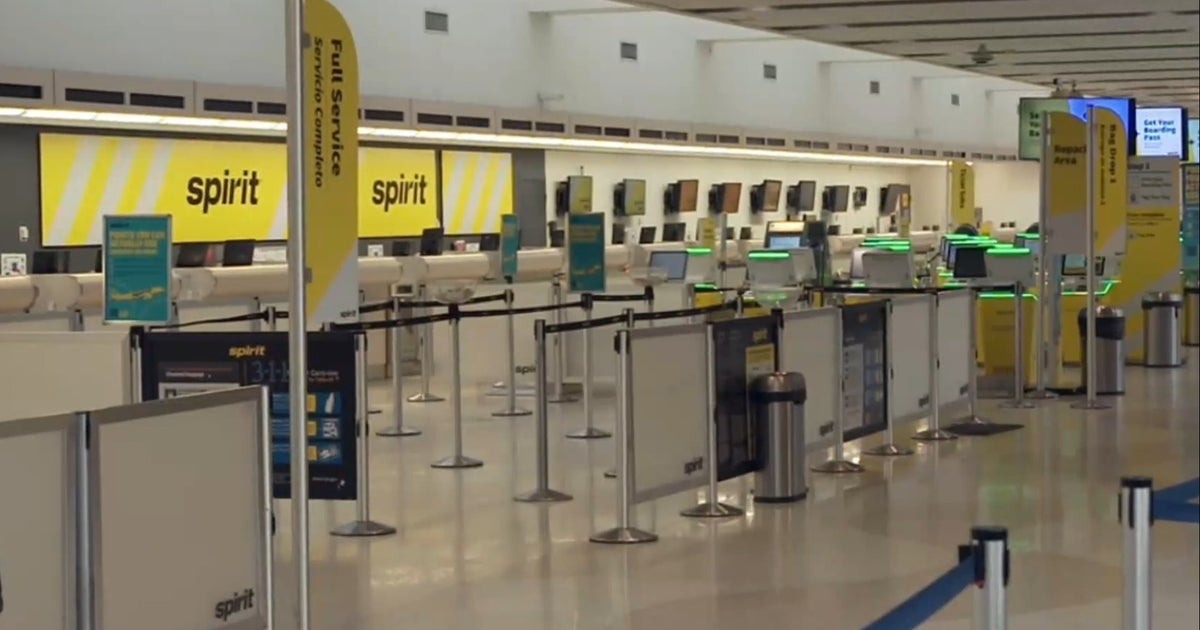
Spirit Airlines' sudden collapse has triggered hundreds of contract-worker layoffs across Florida, including 120 wheelchair and baggage handlers and 80 cabin cleaners at Fort Lauderdale, 40 ticket and gate agents at Miami, and roughly 200 baggage handlers and cabin cleaners in Orlando. Another nine skycaps and janitors at Miami are at risk, while restaurant workers in Spirit's former Terminal 4 are seeing a sharp drop in tips. The shutdown is also stranding travelers and raising trip costs through higher hotel, car rental, and rebooking expenses.
The first-order loser is obvious: airports and outsourced service vendors with Spirit-heavy exposure will see a mechanical revenue hole, but the bigger second-order effect is labor reallocation. In Florida aviation markets where airport staffing is already tight, displaced ramp, wheelchair, and cleaning workers should be absorbed quickly by legacy carriers, ground handlers, and concession operators, compressing wage inflation only temporarily before overtime and retention costs reappear elsewhere. That means the economic damage is concentrated in the near term, but the competitive spillover is more about who can convert stranded capacity into share without operational disruption.
The more important market implication is the demand signal for ultra-low-cost travel. Spirit’s failure does not mean budget travelers disappear; it means fare-sensitive passengers will be rebatched into nearby substitutes with better balance sheets and ancillary revenue models, likely benefitting the strongest low-cost and leisure carriers first. Expect the first 30-60 days to feature irregular operations, stranded passengers, and fare dislocations, but the 3-6 month window should favor airlines that can capture displaced volume while keeping unit costs under control.
The contrarian read is that the collapse may be less bearish for the airline sector than it looks, because it removes the most aggressive price competition from some Florida markets. That can lift realized fares and ancillary attach rates for survivors, especially on short-haul leisure routes. The real risk is a broader consumer retrenchment: if higher travel disruption and higher replacement fares persist into summer, booking windows shorten and discretionary trips get postponed, which would hit hotels, rental cars, and airport retail with a lag.
AI-powered research, real-time alerts, and portfolio analytics for institutional investors.
Request DemoOverall Sentiment
strongly negative
Sentiment Score
-0.78
