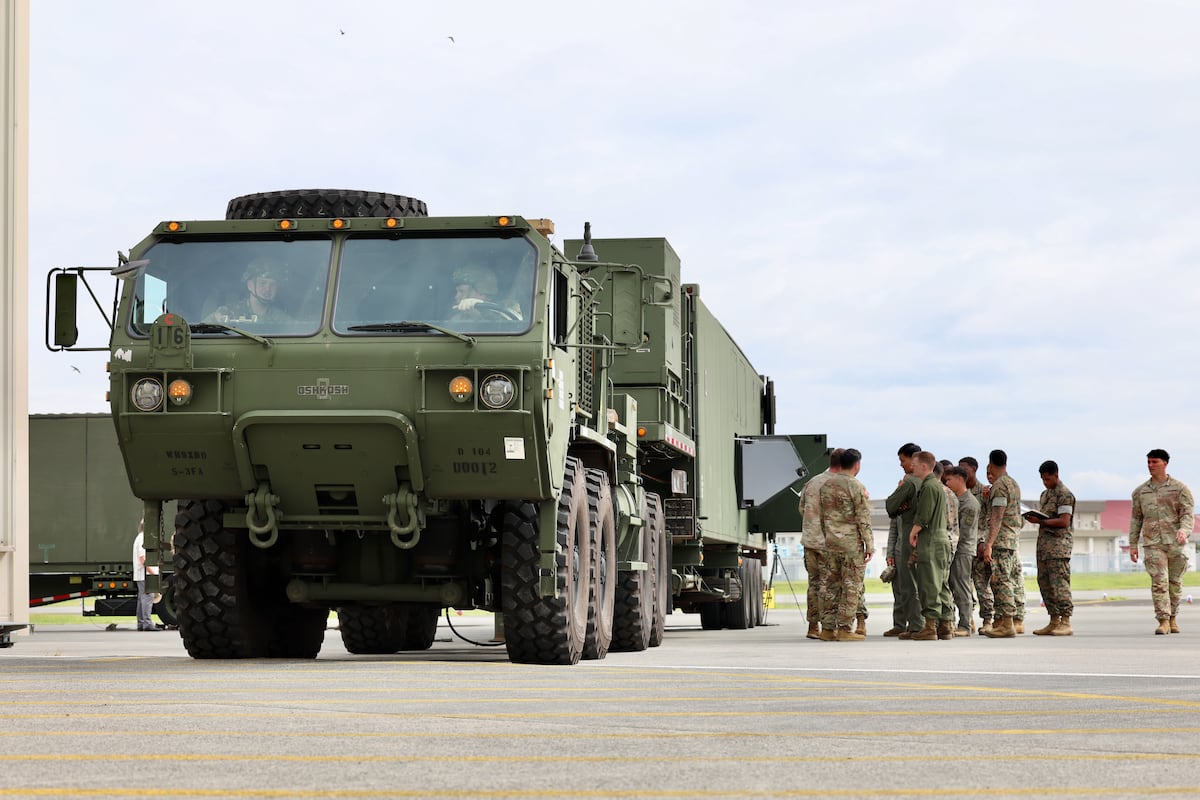
Germany says the planned U.S. Typhon deployment has been effectively shelved, reopening a long-range strike capability gap that Berlin had expected to bridge temporarily. Defense Minister Boris Pistorius said there is still no solution, while Germany’s response now rests on three tracks: modernizing Taurus missiles and Taurus Neo, pursuing Typhon via a U.S. request, and advancing the ELSA European program beyond 2,000 km range. The uncertainty follows reports that the Trump administration may withdraw about 5,000 U.S. troops from Germany, underscoring reduced confidence in U.S. support.
This is less about one missile system and more about Europe being forced to price a much slower path to strategic autonomy. The market implication is a higher probability that defense budgets stay elevated for longer, but the mix shifts toward procurement that can be fielded now: launchers, propulsion, seekers, command-and-control, hardened comms, and munitions inventory rather than long-dated moonshot R&D. That favors companies with exportable, production-ready subsystems and capacity that can be ramped without waiting for a treaty-level policy breakthrough.
The second-order effect is that Germany’s need to bridge the gap becomes a forcing function for broader European procurement fragmentation. If Washington is less reliable, Berlin will likely spread spending across domestic and European vendors to preserve optionality, which is good for a wider supplier base but bad for single-source U.S. platforms that assumed a near-term Germany order. The timeline matters: the tactical gap is immediate, while true European long-range strike capability is a multi-year industrial build, so the funding effect should persist through the next budget cycle even if headlines fade.
The biggest underappreciated risk is not that Europe spends less, but that it spends less efficiently and with more duplication, delaying operating capability by 2-4 years. That creates persistent demand for interim systems, stockpile replenishment, and integration software, and it raises the value of prime contractors that can bundle training, sustainment, and upgrades. A reversal would require either a renewed U.S.-Germany accommodation or a fast political decision to accelerate an off-the-shelf purchase; absent that, the gap becomes a durable justification for higher defense outlays.
AI-powered research, real-time alerts, and portfolio analytics for institutional investors.
Request DemoOverall Sentiment
moderately negative
Sentiment Score
-0.35
Contrarian view: the immediate “loss” to U.S. defense names may be overdone because the article actually increases the probability of larger allied budgets, not smaller ones. What changes is procurement geography and timing, not the structural demand signal. The better trade is not a blanket short U.S. defense basket, but a relative-value tilt toward European primes with near-term delivery visibility versus U.S. names exposed to delayed continental basing decisions.
