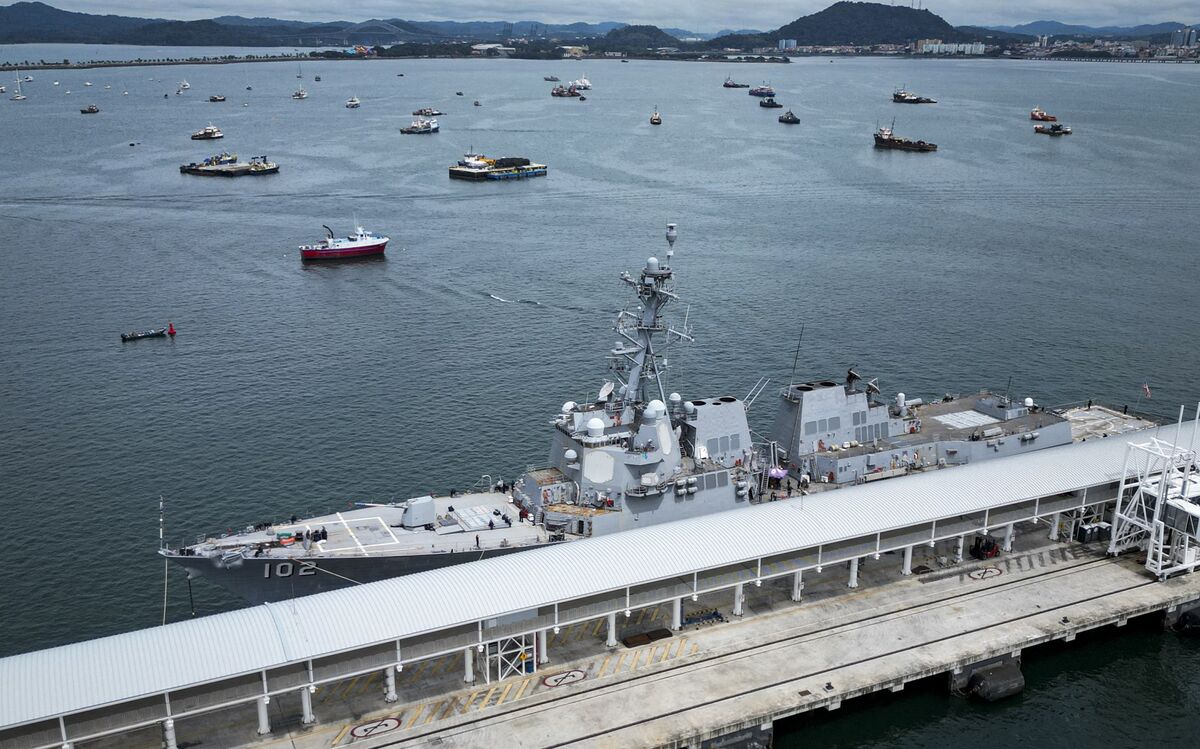
The US has significantly escalated its "maximum pressure" campaign against Venezuela, deploying warships, aircraft, and troops to the southern Caribbean, ostensibly to counter drug trafficking. This intensified naval presence, which recently included a strike on a vessel from Venezuela, aligns with the Trump administration's labeling of President Nicolás Maduro as a "narco-terrorist" and its $50 million bounty for his arrest, signaling a deepening of efforts to destabilize the regime following prior sanctions and diplomatic isolation.
The United States has materially escalated its "maximum pressure" campaign against Venezuela, transitioning from economic and diplomatic measures to direct military posturing. The deployment of warships, aircraft, and troops to the southern Caribbean under the stated objective of countering drug trafficking represents a significant increase in geopolitical tension. This action is reinforced by the Trump administration's explicit labeling of President Nicolás Maduro as a "narco-terrorist," underscored by a $50 million bounty, and a recent military strike on a vessel that reportedly killed 11 individuals. This hawkish development introduces a tangible risk of military conflict in a key energy-producing region, moving beyond the previous strategy of sanctions and isolation. The move signals a new, more volatile phase of US-Venezuela relations, creating significant uncertainty for regional stability and assets with exposure to the nation or its immediate maritime vicinity.
AI-powered research, real-time alerts, and portfolio analytics for institutional investors.
Request DemoOverall Sentiment
moderately negative
Sentiment Score
-0.30
