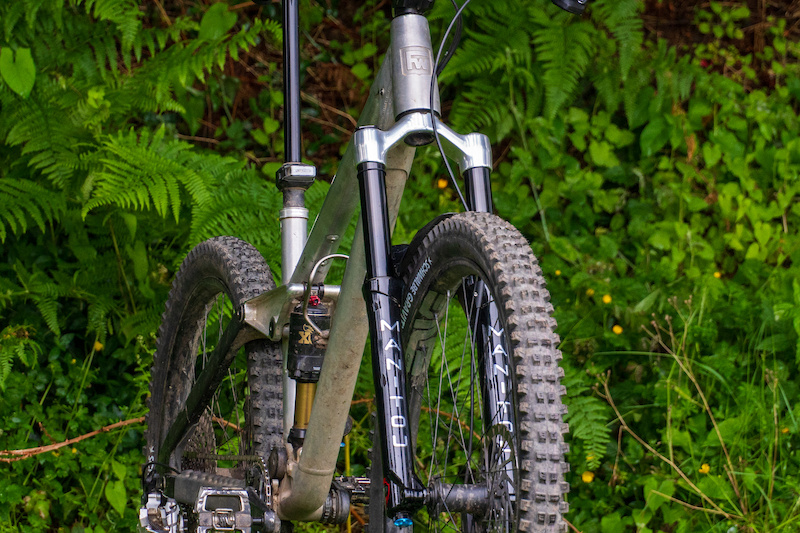
Manitou unveiled the new Mezzer fork lineup, including the Mezzer Pro and Mezzer LT, with 37mm stanchions, revised chassis designs, a new air spring, upgraded MC2-Pro-X damper, and MSRP set at $1,199. The update emphasizes improved small-bump sensitivity, tunability, and chassis stiffness, with lower-priced Expert and Comp trims also added. The article is primarily a product refresh and performance review, so broad market impact should be limited.
This is a classic quality-upgrade launch, not just a spec refresh: Manitou is widening the fork’s setup envelope while targeting two distinct end-markets, short-travel trail bikes and heavier long-travel/eMTB platforms. That should improve sell-through at specialty retail because dealers can now steer customers into clearer use-cases instead of forcing one halo product to fit multiple bike categories. The real second-order benefit is tighter inventory efficiency: one common architecture with differentiated trims lowers SKU complexity versus maintaining separate product families, which matters in a category where margin is usually lost in support, not in headline pricing.
The most interesting competitive angle is that Manitou is not trying to win on absolute stiffness alone; it is building a feel-led product with unusually high adjustability and a premium tactile story. That puts pressure on Fox and SRAM/RockShox at the margin, especially in the $1,000-plus segment where consumers are increasingly willing to pay for performance differentiation but still demand reliability and easy setup. If Manitou can prove durability on the revised chassis and seal stack, the product could gain share in aftermarket and OEM spec on value-oriented premium builds, where buyers want near-flagship performance without the usual brand tax.
The risk is that the launch overpromises on sensitivity while introducing enough mechanical complexity to create service friction. The new spring/damper architecture improves tuning latitude, but that also raises the probability of user error, warranty noise, and mixed reviews if setup isn’t well-documented. The key catalyst window is the next 1-2 quarters of field durability feedback: if early adopters surface creaking, top-out, or bushing issues, the premium narrative can unwind quickly; if not, this could expand into a meaningful brand re-rating over 6-12 months.
Consensus may be underestimating how much a successful product reset can help a niche component brand in a soft bike-demand environment. When unit volumes are weak, buyers concentrate around products that reduce friction for dealers and riders; a fork that is easier to dial in and more clearly segmented by use-case can outperform on mix even if overall industry demand remains flat. The move is less about a category-wide boom and more about Manitou capturing a few points of share from incumbents whose products feel incremental rather than genuinely differentiated.
AI-powered research, real-time alerts, and portfolio analytics for institutional investors.
Request DemoOverall Sentiment
mildly positive
Sentiment Score
0.32
