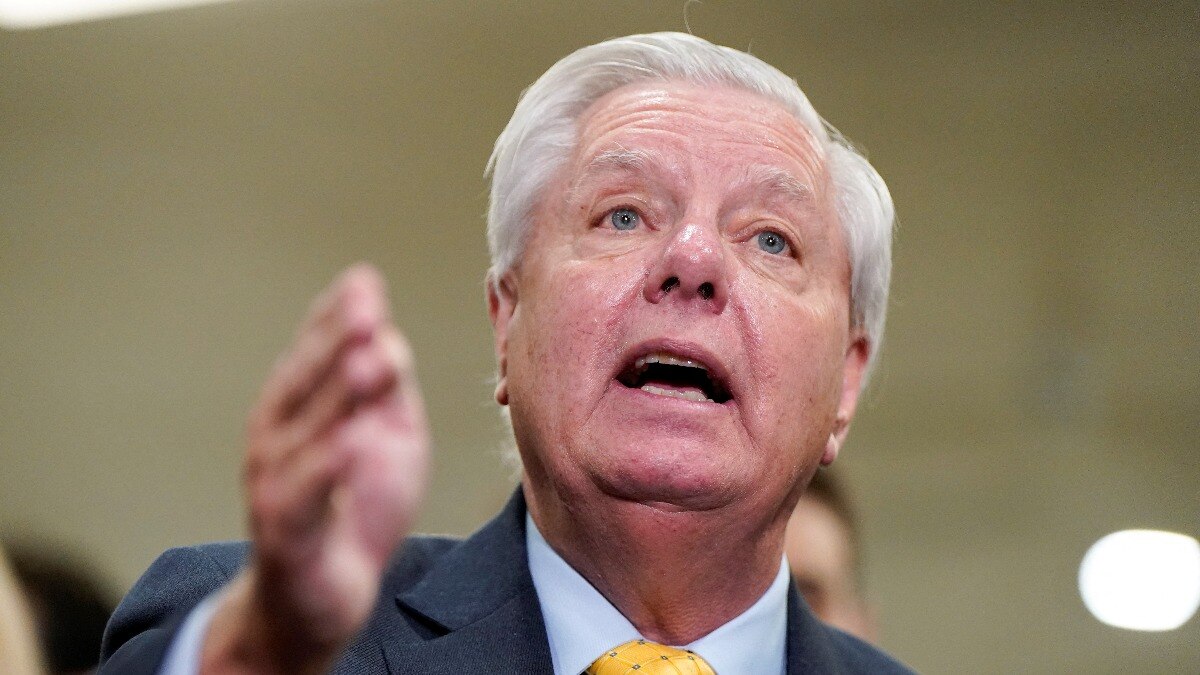
The article centers on Lindsey Graham’s claim that a Saudi-Israel normalization under the Abraham Accords could reshape Middle East geopolitics and end the Arab-Israeli conflict, while also elevating Trump’s diplomatic legacy. It also highlights Pakistan’s rejection of joining the Accords and Graham’s criticism of Islamabad’s role as a mediator in US-Iran talks, amid allegations that Iranian military aircraft were sheltered on Pakistani air bases. The piece is politically charged and geopolitically relevant, but it does not provide a direct market catalyst or concrete economic data.
The market significance is not the rhetoric around a prize rename; it is the renewed coupling of Saudi normalization, U.S. election signaling, and Iran containment into a single geopolitical trade. If Riyadh even modestly advances toward public deconfliction with Israel, the beneficiaries are less the obvious defense primes and more the regional risk-premium compressions across airlines, hotels, banks, and sovereign spreads in the Gulf and Levant. The second-order effect is a potential re-rating of “stable corridor” assets—projects and cash flows that were previously discounted for conflict probability rather than fundamental execution.
The biggest tail risk is a failed or delayed normalization push being interpreted as a diplomatic setback for Trump-era leverage, which could harden anti-normalization positions in Saudi domestic politics and among key constituencies in Pakistan and other Muslim-majority states. That would push the timeline from weeks into quarters, and any market enthusiasm would fade quickly if there is visible Iranian escalation or evidence that Pakistan’s mediation role is politically toxic. In that scenario, the near-term winner is volatility itself: defense spending expectations rise, but broader EM risk assets tied to Gulf capital flows would underperform as investors reprice the odds of a more confrontational Middle East policy mix.
The contrarian miss is that normalization does not need to be complete to matter; even partial security or economic coordination can lower the geopolitical discount rate on Saudi-linked assets. Markets often wait for headline ceremony, but the real monetization begins when counterparties start underwriting projects, air routes, and payment rails as if the region is becoming more investable. That means the trade may be better expressed through relative value in regional quality rather than outright directional bets on headlines.
For now, the setup is asymmetric because the political hurdle is high but the asset repricing from incremental progress could be immediate. The key catalyst window is the next 1-3 months, when U.S. election messaging, Saudi signaling, and any Iran-related incident will either validate or kill the narrative. Watch for a shift from symbolic language to concrete security guarantees or civilian economic MOUs; that is the point where the market will stop treating this as noise.
AI-powered research, real-time alerts, and portfolio analytics for institutional investors.
Request DemoOverall Sentiment
neutral
Sentiment Score
0.00
