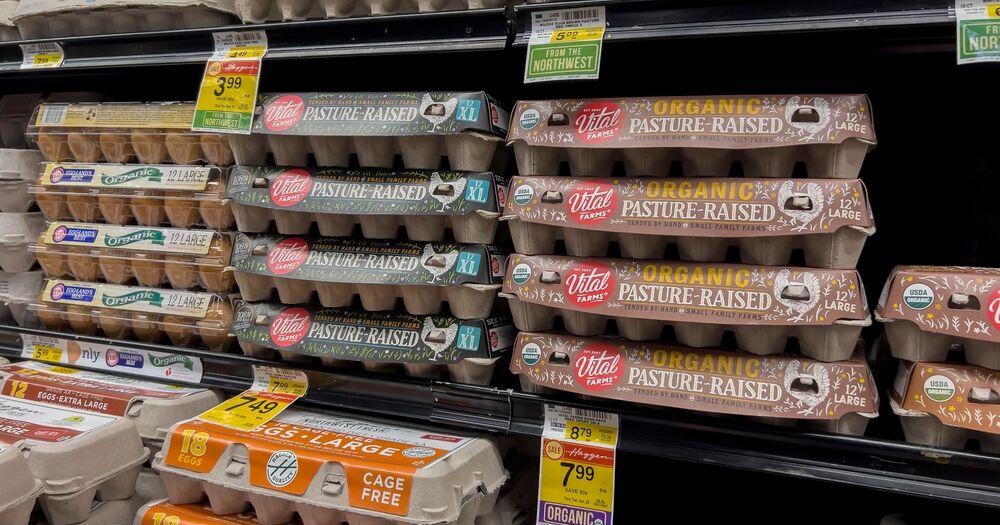
Egg prices are collapsing as HPAI detections fall sharply, with retail shell egg prices in May down 62% year over year and producer prices down 93% to just 25 cents per dozen. That relief for consumers is a margin squeeze for farmers, since April conventional egg production costs were about 79 cents per dozen, leaving producers roughly 44 cents below cost. The article warns that prolonged below-breakeven pricing could force smaller farms out and accelerate consolidation in the egg industry.
The immediate read-through is deflationary for downstream food inflation but ugly for the upstream economics of egg production. The deeper issue is that the current price reset is likely to force a supply-clearing event: when variable margins go negative and there is no meaningful hedging layer, smaller operators tend to exit first, which can tighten future supply faster than headline production data implies. That creates a classic “good headline, bad tail” setup where consumers enjoy lower prices now, but the industry’s capital structure deteriorates until a later shortage re-prices the market.
Second-order effects matter more than the current spot collapse. Feed, packaging, logistics, and barn equipment vendors may see delayed demand as producers defer maintenance and expansion, and integrators with scale can use the downturn to consolidate contracting relationships at better terms. The largest operators are positioned to survive because they can absorb the volatility, but their long-term advantage may be more about acquisition optionality than near-term margin expansion.
The consensus likely underestimates how quickly the market can re-tighten if HPAI re-accelerates into fall migration season. The current disinflationary impulse is a months-long story, not a year-long one: once the weakest producers cull or idle flocks, supply elasticity falls sharply, so the next supply shock can produce a much sharper rebound than the recent collapse suggests. In other words, this is a mean-reversion setup with a volatile path, not a structural normalization.
For public markets, the cleanest expression is not a commodity long but a relative-value trade between beneficiaries of lower food input costs and exposed agricultural producers. Retail and restaurant names with high egg intensity should enjoy a short-term input cost tailwind, while any pure-play animal protein or farm-input supplier with weak end-demand could face a slower top line and inventory overhang. The contrarian risk is that the market treats current low prices as durable, when the industry’s lack of risk management tools makes the next swing higher potentially violent.
AI-powered research, real-time alerts, and portfolio analytics for institutional investors.
Request DemoOverall Sentiment
moderately negative
Sentiment Score
-0.35
