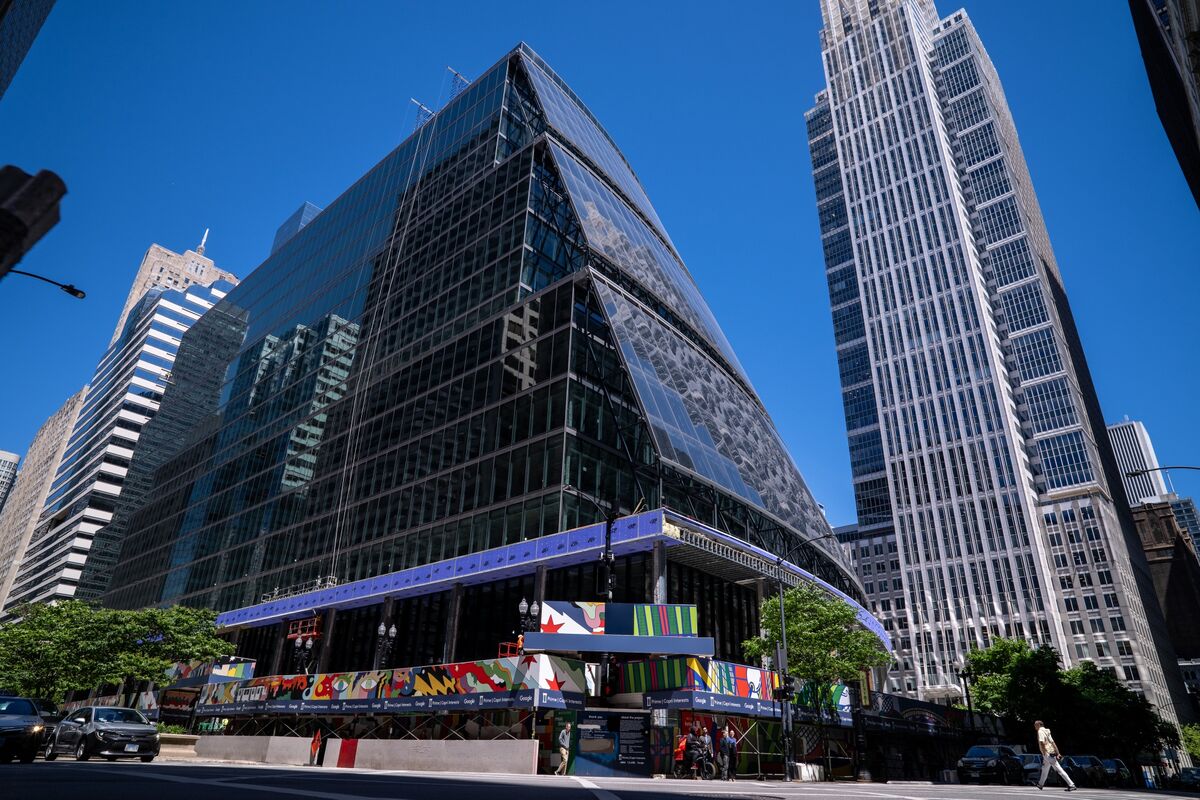
Google's renovation of the James R. Thompson Center is helping revive Chicago's LaSalle Corridor, with startups and small companies snapping up space in the once-neglected downtown district. Alphabet's planned move of Google workers into the building next year is acting as a catalyst for local real estate demand and neighborhood activity. The article suggests a gradual, positive spillover for commercial property occupancy rather than a material market-moving event.
This is less a single-asset story than a balance-sheet reset for a submarket that had been priced as obsolete. The first-order win is obvious for nearby office owners and small-format retail, but the more interesting second-order effect is on credit: a credible anchor tenant can compress cap rates for adjacent assets faster than rents rise, which tends to re-rate local REIT debt and private lending before equity fundamentals show up. That matters because the LaSalle Corridor has been trading like a structurally impaired district; even a modest occupancy inflection can create outsized NAV revisions from a low base.
The more durable beneficiary is the broader urban office conversion/renovation ecosystem. If this lease-up proves sticky, it supports a template where legacy downtown stock becomes a hybrid of tech, boutique office, and service retail rather than pure government/financial back-office space. The losers are suburban office parks and commodity CBD landlords that rely on a single commuter profile; they face a more difficult tenant-mix competition if downtown starts offering better amenity density and stronger “network effects” from tech clustering.
The key risk is timing mismatch: headlines can move quickly, but actual move-ins, supplier buildout, and neighborhood rent translation are a 12-24 month process. Chicago-specific macro weakness, construction-cost inflation, or any softening in tech hiring could delay the virtuous cycle. The contrarian point is that the market may be underestimating how little occupancy is needed to change perception in a distressed district—at low vacancy confidence levels, one marquee anchor can catalyze financing and leasing well beyond its own square footage.
AI-powered research, real-time alerts, and portfolio analytics for institutional investors.
Overall Sentiment
mildly positive
Sentiment Score
0.35
Ticker Sentiment
