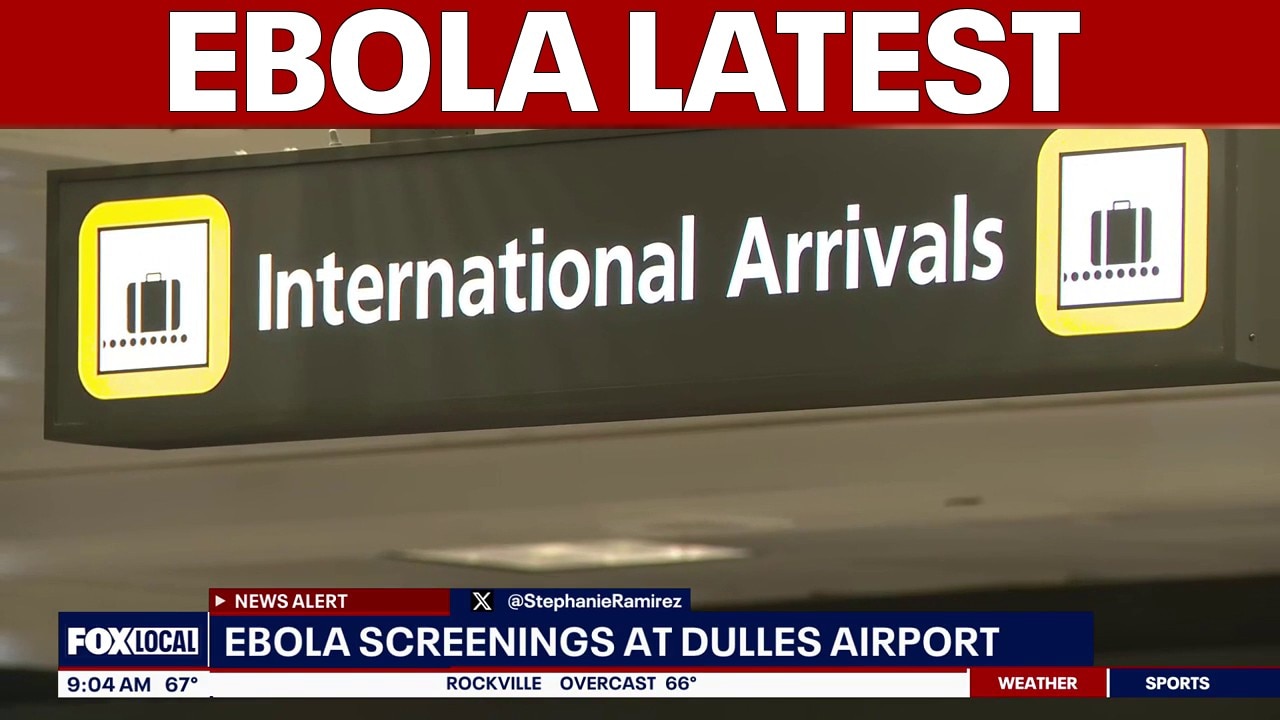
The Department of Homeland Security is requiring all U.S.-bound flights carrying travelers who were in the Democratic Republic of the Congo, Uganda or South Sudan within the past 21 days to land only at Washington–Dulles International Airport, effective for flights departing after 11:59 p.m. on May 20, 2026. The measure follows a rapidly spreading Ebola outbreak, with 51 confirmed cases in Congo, 2 in Uganda, 139 suspected deaths and almost 600 suspected cases reported. Screening, temperature checks and contact tracing will be used as needed, indicating a precautionary but potentially disruptive public-health response.
This is a classic short-horizon risk-off shock with asymmetric second-order effects in travel, not a broad macro growth event. The immediate economic impact is concentrated in airlines, airport operations, and cross-border logistics linked to the affected regions; the larger market signal is that authorities are willing to reintroduce visible containment measures, which can quickly reprice headline-sensitive sectors even if base-case transmission risk remains low.
The most vulnerable names are the ones with the highest exposure to international schedule complexity and the lowest tolerance for friction: carriers with global networks, regional airport service providers, and any business relying on same-day inbound passenger flows. The less obvious beneficiary is the large-hub operator with incremental traffic concentration, because rerouting can temporarily lift utilization, but that benefit is likely offset by screening bottlenecks and lower throughput per gate. Secondary effects can show up in customs/ground handling, hotel demand near the hub, and cargo timing if belly capacity gets disrupted.
The key catalyst window is days to a few weeks: if there are no new cases outside the core geography, the move will be dismissed as precautionary and volatility should mean-revert. The tail risk is not direct US spread but policy escalation—additional routing restrictions, medical screening requirements at more airports, or corporate travel pauses if media coverage widens. That creates a path for temporary multiple compression in travel names even before any true demand damage appears.
Contrarian view: the market may overestimate demand destruction and underestimate operational congestion. A single-airport funnel can create measurable delay costs without changing ultimate travel volumes, so the better expression is often relative-value rather than outright sector shorts. If containment remains localized, the opportunity is to fade the initial panic in the most oversold travel proxies while avoiding names with genuine balance-sheet or network fragility.
AI-powered research, real-time alerts, and portfolio analytics for institutional investors.
Request DemoOverall Sentiment
moderately negative
Sentiment Score
-0.40
