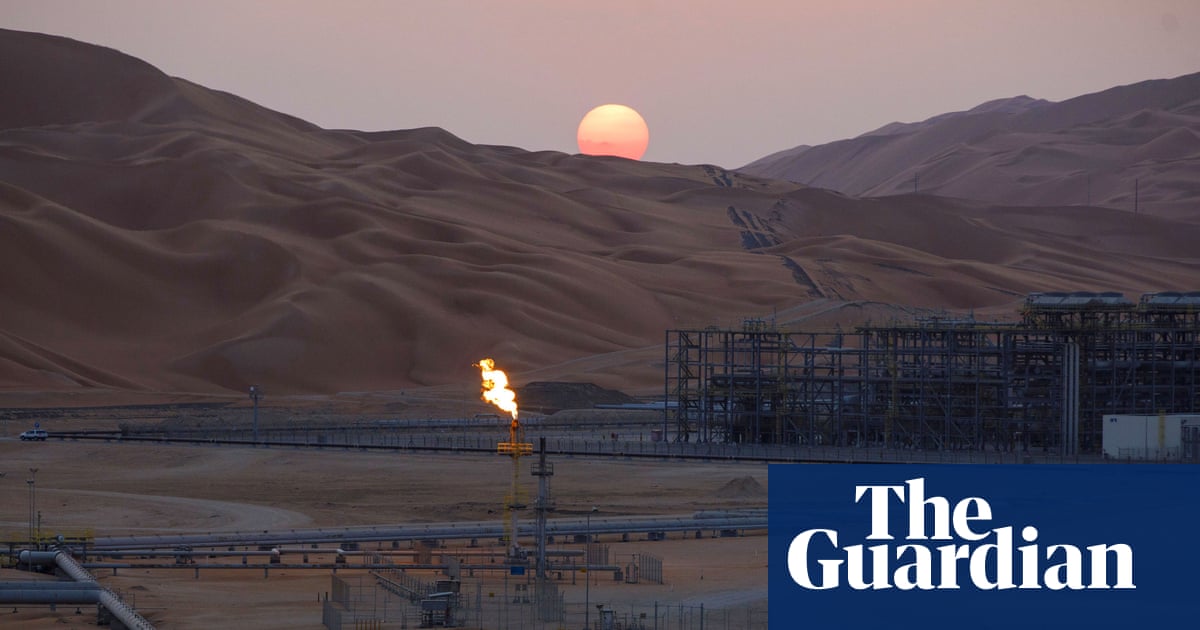
Saudi Aramco reported first-quarter profits of $33.6bn, up 26% year over year, with revenue rising nearly 7% to $115.5bn despite conflict-related disruptions. Its east-west pipeline operated at maximum capacity of 7m barrels per day, offsetting halted Gulf exports and helping support oil supply amid the closure of the Strait of Hormuz, where Brent crude is around $100 a barrel. Aramco also kept its quarterly dividend at $21.9bn, underscoring its role in Saudi fiscal funding.
The key second-order effect is that Saudi supply resilience is now functioning as a geopolitical option value, not just a logistics workaround. Once a constrained export corridor becomes the marginal source of barrels, Aramco can monetize scarcity while also becoming the de facto “shock absorber” for Asian refiners that cannot fully replace Middle East crude in the near term. That supports Saudi fiscal flexibility, but it also increases the probability that any partial de-escalation is greeted by a fast retracement in crude rather than a slow normalization, because the market has been forced into an emergency inventory draw cycle.
The bigger winner is not just upstream producers; it is the entire Red Sea / Mediterranean routing stack relative to Hormuz-dependent flows. Freight, marine insurance, storage, and refinery feedstock optionality become more valuable as counterparties pay up for reliability, while refiners with lighter crude flexibility gain relative to plants optimized for Gulf grades. Conversely, import-dependent industrials and airlines face a sharper near-term margin squeeze, but the larger loser may be policy credibility: if markets learn that a single pipeline can partially offset a Hormuz shutdown, the premium embedded in geopolitics may become more binary and headline-driven.
The contrarian risk is that the current oil spike is too complacent about demand destruction and diplomatic response. At these price levels, the pain threshold for Asian buyers and large consuming states rises quickly, which can accelerate strategic stock releases, consumption restraint, and back-channel pressure for a corridor reopening within weeks rather than months. If the route reopens, the unwind could be violent because positioning has likely crowded into the “prolonged outage” narrative; the market could give back a meaningful portion of the move before physical balances fully normalize.
For Saudi Arabia, the dividend signal matters as much as the profit print: maintaining capital returns while geopolitics are elevated effectively tightens the link between oil price volatility and sovereign liquidity. That makes the equity less a pure oil beta instrument and more a funded fiscal proxy with a political floor, which can create a valuation support until investors start pricing in either forced higher capex/security spend or a later production disruption. The next catalyst is not earnings, but whether shipping constraints persist long enough to force refiners and insurers to reprioritize route and inventory architecture for the rest of the year.
AI-powered research, real-time alerts, and portfolio analytics for institutional investors.
Request DemoOverall Sentiment
moderately positive
Sentiment Score
0.45
