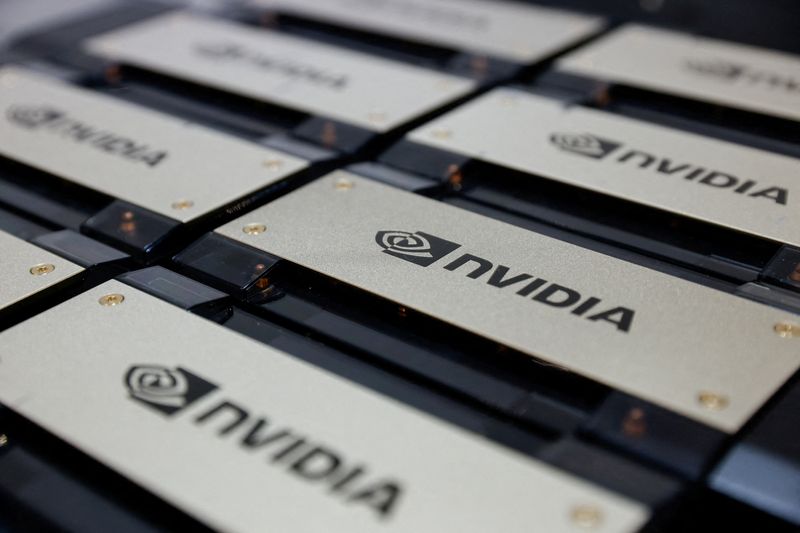
Cantor Fitzgerald raised its IREN price target to $77 from $61 and kept an Overweight rating, citing the $3.4 billion Nvidia AI cloud deal, a partnership with Nvidia, and expansion toward 5 GW of cloud capacity. IREN also added 490 MW in Spain and plans 480 MW commissioned by end-2026 and 1,210 MW by end-2027, but Q3 2026 results were weak with EPS of -$0.30 versus expectations of -$0.22 and revenue of $144.8 million versus $219.87 million expected. The setup is mixed overall: strong strategic demand visibility and asset expansion offset by a material earnings miss.
The market is starting to price IREN less like a “power optionality” story and more like a contracted infrastructure platform, which is the right frame if you believe the company can actually execute on fiber, power, and GPU deployment simultaneously. The valuation rerate is being driven by duration: long-dated AI capacity agreements reduce near-term revenue uncertainty, but the real swing factor is whether management can turn headline contracted demand into cash conversion before capex intensity overwhelms equity value.
Second-order, the biggest beneficiary may be Nvidia’s broader ecosystem rather than IREN alone. Every credible hyperscale-adjacent capacity announcement reinforces GPU scarcity and keeps accelerant demand in place for networking, power delivery, and cooling suppliers, while creating competitive pressure on smaller neoclouds that lack cheap power or a bankable customer roster. Microsoft exposure matters too: it signals that demand is not single-customer dependent, but it also raises the probability of scrutiny on counterparty concentration and delivery milestones over the next 6-12 months.
The key risk is that this becomes a multiple story before it becomes an earnings story. If execution slips on commissioning timelines or if incremental megawatts require materially higher build costs, the market can de-rate the stock quickly because the current setup assumes near-perfect capital allocation and financing access. The mixed operating print suggests the next catalyst is not another partnership headline, but evidence of sustained gross margin expansion and conversion of contracted backlog into operating cash flow.
Consensus may be underestimating how much of the upside is already “borrowed” from future capacity, not current profitability. That creates a fragile setup: strong on newsflow, vulnerable on any delay, and highly sensitive to rising rates or tighter AI infrastructure financing spreads. For NVDA, the trade is more durable because every additional infrastructure partner broadens the addressable deployment base; for IREN, the burden of proof remains on execution.
AI-powered research, real-time alerts, and portfolio analytics for institutional investors.
Request DemoOverall Sentiment
mildly positive
Sentiment Score
0.35
Ticker Sentiment
