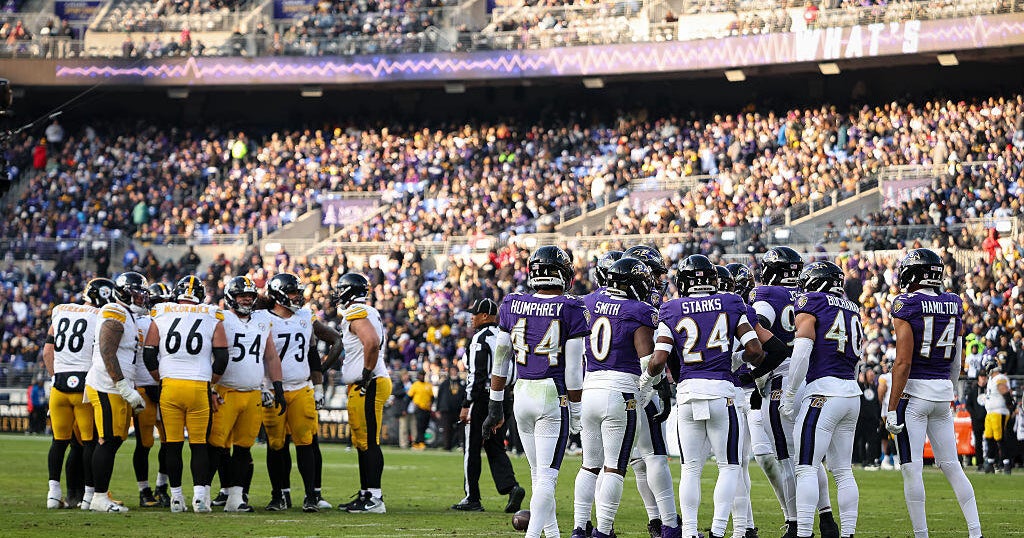
The Pittsburgh Steelers will host the Baltimore Ravens on Sunday Night Football (8:20 p.m.) in Week 18 in a winner-take-all game to decide the AFC North title and which team earns a home playoff game. Pittsburgh is 9-7 after a 13-6 loss to Cleveland, while Baltimore improved to 8-8 with a 41-24 win over Green Bay; the clubs last met on Dec. 7 with the Steelers winning 27-22. Beyond on-field consequences, the outcome determines playoff seeding with attendant short-term revenue and viewership implications for the teams and broadcasters.
Market structure: A high-stakes Sunday Night Football divisional decider materially benefits NBCU/Comcast (CMCSA) and national advertisers via higher live-TV ratings (estimate 20–25M viewers vs typical 16–18M), lifting 30s spot pricing ~10–20% for this game. Sportsbooks (DKNG, PENN, CZR, MGM) see a one-off handle surge (estimated single-game handle $50–150M) and elevated in-play margin; local travel/hospitality gets a micro bump but negligible for large-cap leisure names. Risk assessment: Near-term (days) upside is event-driven; worst-case tail risks include streaming outages, player injury, or punitive ad boycotts which could erase the expected ad premium and create reputational fallout—plan for a 24–72 hour reaction window. Short-term (weeks) could shift subscriber promos to Peacock; long-term structural impact on ad economics is marginal (low single-digit % to Comcast ad revenue) but repeats of marquee games sustain linear TV pricing power versus pure streaming. Trade implications: Tactical, event-driven trades work best: buy limited-duration exposure to CMCSA and US-listed sportsbooks; use defined-risk options to capture a 1–3% expected post-game move while capping downside. Cross-asset impact is tiny for bonds/FX; options IV on DKNG/PENN may rise pre-game—favor buying nearer-dated call spreads rather than naked calls to control vega. Contrarian angles: Consensus treats this as negligible for broad market—too conservative for media shorts/longs around event windows. Risk is that streaming conversion from Peacock is overestimated; if viewership skews older and linear-only, Peacock subscription lift may be <50k subs, so avoid paying up for long-dated CMCSA exposure. A streaming outage or betting scandal would flip sentiment sharply downward within 48 hours.
AI-powered research, real-time alerts, and portfolio analytics for institutional investors.
Request DemoOverall Sentiment
neutral
Sentiment Score
0.00
