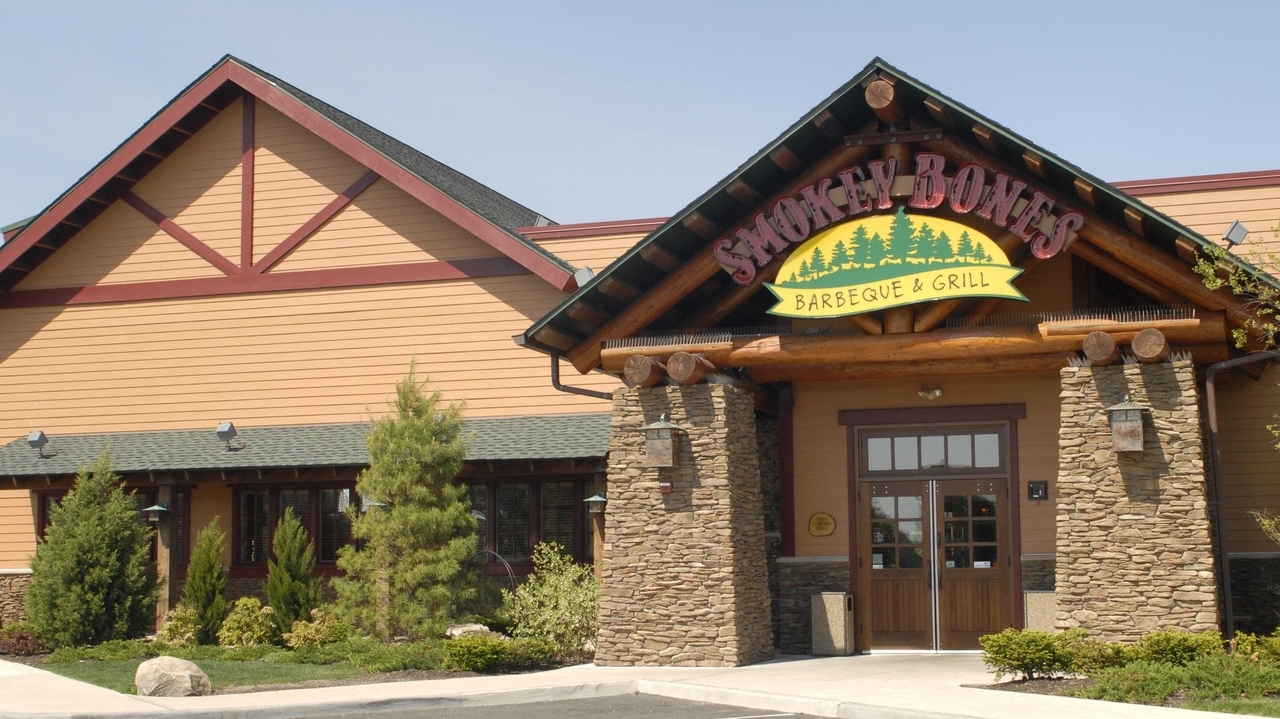
Smokey Bones has permanently closed all 20 remaining locations, including its Lake Ronkonkoma, New York restaurant, just months after parent companies Twin Hospitality Group and FAT Brands filed for Chapter 11 bankruptcy protection. The closures include three New York sites plus locations across Pennsylvania, Ohio, Massachusetts, Virginia, Maryland, North Carolina and Rhode Island. The news underscores continued restructuring pressure and operational weakness at the restaurant chain following its 2023 acquisition by FAT Brands.
The immediate loser is not the shuttered brand itself but the residual asset value inside FAT’s capital structure. A full chain-level wind-down tends to destroy the option value that bankruptcy usually preserves: vendor confidence collapses, landlords re-trade hard, and the remaining brands inherit higher financing costs because the market starts pricing in broader cross-default and governance risk rather than isolated underperformance. That dynamic is especially toxic for a levered roll-up, where each brand failure increases the discount rate applied to the rest of the portfolio.
Second-order effects are likely to show up in three places over the next 1-2 quarters: foodservice distributors lose a small but meaningful low-margin customer base, landlords face a wave of vacancy in secondary trade areas, and local competitors gain share from displaced traffic without needing to cut price aggressively. The bigger read-through is to the casual-dining category’s ability to pass through labor and commodity inflation; when a concept closes rather than re-prices, it signals demand elasticity has already broken before the market sees it in same-store sales.
The market may still be underestimating equity dilution and recovery haircut risk at the parent level. For the common-equity and subordinated debt stack, the real catalyst is the upcoming court hearing: if the process reveals a broader store rationalization plan or financing amendment, that usually precedes an accelerated restructuring timeline rather than a clean reorganized exit. The bearish setup persists for months, not days, because brand attrition tends to reappear in landlord concessions, supplier terms, and media coverage long after the initial closure headline fades.
The contrarian angle is that the cleanest short may not be the operating parent if it is already deeply distressed; instead, the mispricing could be in assuming the damage stops there. Portfolio contagion and reputational spillovers often compress valuation across the entire sponsor complex, creating relative-value opportunities versus higher-quality restaurant operators with similar concept exposure but stronger balance sheets.
AI-powered research, real-time alerts, and portfolio analytics for institutional investors.
Request DemoOverall Sentiment
strongly negative
Sentiment Score
-0.82
Ticker Sentiment
