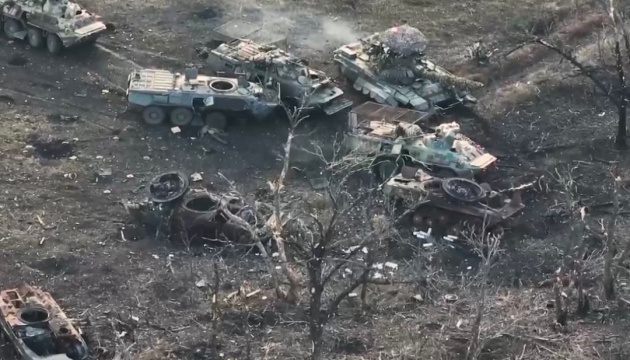
British intelligence estimates Russian military casualties in Ukraine at nearly 500,000, underscoring the scale and persistence of the war. Anne Keast-Butler also said Russia is escalating hybrid attacks against the UK and Europe, including cyberattacks, sabotage attempts, and smuggling Western technology. The article adds that Ukraine sees a window of several months to seize battlefield initiative and improve its position for peace talks.
The important market implication is not the casualty figure itself, but the signal that the conflict is intensifying into a prolonged attritional and asymmetric campaign. That combination usually supports sustained demand for defense electronics, air defense, EW, drones, munitions, and critical-infrastructure security rather than a one-off spike in traditional land-war exposure. It also raises the probability of repeated disruption events in Europe that keep risk premia elevated in transportation, logistics, and industrial supply chains.
A more underappreciated second-order effect is the widening of the “security tax” on cross-border commerce: more customs scrutiny, tighter export enforcement, and higher insurance/route-friction costs for firms moving dual-use electronics, industrial components, and parcel freight. That should incrementally benefit firms with strong screening, traceability, and cyber-defense capabilities, while pressuring operators exposed to package networks, air cargo, and just-in-time fulfillment if governments respond with tighter inspections or retaliatory cyber measures.
The cyber/sabotage emphasis matters because it broadens the battlefield beyond Ukraine and raises tail risk for Western critical infrastructure. Markets often discount this as background noise, but a single visible incident in aviation, parcels, ports, or energy infrastructure can quickly re-rate sector beta for weeks; the nearer-term catalyst window is days-to-months, not years. The main reversal mechanism is a credible ceasefire path or a sharp drop in cross-border attacks, but absent that, the base case is a grind higher in defense and cyber spending with intermittent logistics shocks.
Consensus likely underestimates how durable the ancillary spend cycle is. Even if battlefield momentum changes, Western governments now have political cover to accelerate procurement, hardening, and intelligence budgets, which is structurally positive for selected defense and cyber names. The trade is less about “war winners” broadly and more about identifying vendors with recurring revenue, low dependence on U.S. budget timing, and direct exposure to infrastructure protection.
AI-powered research, real-time alerts, and portfolio analytics for institutional investors.
Request DemoOverall Sentiment
mildly negative
Sentiment Score
-0.25
