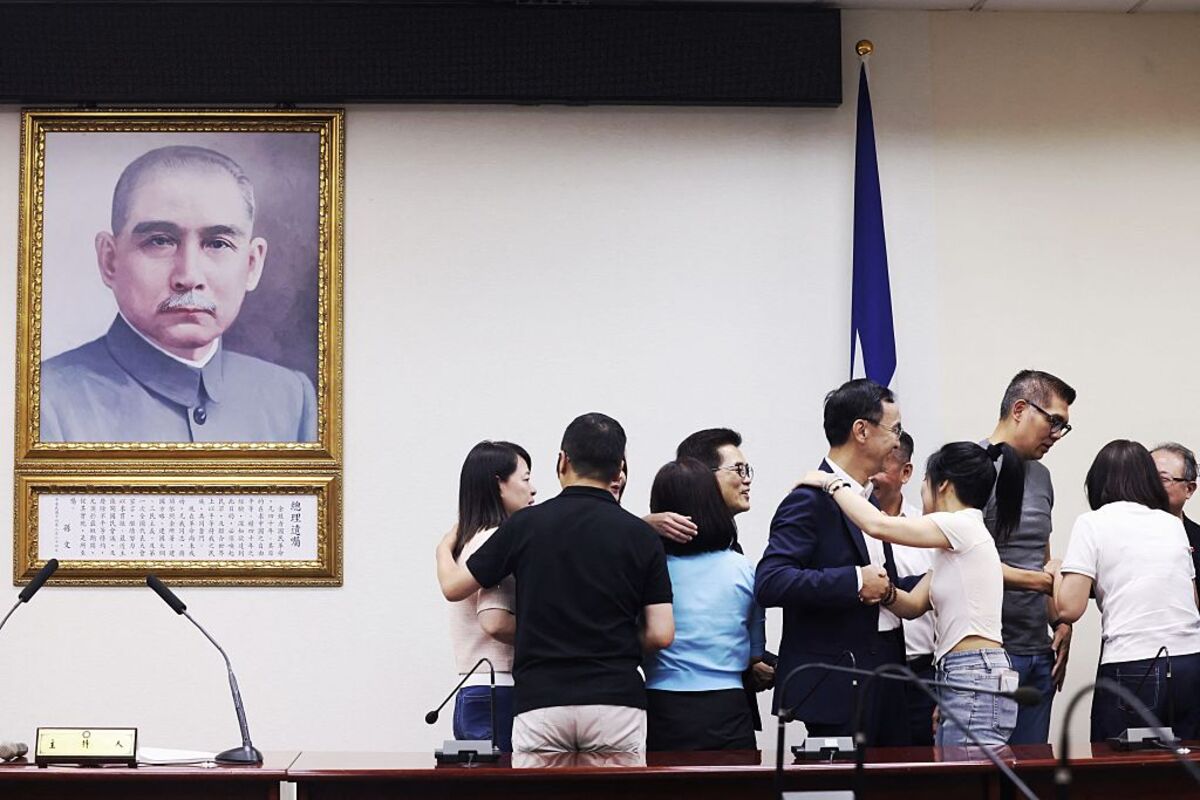
Taiwan's failed recall campaign against Kuomintang (KMT) lawmakers, with all 24 retaining their seats, significantly undermines President Lai Ching-te's Democratic Progressive Party (DPP) and its legislative majority ambitions. This result strengthens Beijing's and the KMT's leverage against Lai, potentially deepening political deadlock and hindering Taiwan's ability to bolster its defenses against China, a critical geopolitical consideration for institutional investors.
The failure of a recall campaign against 24 Kuomintang (KMT) lawmakers in Taiwan represents a significant political setback for President Lai Ching-te's Democratic Progressive Party (DPP). This outcome, which defied analyst expectations, solidifies the KMT's opposition power and prevents the DPP from pursuing a parliamentary majority. The key consequence is a likely deepening of political deadlock, which provides both the domestic opposition and Beijing with increased leverage against President Lai's agenda. For investors, the most critical implication is the potential for this gridlock to hinder the government's ability to pass legislation aimed at strengthening Taiwan's defenses. This development elevates geopolitical uncertainty in the region, consistent with the moderately negative sentiment signal, as legislative paralysis on national security matters could be interpreted as a structural vulnerability in Taiwan's posture towards China.
AI-powered research, real-time alerts, and portfolio analytics for institutional investors.
Request DemoOverall Sentiment
moderately negative
Sentiment Score
-0.50
