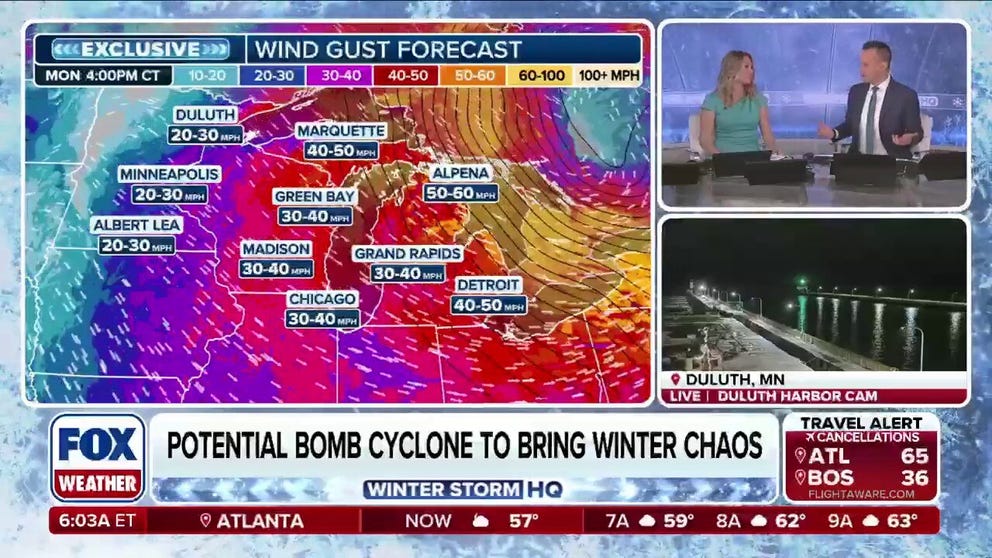
A fast-moving winter storm will track from the Upper Midwest into the Northeast beginning Sunday, bringing blizzard warnings in Minnesota and Wisconsin, general snowfall of 5–8 inches from Minneapolis into Michigan and localized lake-effect totals up to 18 inches; portions of Western and Upstate New York could exceed one foot through Tuesday. The system also poses a flash-flood risk where 1–2 inches of rain fall over existing snowpack (notably Chicago to Cleveland and Buffalo), a Level 1 severe wind threat from northern Indiana into Missouri with potential isolated tornadoes, widespread travel disruptions and possible power outages, and icing up to 0.10" in New England — outcomes that could pressure regional utilities, airlines, and logistics operations and lift short-term heating/energy demand.
Market structure: The storm mechanically benefits natural gas suppliers, power generators and home-improvement/retail channels (HD, LOW) via immediate heating demand, generator and repair sales, while hurting airlines (AAL, UAL, DAL), regional ground transport and short-cycle logistics (rail/parcel) from cancellations and flash floods. Pricing power will be temporary — gas and spark spreads can spike 10–40% in a 7–21 day window if temperatures run 10–20°F below normals; retailers capture a concentrated 2–6 week sales lift for weather-related goods. Cross-asset: expect near-term strength in Henry Hub futures and utility forwards, transient widening of insurance equity/credit spreads, modest safe-haven moves into Treasuries and USD volatility on flight-disruption headlines. Risk assessment: Tail risks include prolonged multi-day grid outages or supply-chain interruptions that convert a localized weather event into multi-week economic hits (losses >$1bn for regional carriers or >$500m aggregate insured losses in a state). Immediate (0–7 days) risk is travel and logistics disruption; short-term (weeks) is claims and repairs pressure; long-term (quarters) is capex and resilience spending shifting margins in construction/equipment makers. Hidden dependencies: pipeline basis constraints in the Northeast, local rail/road chokepoints and utility fuel inventories; catalysts include emergency declarations, grid failures or rapid temperature reversals that amplify gas draws. Trade implications: Favor short-dated directional plays — long short-dated NG exposure (call spreads) and protective puts on US airlines for a 2–4 week horizon; add tactical longs in HD/LOW and select utilities (NEE/DUK) to capture demand and power-price tailwinds over 4–12 weeks. Use defined-risk option structures to limit premium decay; consider small insurer hedges (short-dated puts) to protect against surprising aggregated claims. Monitor NWP snowfall maps and NWS temperature anomalies daily; if HDDs beat forecast by >15% for 7 consecutive days, increase gas/utility exposure. Contrarian angles: The market may underprice the Northeast pipeline/basis squeeze — consensus thinks storage and LNG exports mute price moves, but local winter outages can drive regional Henry Hub basis spikes of 30–60% relative to NYMEX. Overreactions are possible in airlines (one-week selloffs) that create re-entry opportunities; historical parallels (Polar Vortex 2014, 2022 storms) show durable goods and infrastructure suppliers can get multi-quarter demand tails as municipalities prioritize resiliency spend. Unintended consequence: outsized repair orders could temporarily lift margins for equipment OEMs (CAT, DE) even if heavy capex cycles lag.
AI-powered research, real-time alerts, and portfolio analytics for institutional investors.
Request DemoOverall Sentiment
moderately negative
Sentiment Score
-0.45
