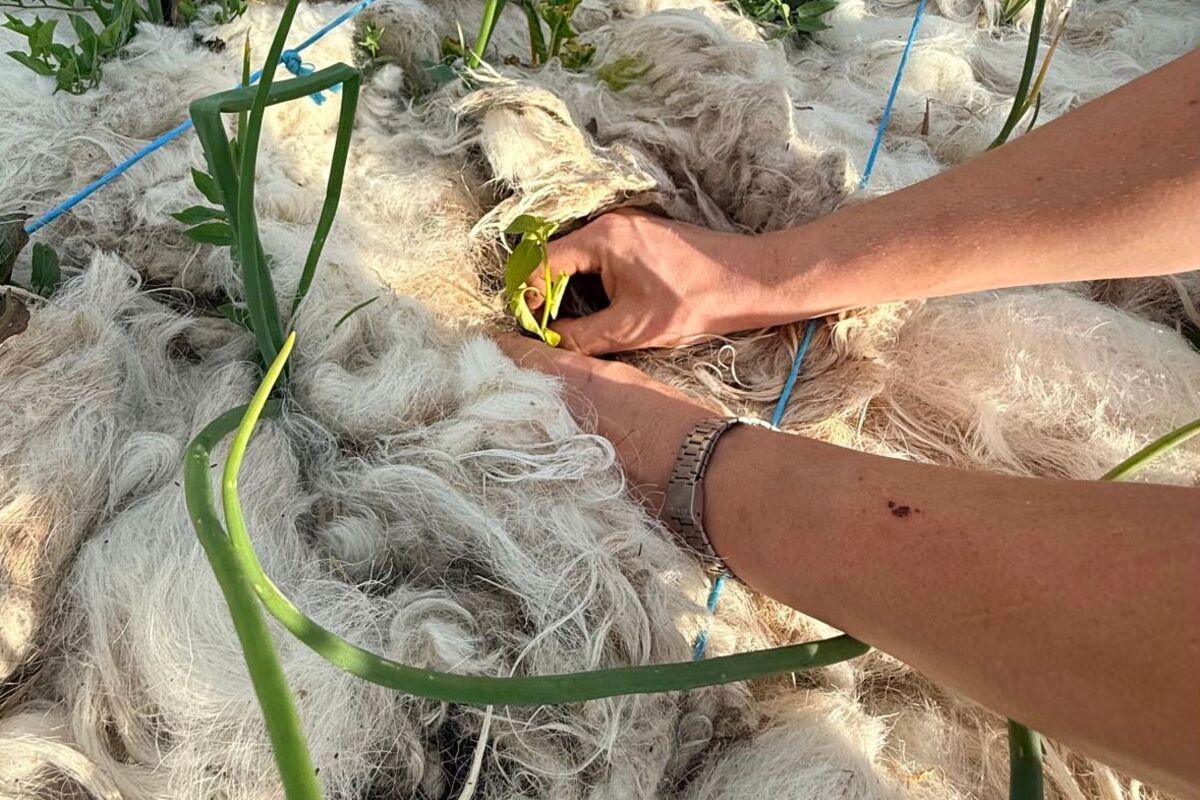
Europe’s heatwave is forcing farmers to adapt with night feeding, vitamins for chickens, wool coverings for vegetables, and misters/fans for dairy barns. The article highlights climate-driven operational stress on food production and near-term supply risk, but does not report a discrete market-moving price shock or policy change. Overall impact is more thematic than immediate, with modestly negative implications for agricultural output and input costs.
The first-order read is higher near-term volatility in fresh produce, dairy, and poultry inflation, but the second-order effect is a widening performance gap between climate-resilient operators and commodity farmers. Growers with capital to deploy shade, irrigation, controlled-environment storage, and animal-cooling systems will preserve output and pricing power, while smaller producers face yield loss, quality downgrades, and higher mortality. That should reinforce consolidation in the ag supply chain as processors and retailers increasingly favor suppliers with dependable delivery over the cheapest spot offer.
The more important market implication is that weather normalization does not fully reverse the damage: heat stress can reduce output quality and fertility for weeks after the temperature spike, so the earnings hit extends beyond the heatwave itself. Input suppliers tied to mitigation—greenhouse equipment, irrigation, farm automation, and water management—should see stronger order books over the next 1-2 quarters as farmers convert one-off emergency spending into recurring capex. In contrast, margin pressure will likely show up first in labor-intensive growers and in food manufacturers with limited contract pass-through.
Consensus may be underpricing the persistence of climate adaptation spend. Investors often treat these episodes as temporary margin noise, but repeated heat events change farm investment behavior and procurement terms, creating a slow-burn rerating of “resilient food” assets versus exposed acreage. The bigger risk is that if this summer turns into a broader European weather pattern, insurers and lenders tighten terms, raising working-capital costs and accelerating exit of weaker growers.
AI-powered research, real-time alerts, and portfolio analytics for institutional investors.
Overall Sentiment
mildly negative
Sentiment Score
-0.15
