
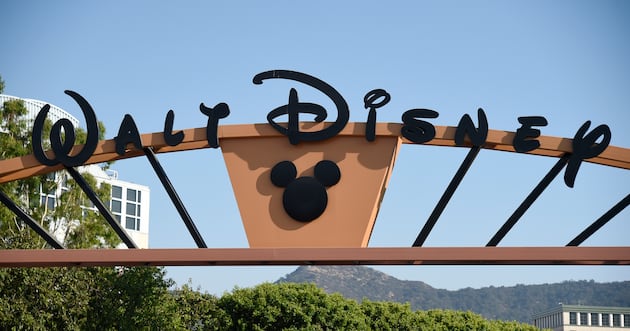
Disney is laying off around 1,000 employees in a restructuring aimed at streamlining operations and making the workforce more technologically enabled. The cuts are expected to hit product and technology, some corporate roles, and parts of the movie studio and traditional TV businesses, with Marvel reportedly hit especially hard across film, TV, comics, finance, legal, and creative roles. Shares rose 1.6% on the announcement, but the move signals ongoing cost discipline and AI-related integration efforts under new CEO Josh D’Amaro.
This is less about cost savings than about Disney accelerating a structural pivot from labor-intensive creative capacity toward software-mediated content production. The marginal benefit is not the headline headcount reduction; it is the optionality to standardize workflows, compress vendor spend, and shorten iteration cycles across franchises. That matters most at Marvel, where creative throughput has been under pressure and where any AI-enabled productivity gain can be redeployed into more titles, more variants, or lower burn per project.
The second-order winner is likely Disney’s ecosystem partners that can sell tooling, cloud, workflow automation, and rights-management solutions into legacy media stacks. The losers are premium creative labor and external production vendors that relied on Disney as a high-margin client; over time this can spill into weaker bargaining power for contractors and a slower refill rate for outsourced work. Competitively, this is a signal that Disney will not defend its cost structure emotionally, which raises the bar for peers still carrying bloated studio and TV overhead.
Near-term, the stock reaction likely reflects relief that management is actively forcing discipline rather than a re-rating of fundamentals. The risk is that cuts in production, legal, and technical functions create execution drag over the next 2-3 quarters if they slow franchise development or increase rework costs. The contrarian angle is that the market may be underestimating how much this sets up margin leverage in FY26-FY27 if Disney can keep content output stable while lowering operating intensity; if that happens, this becomes a multiple-expansion story, not just a restructuring story.
The biggest tail risk is reputational and creative: if the AI narrative is perceived as replacing high-value human craft rather than augmenting it, Disney’s franchise pipeline could face talent attrition and quality dilution. That risk is more medium-term than immediate, but it is the key reason this is a tactical positive and not yet a clean secular long. Watch for whether management pairs cuts with explicit reinvestment into streaming profitability, park-linked IP monetization, or disciplined content slate guidance over the next earnings cycle.
AI-powered research, real-time alerts, and portfolio analytics for institutional investors.
Request TrialOverall Sentiment
moderately negative
Sentiment Score
-0.48
Ticker Sentiment
