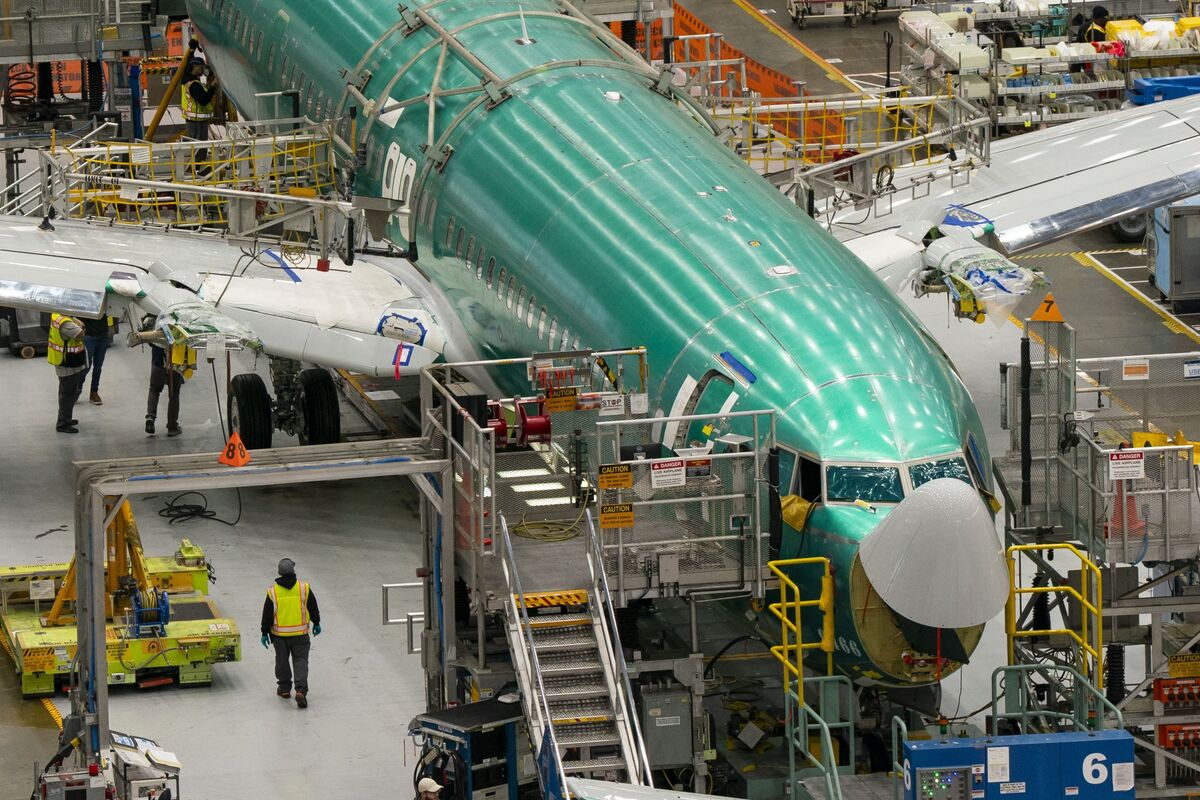
Boeing's first-quarter cash burn narrowed to $1.45 billion, well below the $2.61 billion analyst estimate, as commercial aircraft deliveries rose 10% to 143 planes, the most since 2019. Revenue increased 14% to about $22.2 billion, supported by higher output and steadier operations at defense and services units. The results indicate continued operational recovery and better-than-expected near-term cash generation.
The key signal is not the headline cash burn print itself, but the operating leverage it implies across Boeing’s ecosystem. A steadier delivery cadence tends to tighten the entire aerospace supply chain: tier-2/3 suppliers get better volume visibility, MRO/service partners see improved utilization, and the competitive pressure shifts toward Airbus on single-aisle share only if Boeing can sustain this pace for multiple quarters rather than one clean print. The market should also read this as a credibility event for management execution, which matters because the stock has been trading more on operational trust than near-term earnings power.
Second-order beneficiaries are the industrial suppliers and lessors that depend on a normalized Boeing production rhythm; the lag is usually 1-2 quarters before it shows up in revenue revisions. The biggest loser is the bear case built around perpetual remediation-driven cash drains: if cash outflow keeps stepping down, that thesis weakens fast and can force short covering in BA. That said, the recovery path is still fragile because delivery improvement can be offset by any slip in quality control, supplier bottlenecks, or defense-program noise, and the market will discount those risks aggressively given the multi-year repair cycle.
The contrarian setup is that consensus may be underestimating how much of the upside is already in the stock from “less bad” expectations. If the next few quarters simply confirm stabilization, upside could be more valuation-multiple driven than estimate-driven; if execution surprises positively again, the move can re-rate quickly. But the inverse is also true: one production stumble can reset the narrative and compress the multiple more than the cash flow delta would suggest, so this is still a high-beta operational recovery rather than a clean fundamentals compounding story.
AI-powered research, real-time alerts, and portfolio analytics for institutional investors.
Request TrialOverall Sentiment
mildly positive
Sentiment Score
0.38
Ticker Sentiment
