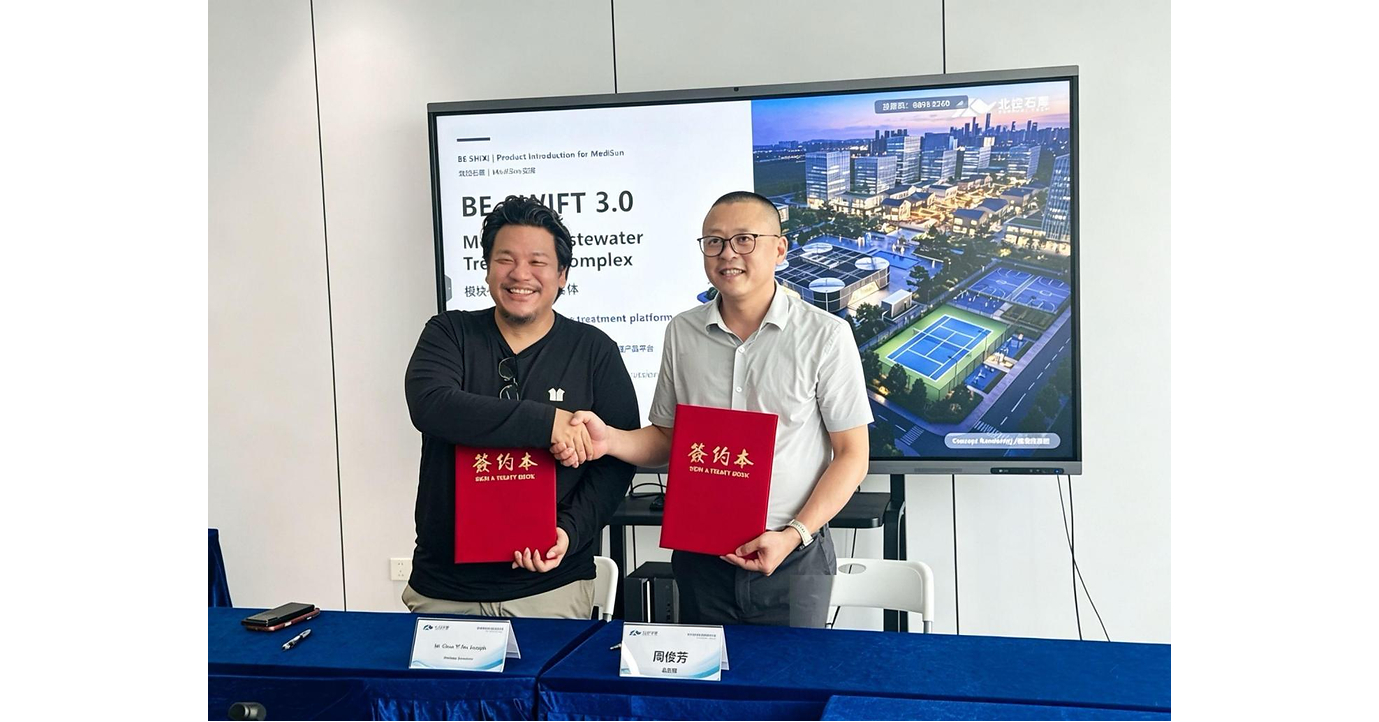
MediSun Energy announced a global distributorship with Guangdong Beijing Enterprises Shixi Technology for its SBR-AGS modular municipal wastewater technology, granting exclusive distribution in Malaysia and strategic cooperation in Saudi Arabia. The modular systems target up to 85% total nitrogen removal and >90% biological phosphorus removal, with reported 30–50% energy savings, 10–20% lower capital cost, and deployment in 60–90 days (15–35 days for 5,000 m³/d modules). The deal supports a faster rollout of low-carbon, space-efficient decentralized wastewater infrastructure in Southeast Asia and the Middle East.
This reads as an option on procurement conversion, not a proven earnings event. If the modular SBR-AGS package truly shortens build time and cuts footprint, the economic winner is whoever controls process IP, commissioning, and long-tail service revenue; the loser is the local civil-works stack that usually captures a large share of project value. That matters most in Saudi and Malaysia, where land scarcity and utility permitting can make schedule certainty more valuable than the lowest bid.
Near term, any stock reaction should be treated as headline-driven and fragile. The market will likely require evidence of signed orders, deposits, or named reference projects before assigning real backlog value, because municipal water wins are slow, financing-dependent, and vulnerable to local-content or performance-guarantee friction. If no project-level disclosure appears within the next 1-2 quarters, the premium on the announcement should fade.
The contrarian read is that "modular" can be over-marketed: energy savings and capex reductions often compress once site-specific engineering, O&M, and warranty costs are included. Still, if this format gets traction, it can pull share from traditional EPCs toward scaled water-technology platforms such as XYL, PNR, and VEO over a 6-18 month horizon. The key falsifier is simple: no backlog conversion, no rerating; if a first utility award lands, the thesis becomes investable.
AI-powered research, real-time alerts, and portfolio analytics for institutional investors.
Overall Sentiment
mildly positive
Sentiment Score
0.25
Ticker Sentiment
