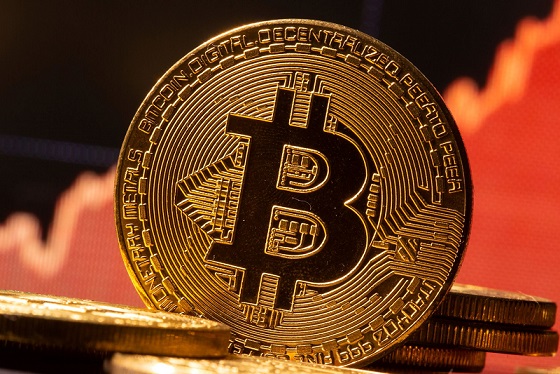
Bitcoin rose 0.4% to $77,756.2 as traders balanced hopes for a U.S.-Iran peace deal against higher Treasury yields and renewed Fed hike expectations. U.S. spot Bitcoin ETFs have seen $1.84 billion of outflows over six sessions, while spot BTC order flow showed about $1.2 billion of net selling over nine sessions before $98 million of buying on May 21. SpaceX disclosed holdings of 18,712 Bitcoin as of March 31, and Blockchain.com confidentially filed for a U.S. IPO.
The market is still pricing crypto as a leveraged macro asset, not an idiosyncratic one. That matters because if Treasury yields stay sticky and the Fed repricing continues, Bitcoin’s marginal buyer is likely to remain ETF-led rather than native-crypto, which makes flows more fragile and more momentum-driven than many holders assume. The recent shift in spot ETF demand suggests a regime where price is now being set by cross-asset risk appetite and duration stress rather than by adoption headlines.
The most interesting second-order effect is that a de-escalation in the Gulf would likely be bearish for the inflation impulse that has been helping keep rate-cut expectations suppressed, which is a net headwind for “hard asset” trades in the short run. In other words, the same peace narrative that supports equities and bonds could remove one of Bitcoin’s geopolitical hedges while also easing the policy path that had been forcing real yields higher. That creates a subtle but important divergence: crypto may underperform a broad risk rally if the catalyst is lower energy volatility rather than renewed liquidity.
NVDA remains the cleanest expression of the AI capex trade, but the muted reaction after a beat suggests the market is moving from growth validation to duration and valuation scrutiny. That is a sign to expect more dispersion across semis: the suppliers tied to near-term compute demand should hold up better than the mega-cap consolidators where multiple expansion has already done the work. For now, the setup looks more like a relative-value environment than a directional one.
The contrarian risk is that the market is underpricing how quickly the Iran narrative can reverse. If the deal talk fades and shipping risk returns, energy again becomes the dominant macro variable, forcing higher rates and renewed stress in long-duration assets; if the deal sticks, the unwind in inflation hedges could be sharp and violent over a 1-3 week horizon. That asymmetry argues for trading volatility rather than outright conviction in either direction until the diplomacy is confirmed or disowned.
AI-powered research, real-time alerts, and portfolio analytics for institutional investors.
Request DemoOverall Sentiment
neutral
Sentiment Score
0.12
Ticker Sentiment
