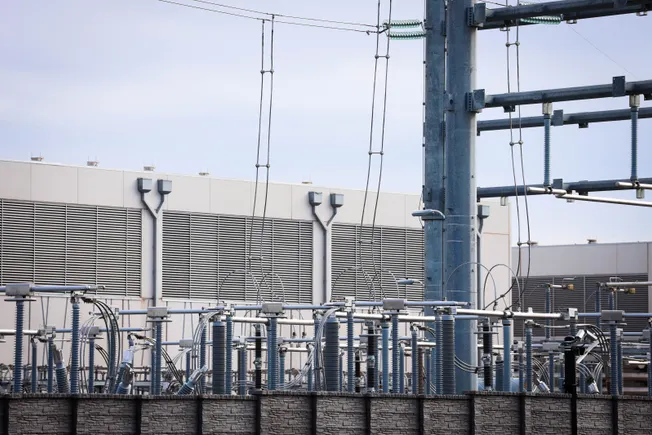
FERC approved five transmission security agreements between ComEd and data center developers (Equinix, Grundy County Power, Karis Critical, PowerHouse Hillwood Holding and QTS) that include ramp schedules, facility readiness obligations, credit requirements, committed revenue contributions, shortfall payments and termination fees to shield existing customers from cost shifts. The agency found the contracts qualify for the Mobile‑Sierra presumption, limiting immediate Commission scrutiny, though commissioners cautioned the presumption is not absolute and urged additional consumer protections. Exelon said its utilities have an 18‑GW “high probability” data‑center pipeline, underscoring the scale of potential grid impacts and the need for state and federal guardrails.
This is a structural regulatory precedent that shifts the near-term economics of large new electricity loads: negotiated commercial protections (defined ramps, credit and shortfall mechanics) make utilities’ recovery pathways cleaner, which in turn de-risks incremental rate base expansion and shortens the horizon for capex payback. That lowers merchant exposure for the utility but does not eliminate long-run political and regulatory pushback over rolled‑in cost allocation — expect a multi-year tug-of-war between utility capital recovery and ratepayer protection that will show up in state dockets and litigated appeals.
For data-center operators and colocators the mechanics change the trade-off between securing interconnection and preserving returns: contractual credit and termination obligations act like a non-trivial up-front tax on new deployments, reducing IRR per MW and increasing the effective hurdle rate for greenfield sites. This will favor developers with deep balance sheets or operating leverage (who can absorb fixed contribution schedules) and hurt marginal entrants or speculative builds that previously relied on softer commerical terms.
Supply‑chain winners are likely to be transmission‑EPC and switchgear suppliers that can time production to multi-year utility build programs; losers are speculative landowners and small-scale developers who cannot meet committed revenue profiles. Near-term catalysts are state-level proceedings and any FERC rehearings (weeks–months); the structural outcome — who bears the cost — will play out over 1–4 years as rate cases, rolled‑in vs incremental decisions, and contract enforcement crystallize.
AI-powered research, real-time alerts, and portfolio analytics for institutional investors.
Request DemoOverall Sentiment
neutral
Sentiment Score
0.00
Ticker Sentiment
