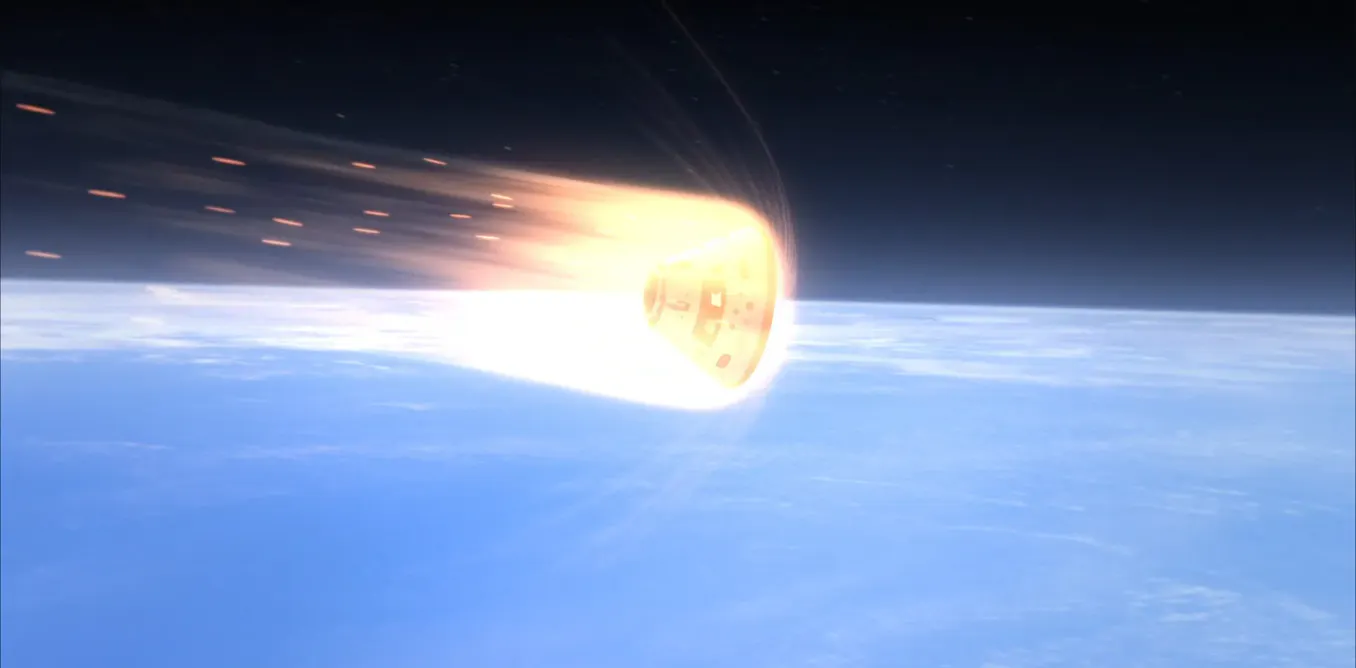
Artemis II set a human-distance record at 406,771 km and will re-enter at >11 km/s (~40,000 km/h), producing shock-heated air temperatures around 10,000°C and a maximum heat-shield surface temperature of ~3,000°C. NASA will retain the AVCOAT ablative heat shield used on Artemis I but has modified the trajectory to reduce the pronounced 'skip' that likely caused AVCOAT chunking on Artemis I; this is a technical mitigation rather than a program change. Near-term market impact is negligible, but the episode underscores engineering and materials risks in crewed lunar-return hardware and potential supplier/quality-control focus for aerospace contractors.
The mission’s re-entry anomalies create a near-term procurement and engineering services wave rather than a one-off technical shock: expect several quarters of high-margin follow-on work for thermal-protection system (TPS) suppliers, specialized machine shops, and accredited test facilities as agencies demand repeat inspections, root-cause fixes, and validation runs. Capacity for hypersonic wind-tunnel time, large-format autoclaves, and certified ablative layup lines is limited; constrained capacity can translate into 200–400bps incremental gross margin for niche suppliers over the next 6–24 months as programs are re-sequenced and prioritized.
A trajectory tweak that trades a sharper skip for repeated controlled heating reduces the probability of an immediate wholesale material redesign but increases recurring maintenance cadence and life‑cycle spend per mission. That shifts value from single‑large R&D winners to companies offering production scale, iterative QA, and refurbishment services — a multi-year annuity rather than an abrupt technology replacement cycle.
Financially, this episode can tighten aerospace insurance spreads and contingency reserves in the short run (weeks–months) while underpinning long-term defense program budgets (1–3 years) as political appetite for crewed capability and resilience grows. The largest reverse trigger would be a clean, low‑impact recovery that validates current fixes; that outcome would compress the incremental aftermarket opportunity and revert benefits to incumbents focused on volume manufacturing rather than engineering services.
For markets, the non-obvious trade is exposure to the mid/small-cap ecosystem that supplies TPS consumables, test time and inspection services — these names can re-rate on multi-year contract flows even if primes merely capture headline contracts. Monitor certification cycle milestones and facility booking curves as early indicators; contract awards and NASA/DoD procurement notices will be the primary catalysts over the next 3–12 months.
AI-powered research, real-time alerts, and portfolio analytics for institutional investors.
Request DemoOverall Sentiment
mildly positive
Sentiment Score
0.15
