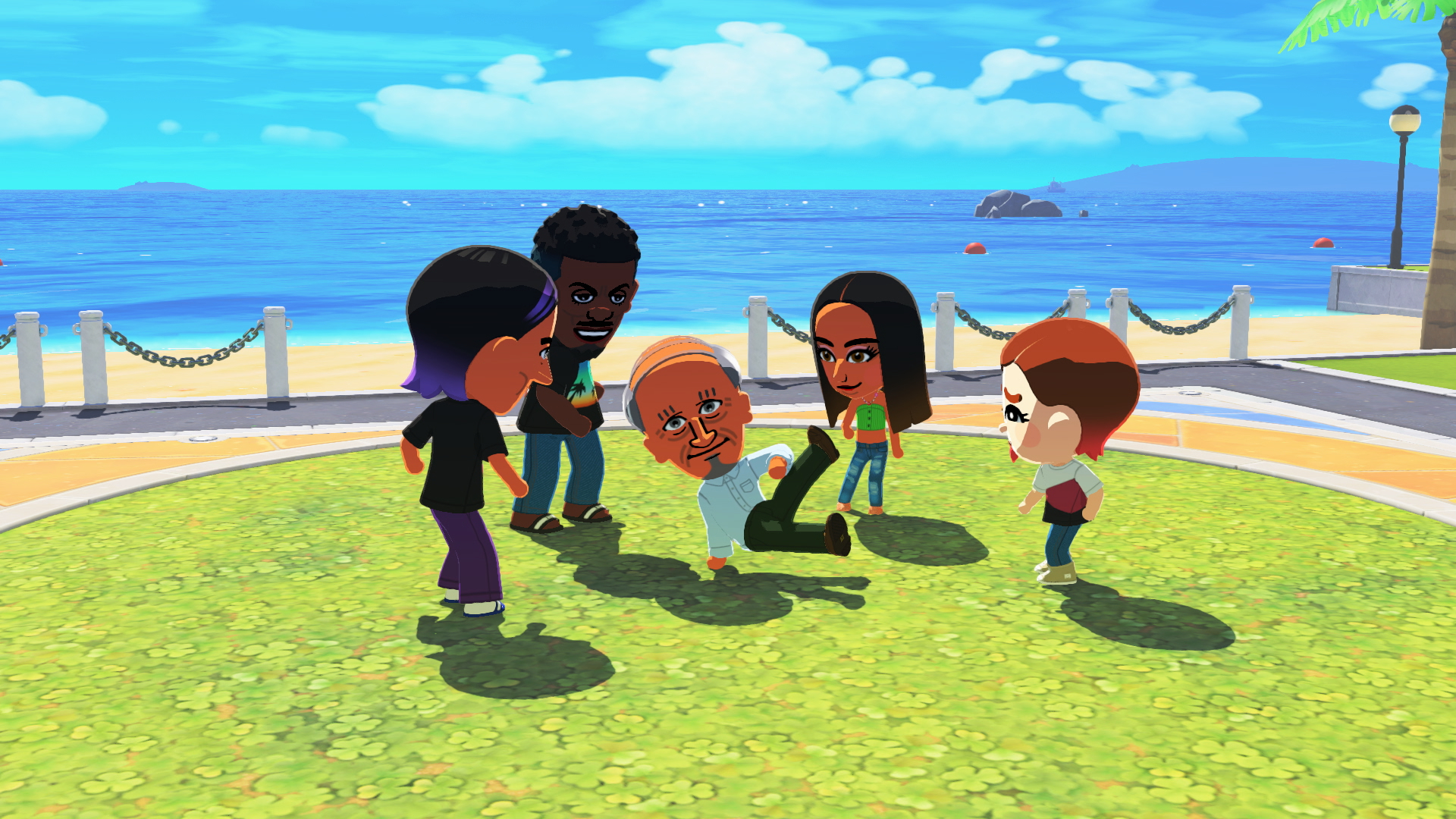
Nintendo launched Tomodachi Life: Living The Dream today and is giving Nintendo Switch and Switch 2 owners free in-game icons through 13 May, with releases staggered in weekly waves starting now and continuing on 22 April and thereafter. The article is broadly positive but largely promotional, highlighting ongoing freebie activity and demo-to-full-game progress carryover rather than any financial or operational surprise. Market impact looks limited.
Nintendo is using low-cost digital rewards to convert a launch event into an engagement loop, which is more valuable than the freebies themselves. The second-order effect is retention: icon drops and demo carryover keep lapsed users active on the platform, raising the odds of software attach and online subscription stickiness over the next 1-2 quarters. That matters more for the installed base than for unit sales today, because the monetization path is software, DLC, and recurring services rather than one-time hardware margin.
The key beneficiaries are Nintendo’s first-party ecosystem and, indirectly, any accessory or digital-content exposure tied to higher platform engagement. The competitive implication is negative for non-Nintendo family-friendly publishers competing for shelf time and attention in the same window; a successful cadence of low-friction content reduces the chance that casual users spend on third-party alternatives. There is also a subtle supply-chain read-through: this kind of launch is demand-light on physical inventory, so it improves launch efficiency and lowers the risk of channel stuffing or markdowns.
The risk is that the engagement lift proves transient if the title behaves like a novelty rather than a durable daily-use product. In that case, the incremental value accrues in days, not months, and the market may overestimate downstream monetization. The more interesting upside is if Nintendo uses the launch cadence to normalize a broader cross-platform identity layer across Switch and Switch 2, which would strengthen lock-in and reduce churn risk over the next 12-18 months.
Contrarian view: this is less about a single game and more about Nintendo engineering a higher-frequency content cadence to keep the ecosystem warm ahead of the next hardware transition. If investors are still focused mainly on console unit shipments, they may be underpricing the service-layer revenue optionality; if they are already extrapolating a major re-rating from one launch, that optimism may be too aggressive given the low ARPU of free engagement mechanics.
AI-powered research, real-time alerts, and portfolio analytics for institutional investors.
Request DemoOverall Sentiment
mildly positive
Sentiment Score
0.18
