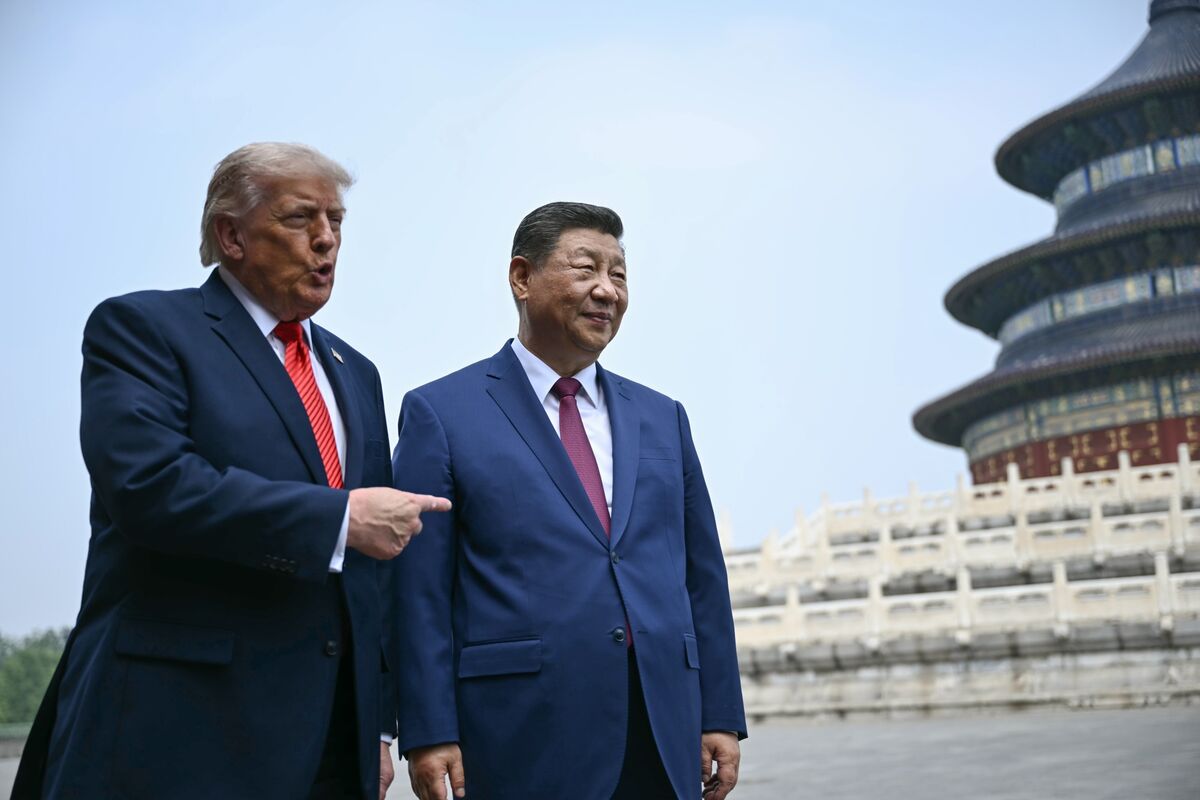
The article says the Trump-Xi summit had a "silver lining" for Hong Kong’s finance hub, but it does not provide specific policy changes, numbers, or immediate market moves. The piece frames the meeting from Hong Kong’s perspective and suggests a modest positive backdrop for the city rather than a direct catalyst for assets. Overall, the content is mostly contextual and newsletter-oriented, with limited near-term market impact.
The cleanest read-through is not “Hong Kong is back,” but that the city may regain relative utility as a neutral funding and booking venue when geopolitics improve at the margin. That tends to help the highest-beta parts of the local financial stack first: exchanges, brokers, wealth managers, cross-border lenders, and landlords with prime office exposure. The effect is usually lagged by 1-2 quarters because capital allocation decisions follow sentiment, but the market can re-rate faster if policy signals reduce the probability of further decoupling.
The second-order winner is regional liquidity arbitrage. If Hong Kong’s role as an intermediate platform stabilizes, capital that was parked in Singapore or onshore mainland channels may rotate back for listings, treasury management, and FX hedging, supporting HKD funding conditions and fee pools. That would be modestly negative for rival Asian financial hubs that have benefited from Hong Kong’s risk premium, especially in ECM/DCM and private wealth flows.
The key contrarian point is that any upside is likely underpowered unless it is paired with tangible mainland easing and a durable reduction in US-China escalation risk. A one-off diplomatic thaw can lift sentiment for days to weeks, but banks and real estate need months of improving transaction volumes before earnings inflect. If the market extrapolates too quickly, the risk/reward shifts toward fading the move: the city’s structural challenges have not gone away, so this is more about a lower-risk premium than a full fundamental reset.
Tail risks are mostly policy reversal and headline whiplash. A renewed tariff, export-control, or sanctions cycle would hit Hong Kong through equity turnover, IPO pipelines, and FX/credit confidence almost immediately, while the downside in local financials could be amplified by thin positioning. The best setups are tactical rather than secular: trade the spread between Hong Kong-sensitive financials and broader Asian financials, and keep duration short until there is evidence that the diplomatic tone is translating into actual flows.
AI-powered research, real-time alerts, and portfolio analytics for institutional investors.
Request DemoOverall Sentiment
neutral
Sentiment Score
0.10
