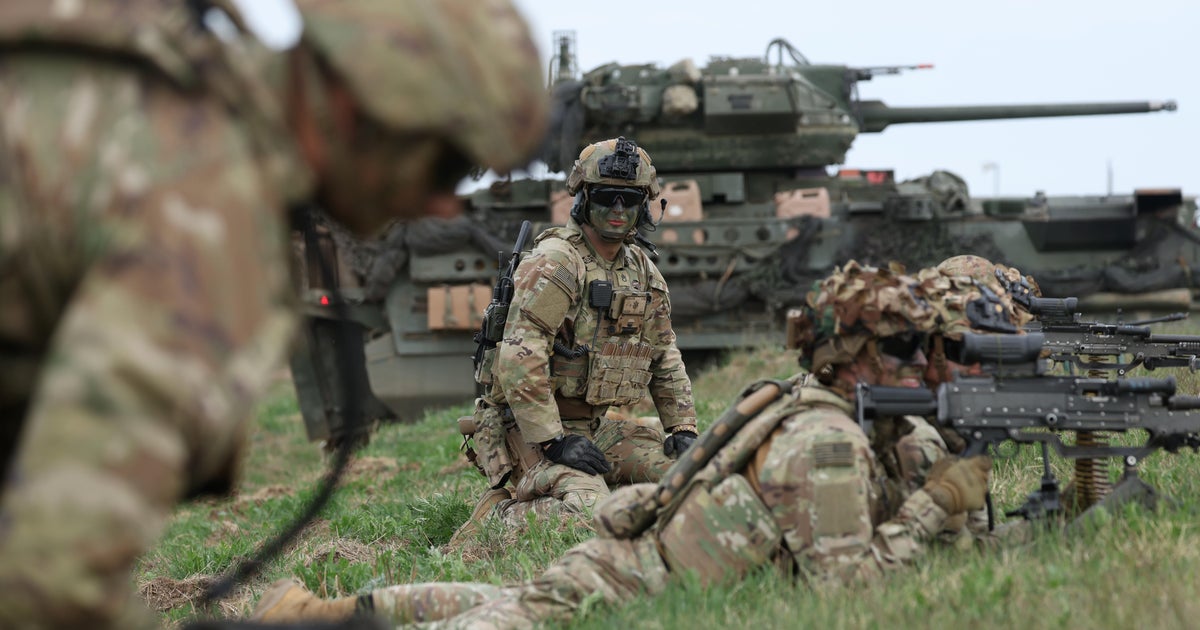
Trump said the U.S. will send an additional 5,000 troops to Poland, reversing an earlier move to cancel the deployment of 4,000 forces, but the permanent vs. rotational status remains unclear. NATO allies welcomed the announcement while criticizing Washington's messaging as "confusing indeed," highlighting continued friction over burden sharing, U.S. troop levels in Europe, and alliance commitments ahead of next week's NATO summit in Ankara.
The market implication is less about the headcount and more about the signaling function: Washington is still treating forward force posture in Europe as a bargaining chip, not a fixed alliance commitment. That raises the option value of “front-line” members like Poland and the Baltics versus rear-area bases in Germany, because in a drawdown scenario the U.S. is likelier to preserve politically symbolic, Russia-facing deployments while trimming legacy Cold War infrastructure. The second-order effect is a faster procurement cycle in Eastern Europe, where governments will try to convert temporary reassurance into hard contracts for air defense, artillery, C2, and base-hardening.
For defense equities, this is incrementally positive for primes with exposure to European missile defense, short-range air defense, and mobility/logistics rather than heavy platforms. The near-term winner is the supply chain attached to Patriot/IFPC-like systems, counter-UAS, ammo, and military construction; the loser is any thesis built on static U.S. European basing or Germany-centric logistics. Over 6-18 months, a more Europeanized burden-sharing model should improve order visibility for U.S. defense contractors, but it also increases procurement competition from European suppliers if political pressure shifts toward local content.
The main risk is that the announcement proves temporary and reversible within days or weeks if broader negotiations deteriorate. In that case, European allies will still accelerate spending, but the premium shifts from troop presence to sovereign capability, which is less supportive for U.S. basing contractors and more supportive for European defense names. Another tail risk is that noisy messaging weakens deterrence even if force levels don’t change, which would raise probability of a crisis-premium move in Eastern European assets before budgets actually flow.
Consensus may be underestimating how quickly this could convert from rhetoric into budget line items. European governments have already been boxed into proving seriousness, and that tends to favor multi-year procurement commitments during the next 1-2 summit cycles. The trade is therefore not a one-day headline reaction; it is a 12-24 month reallocation from passive reliance on U.S. protection toward sovereign air defense, ammunition stockpiles, and military infrastructure.
AI-powered research, real-time alerts, and portfolio analytics for institutional investors.
Request DemoOverall Sentiment
neutral
Sentiment Score
0.05
