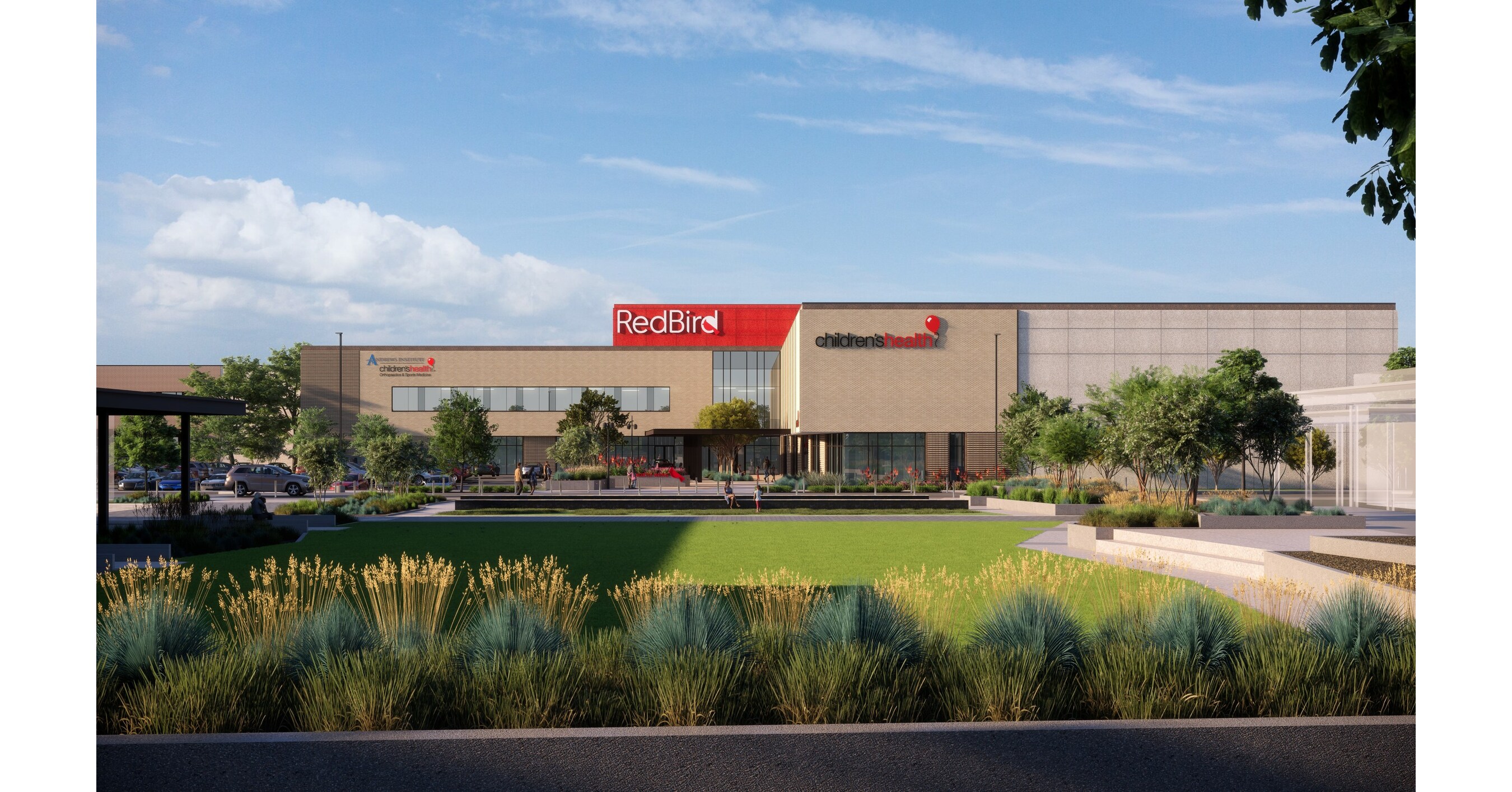
Russell Glen Company has begun construction on the 42,000-square-foot Children’s Health Specialty Center RedBird in the former Macy’s at The Shops at RedBird, targeting a December 2027 opening. The project is part of the mall’s second redevelopment phase into a healthcare-anchored mixed-use destination, adding pediatric primary/urgent/behavioral health and sports medicine services. The center is intended to expand access for roughly 35,000 annual patients from southern Dallas County that currently travel to Children’s Medical Center Dallas.
This is a valuation signal on stranded retail real estate, not a near-term earnings event. The real economic winner is the landlord/developer stack that can re-tenant obsolete boxes with credit-worthy healthcare uses: it converts low-rent, high-friction square footage into sticky weekday traffic, lowers vacancy/security drag, and raises the implied value of adjacent land. That mechanism is supportive for healthcare-anchored mixed-use owners and medical office platforms, but only if replicated at scale; one project is more proof-of-concept than cash-flow driver.
The second-order loser is the class of mall owners and soft-goods tenants that depend on discretionary foot traffic to justify large-format boxes. If healthcare becomes the highest-and-best use for more dead malls, the market will likely assign a lower probability to retail-only recovery and a higher probability to redevelopment, which is positive for optionality but negative for legacy retail rent growth. For public comps, the most relevant read-through is to hospital-adjacent real estate names rather than department stores; the mall brand itself is not the tradable asset.
Time horizon matters: there is essentially no tradable impact over days, modest signaling impact over 1-3 months, and only a 6-18 month valuation impact if financing, construction and tenancy all stay intact through opening. The key falsifiers are delayed capex, higher-for-longer financing costs, or a healthcare partner pulling back on outpatient expansion. Consensus is probably overestimating how much economic rent these conversions create; the civic value is clear, but the private-market IRR can still be mediocre once buildout costs and slower lease-up are fully loaded.
AI-powered research, real-time alerts, and portfolio analytics for institutional investors.
Request DemoOverall Sentiment
mildly positive
Sentiment Score
0.15
Ticker Sentiment
