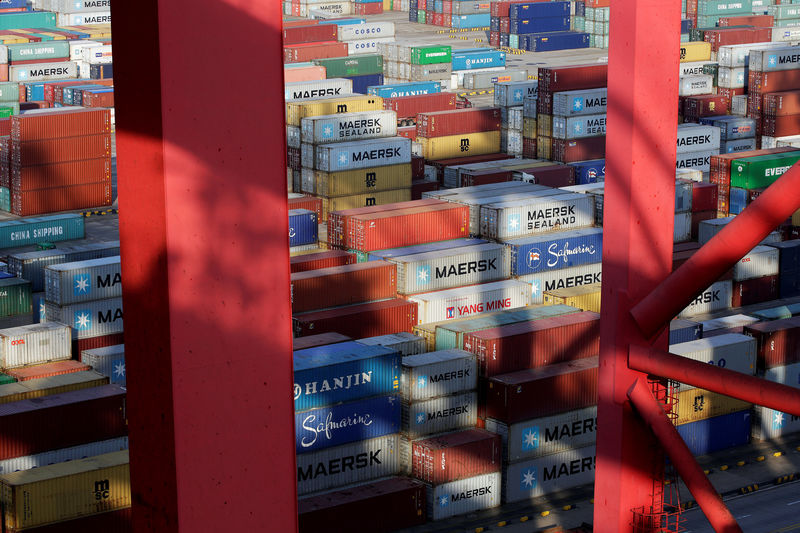
Kharg Island, handling roughly 90% of Iran’s oil exports, was reportedly struck in U.S. attacks that hit military targets but spared oil infrastructure; Iran exported about 1.1–1.5 million barrels per day from Feb 28 to mid-March. President Trump threatened strikes on Kharg’s petroleum facilities if attacks on shipping continue, risking disruption to the Strait of Hormuz — a conduit for ~20% of global fossil energy — and driving sharp oil price swings, heightened volatility, and broader market risk.
Tightening maritime chokepoint risk is already transmitting into three measurable market channels: spot tanker freight, war-risk insurance premia, and regional crude/grade flows. A sustained closure or sporadic interdiction that lasts weeks (not hours) pushes VLCC/Suezmax voyage times into double-digit day extensions versus baseline, creating a step-change in unit transport cost that accrues to owners and to any market participant holding physical barrels in transit.
Those higher transport and insurance costs create a clear arbitrage that favors floating storage and contango structures: when monthly carry exceeds roughly $0.5–$1.0/bbl per month, owners historically prefer idle or slow-steaming storage to quick delivery, tightening prompt availability and steepening forward curves for months. Independently, refiners configured for heavier, sour crudes gain optionality as buyers substitute away from hard-to-get light sweet grades; this reshuffles regional crack spreads and margin capture for mid-continent vs coastal plants for multiple quarters.
Defense/industrial suppliers and regional logistics service providers benefit through a multi-quarter uptick in demand for spare parts, base repairs, and escort-related services, but equities in these sectors are highly binary to de‑escalation; a diplomacy path that restores insured passage will compress premiums and reverse a large part of the move within days. Primary catalysts to watch are coalition-escorted shipping corridors (days–weeks), insurer bulletin reversals (hours–days), and coordinated SPR/production backfills (weeks–months) — any of which can unwind the bulk of the risk premia rapidly.
AI-powered research, real-time alerts, and portfolio analytics for institutional investors.
Overall Sentiment
strongly negative
Sentiment Score
-0.75
Ticker Sentiment
